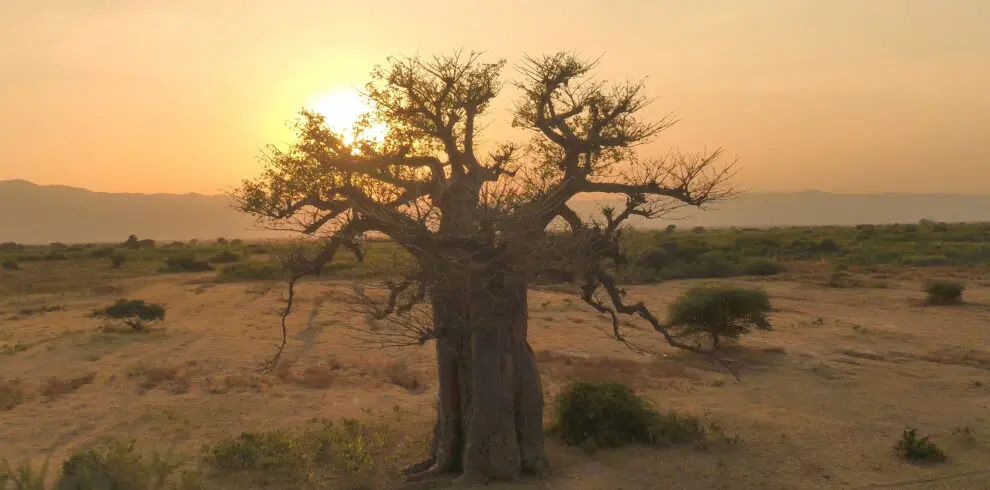
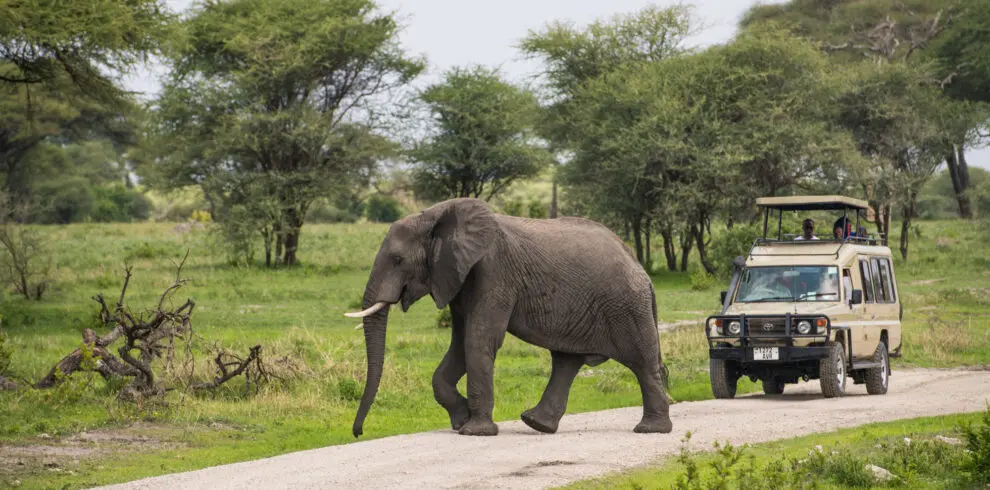
Some journeys follow a road. This one follows a river of hooves.
Seven days, six nights, a Landcruiser with the safari photo roof thrown open, and a driver-guide who belongs to your group alone — no strangers, no shared seats, no schedule but your own. It begins gently in Arusha, under the shoulder of Mount Meru, and ends on the floor of the Ngorongoro Crater, where roughly 25,000 large animals live inside a single collapsed volcano.
In between, Tanzania unfolds at its own pace. Lake Manyara greets you with elephants in the forest and a shoreline stitched pink with flamingos. The Ngorongoro highlands lift you to the crater rim, then release you down through Nabi Gate onto the Serengeti's open plains — zebra, giraffe, lion, jackal, all of it arriving before sunset. Then the long, deliberate drive north, into the wilder country near the Mara River, where the Great Migration gathers.
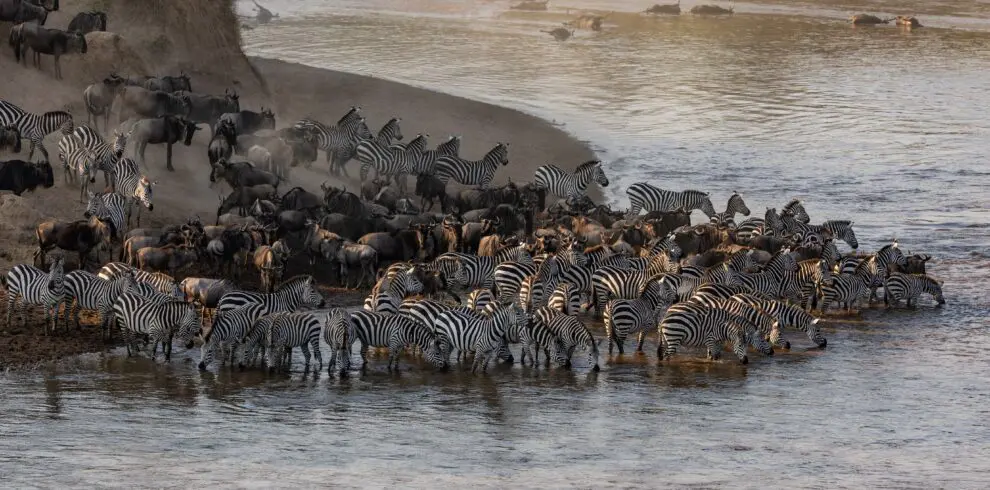
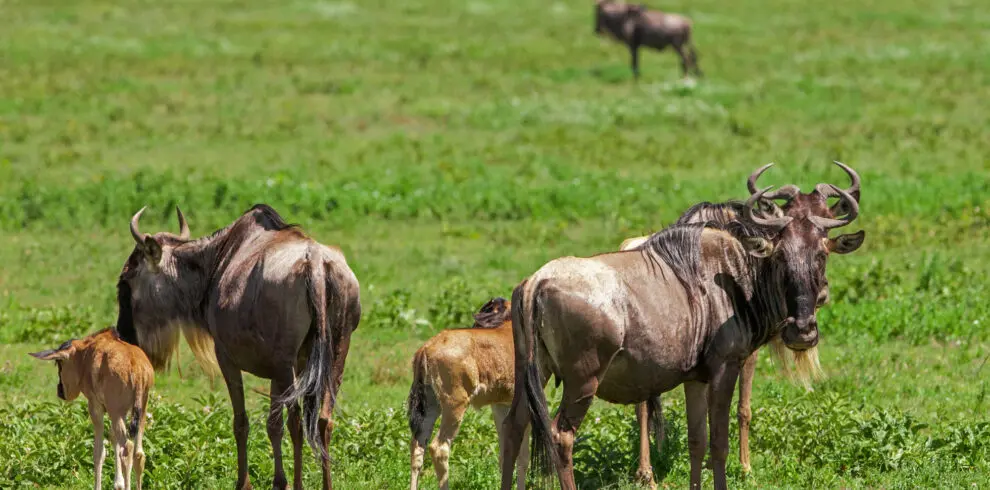
This is the heart of it: wildebeest and zebra massed in their thousands along the water, following the rains as they have for millennia. Crossings can't be promised — nature doesn't take bookings — but the sheer scale of the herds is a thing you feel in your chest.
Nights are spent under canvas and thatch: Pembeni Rhotia, Sound Of Silence, Kenzan Mara Tented Camp, Ang'ata Ngorongoro Camp. Small group, big country.
You don't watch the Migration. For a few days, you travel inside it.

Please note: Kenzan Mara Tented Camp operates annually from 01 July to 31 October, during the Migration period. The stated accommodation is therefore season-dependent.
You land, and Africa takes it from there. An Afromaxx driver meets you at Kilimanjaro International Airport and carries you through to Arusha — roughly 45 minutes to the lodge. Depending on your arrival time, there may be room in the day to wander the surroundings, take in the views of Mount Meru, or browse the shops before the safari proper begins. Tonight is for settling: a Garden View Room, an early night, and the quiet knowledge of what's coming.
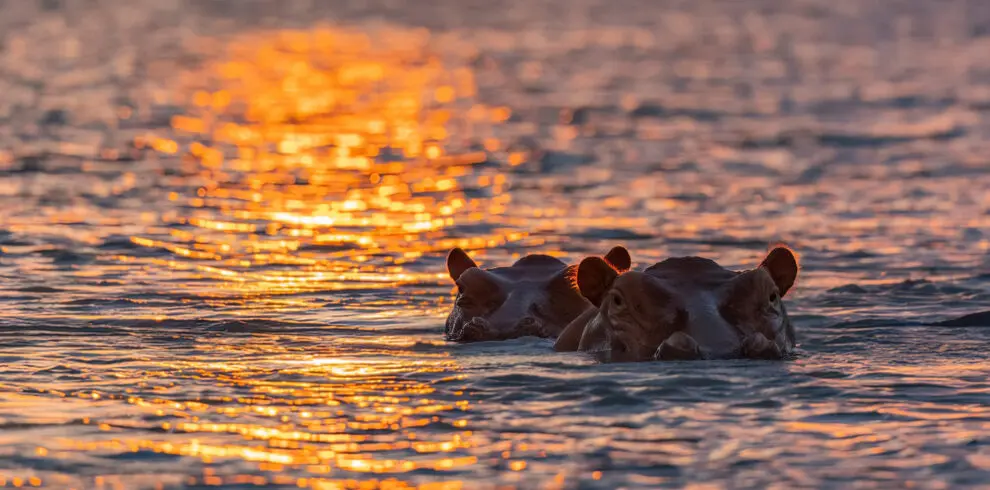
Out of Arusha in the morning, through farmland and village country towards the East African Rift Valley. At the gates of Lake Manyara National Park the safari photo roof goes up, and everything changes. Elephants move through the groundwater forest. Giraffes browse the canopy. Zebra, monkeys and hippos hold the shoreline while pelicans and flamingos work the shallows around the Hippo Pool. Late in the day you climb out of the valley to Rhotia, where dinner and a bed are waiting.
Breakfast, then altitude. The road lifts you into the Ngorongoro highlands, and on a clear morning the great caldera opens below you like something imagined. From there it's down and westward to Nabi Gate, and the Serengeti begins — that endless, grass-gold horizon that gives the park its name. The game drive runs right through the plains: zebra, giraffe, elephant, lion, jackal, hippo, and birdlife in every direction. You reach camp shortly before sunset, with the sky doing its best work.
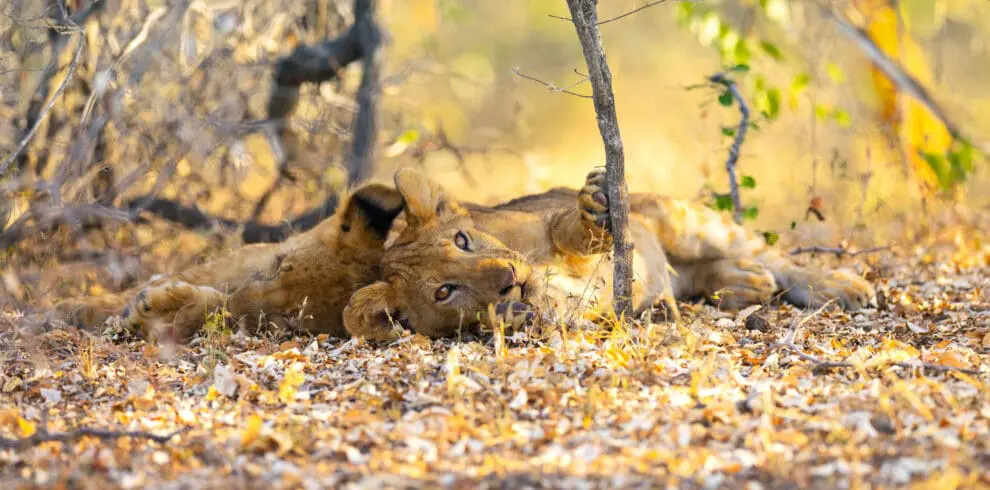
An early start, because the bush belongs to the early. Today is a long game-drive transfer north through the Serengeti, and the first hours are the richest — lions still working, hippos shifting in the pools, hyenas trotting home, antelope and their young scattered across the grass. You stop as often as the wildlife asks you to. By the end of the day you're deep in the northern Serengeti near the Mara River, in the very country where the Great Migration makes its crossings.
A whole day given to the northern Serengeti and the Mara River, and no need to be anywhere else. The herds follow the seasonal rains across this ecosystem, and when they gather here, wildebeest and zebra fill the riverbanks and the plains beyond in numbers that resist counting. River crossings can't be guaranteed — no one can promise you that moment — but the spectacle of the Migration itself, the noise and dust and sheer mass of it, is the point of the day.
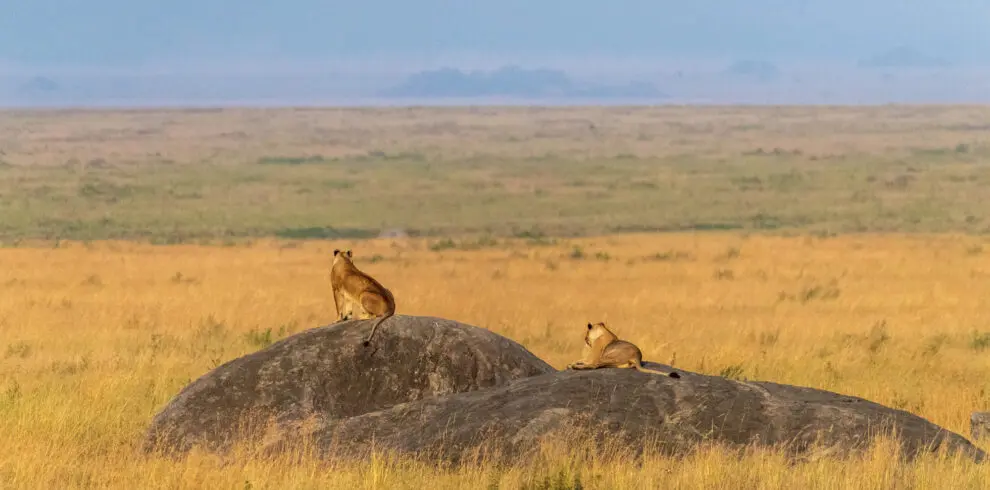
The long road south, and a fine one. You leave the Mara behind and game view the whole way, watching the country change beneath the wheels: open plains giving way to acacia woodland, the Seronera area, and the great granite kopjes where lions like to lie out in the afternoon heat. Later in the day the Ngorongoro highlands rise ahead of you, green and cool after the plains. You arrive at camp on the crater rim in the evening.
You finish where Tanzania keeps its treasure. The descent onto the Ngorongoro Crater floor delivers you into one of the country's flagship wildlife areas — roughly 25,000 large animals inside a single caldera, with regular sightings of rhino alongside zebra, buffalo, hyena, lion, cheetah and elephant. It's a concentrated, unhurried, rather extraordinary last morning. Afterwards, the road carries you back to Kilimanjaro International Airport, and the journey ends.
No Fixed Departure Dates Available
Yes — all national park and transfer fees are included in the rate, along with the private safari itinerary, meals as indicated behind each lodge, the Landcruiser with safari photo roof, an experienced English-speaking driver/guide exclusively for your group, a guaranteed window seat, 3 litres of drinking water per person per day, and binoculars. What's not included: your Tanzanian visa, any changes or increases to national park fees, taxes or other fees after quotation, and any new government fees introduced after quotation.
No optional activities or permits are separately priced in the supplier offer. A few things are mentioned as available but unpriced: the Arusha lodge can arrange a local market visit, walks, canoeing in Arusha National Park or cycling, and Kenzan Mara Tented Camp's description mentions balloon and walking safaris. Costs and booking arrangements for these aren't specified — we'd confirm them for you directly.
No, and anyone who promises otherwise is selling you something. The Great Migration moves with the seasonal rains, and crossings happen when the herds decide they happen. What Days 4 and 5 are built around is being in the right place at the right time of year — the Mara River and northern Serengeti during the Migration months — where large concentrations of wildebeest and zebra are the reliable draw.
Kenzan Mara Tented Camp operates annually from 01 July to 31 October, during the Migration period, so the Day 4 and 5 accommodation is season-dependent and the itinerary is built around those months. More broadly, hotels listed depend on availability at the time of booking; should alternatives be needed, they'd be of a similar standard.
Need help with booking? Send Us A Message
Not sure where to begin planning your African adventure? Schedule a complimentary 30-minute chat with one of our Africa travel consultants.
1. Choose your preferred length — 15 minute quick questions, or 30 minute proper conversation.
2. Pick a date and time that suits you; adjust the timezone dropdown if you’re elsewhere.
3. Share a few details about the journey you have in mind.
4. One of our travel consultants will confirm your booking by email and be in touch at the appointed hour. No cost, no obligation — just expert counsel. You’ll receive a calendar invitation and a reminder beforeyou meet.
Describe your travel vibe and discover epic regions & crafted itineraries. Africa is here!
Tell our Travel Concierge (Chobi) your dates, budget and dreams… your Safari Aura — it knows every highlight we see, every destination we visit, every safari we run, and every experience we offer.
our relationship with artificial intelligence ATC & AI | Review our Privacy Policy