
Welcome to the home of safari
Tanzania
A destination where safari, adventure, culture and island life can all become part of one unforgettable journey. From endless plains to high peaks, Tanzania is beauty on an epic scale.
Start Exploring- Great Migration
- Iconic Safaris
- Mountain Adventures
- Tropical Beaches
tanzania
Welcome to the home of safari
A destination where safari, adventure, culture and island life can all become part of one unforgettable journey. FromEndless plains to high peaks, Tanzania is beauty on an epic scale.
- PRIMATE ENCOUNTERS
- CLASSIC SAFARIS
- NILE ADVENTURES
- LAKES & LANDSCAPES
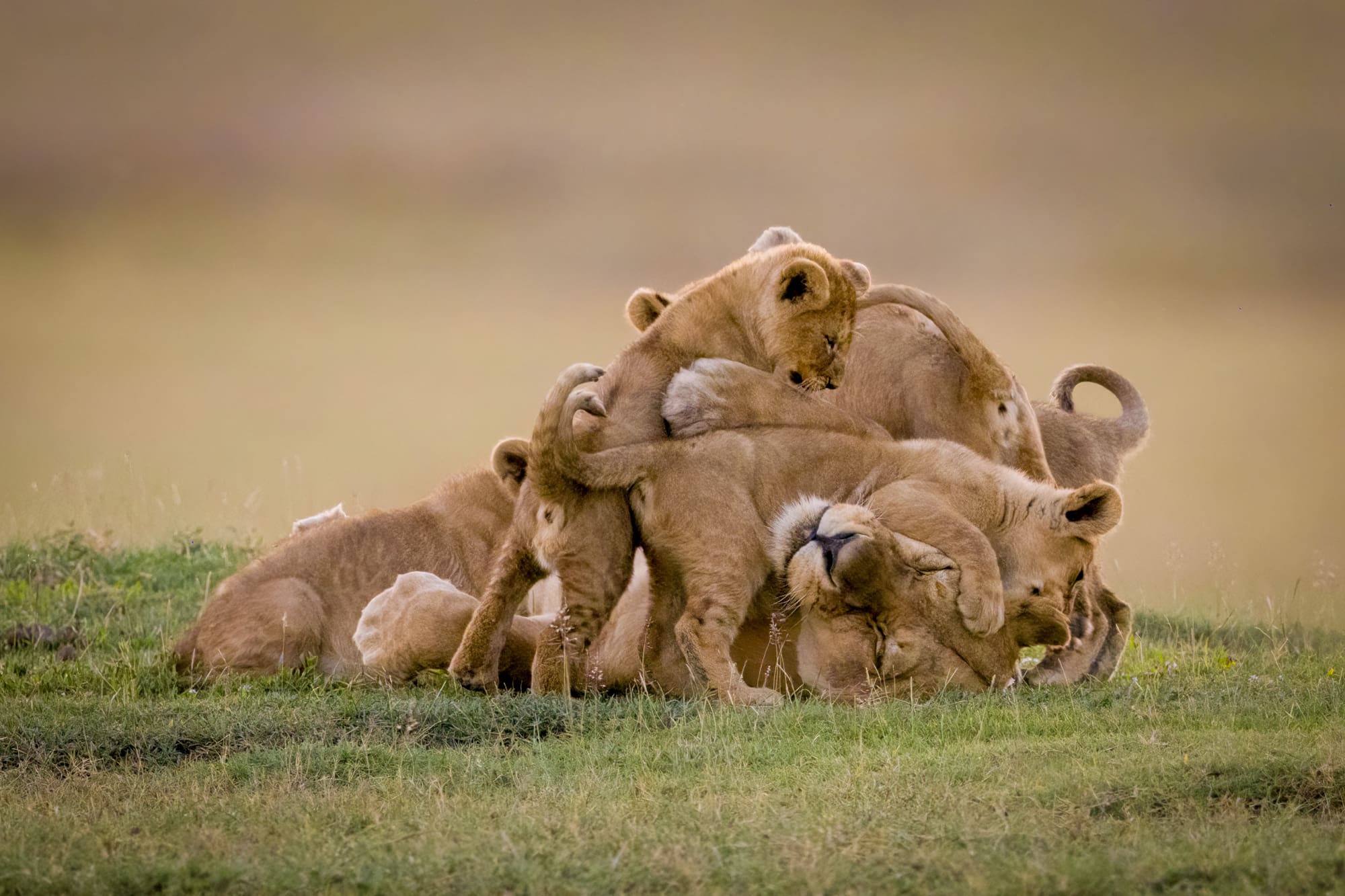
Serengeti National Park
Experience the Serengeti’s vast landscapes, exceptional wildlife and timeless safari atmosphere in one of Africa’s greatest wildernesses
Ngorongoro Crater
Descend into Ngorongoro Crater, where dramatic landscapes and abundant wildlife create one of Tanzania’s most remarkable safari experiences.
Ruaha National Park
Wild, remote and wonderfully untamed, Ruaha offers dramatic landscapes and exceptional wildlife far from the crowds for a truly rewarding Tanzanian safari experience.
Mount Kilimajaro
Venture into Kibale National Park’s lush Climb Africa’s highest mountain and experience the challenge, scenery and sheer exhilaration of reaching Kilimanjaro’s summit.
Zanzibar Island
Powder-white beaches, turquoise waters and island charm make Zanzibar the perfect tropical escape after an unforgettable safari.
the ultimate safari experience
Why Choose Tanzania?
Tanzania is a country of extraordinary scale, where vast wilderness, remarkable wildlife and some of Africa’s most iconic landscapes come together. The endless plains of the Serengeti provide the stage for the Great Migration, while the Ngorongoro Crater offers exceptional wildlife viewing within its dramatic natural setting. Rising above it all is Mount Kilimanjaro, Africa’s highest peak and one of the continent’s great adventures.
Yet Tanzania extends far beyond its best-known landmarks. Tarangire National Park brings a completely different character, with ancient baobabs, sweeping savannah and impressive concentrations of elephants creating a landscape that feels distinctly African. Further south, Ruaha National Park offers something wilder and more remote. Its rugged scenery, seasonal rivers and expansive wilderness make it an exceptional choice for travellers looking to experience Tanzania away from the busier safari routes.
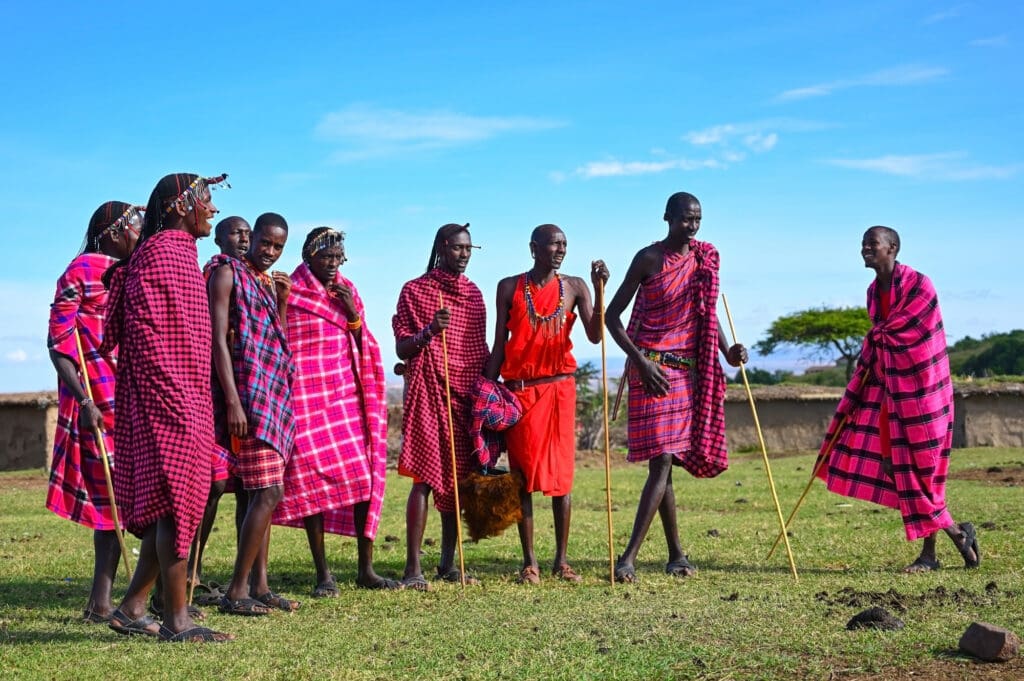
This variety is what makes travelling through Tanzania so rewarding. One journey can take you from watching big cats on the Serengeti plains and elephants beneath Tarangire’s baobabs to exploring the remote wilderness of Ruaha. For the adventurous, Kilimanjaro offers the challenge of trekking through changing landscapes towards the Roof of Africa, while encounters with local communities provide an opportunity to discover the traditions and cultures that form an important part of Tanzania’s identity.
And then there is Zanzibar. After days spent exploring the bush, the island offers an entirely different pace. Wander through the historic streets of Stone Town, discover Zanzibar’s distinctive Swahili character or simply relax beside the warm, turquoise waters of the Indian Ocean.
From the celebrated landscapes of the northern safari circuit to the quieter wilderness of the south, from Africa’s highest mountain to its tropical coastline, Tanzania offers an incredible diversity of experiences.
Ask Our Travel Concierge, Chobi!
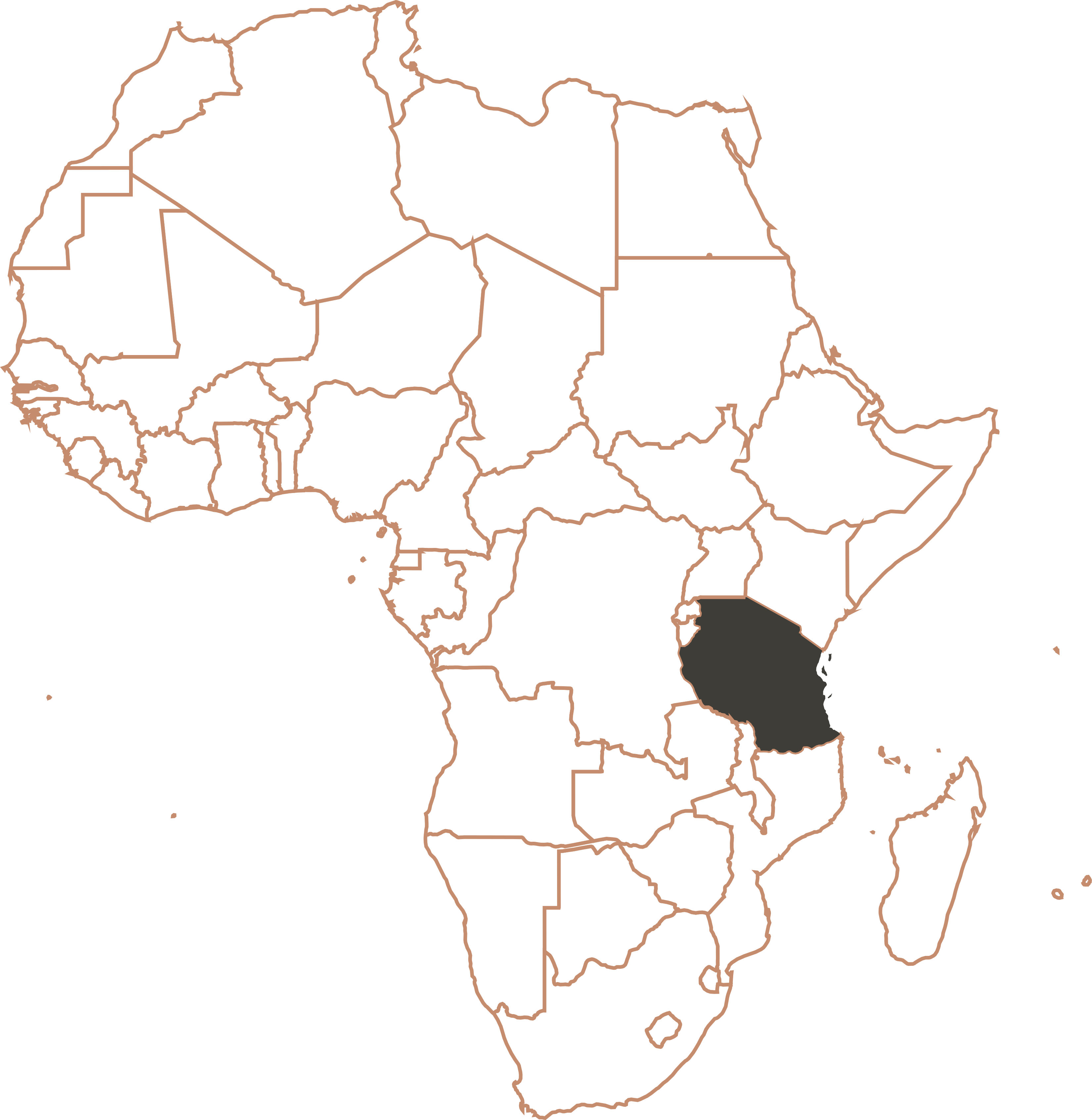
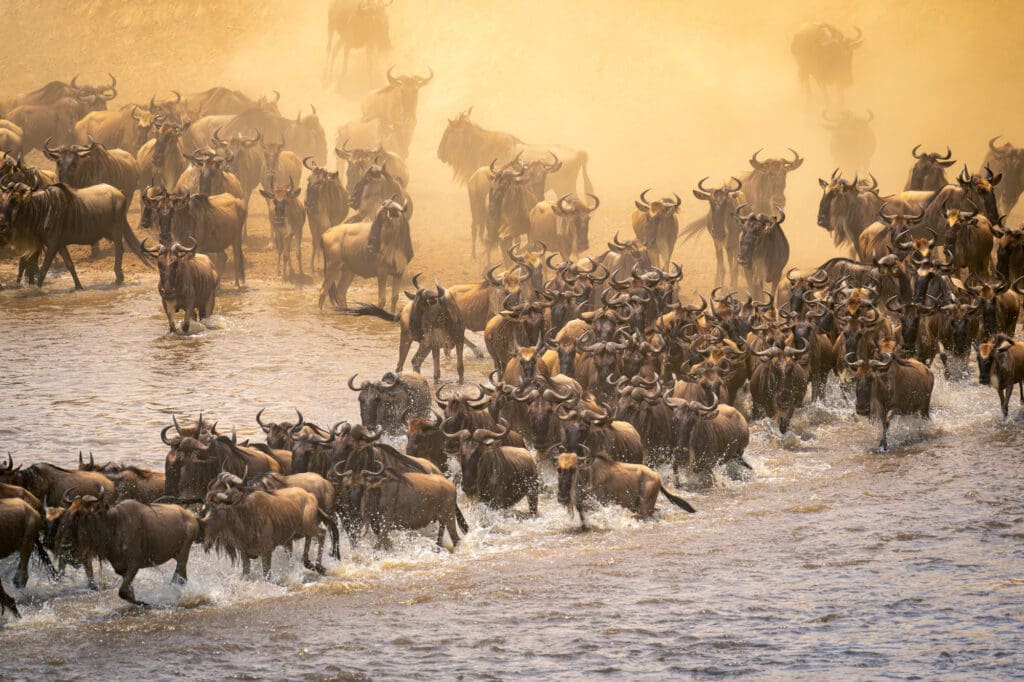
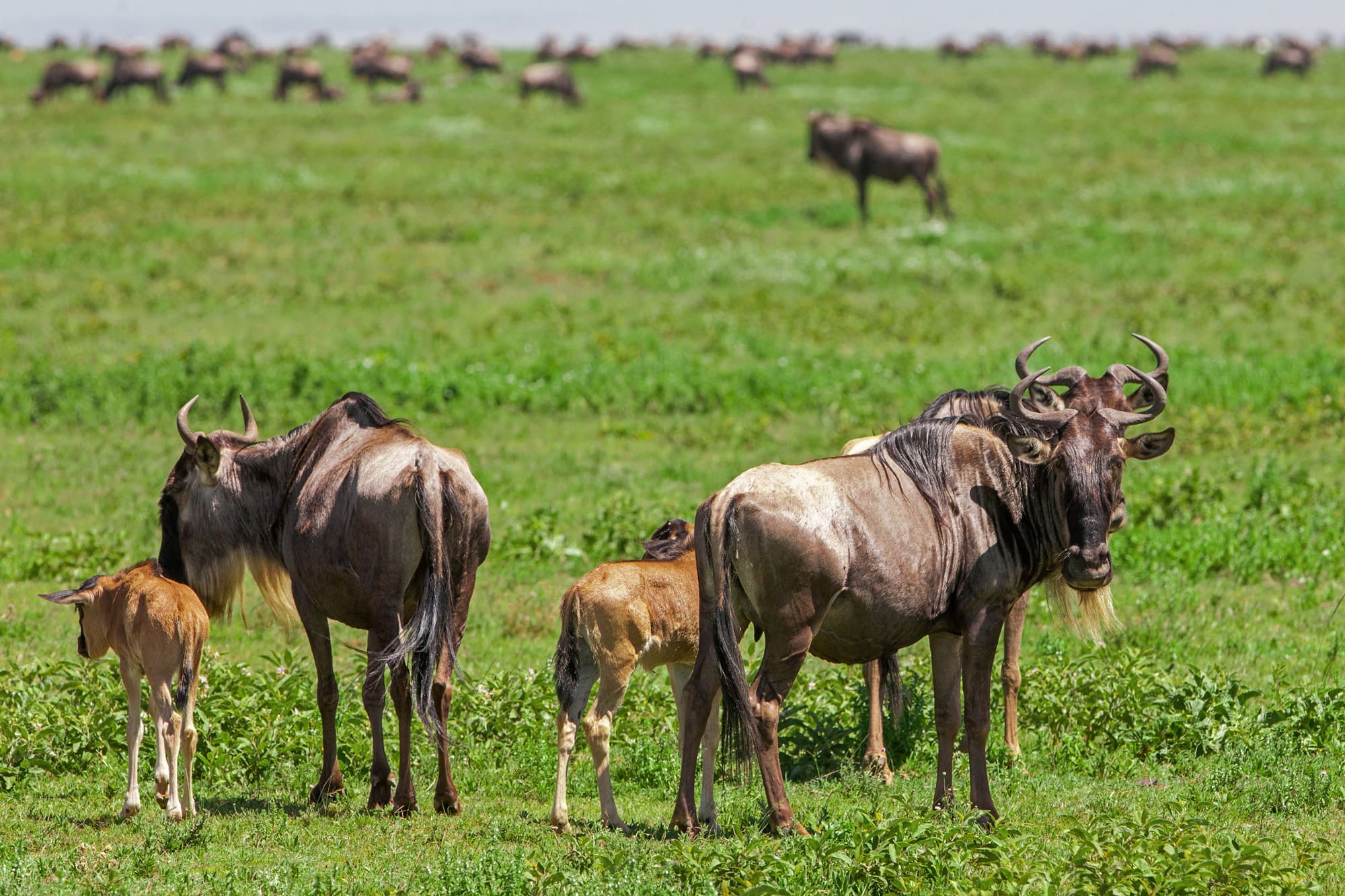
- Witness the Great Migration across the Serengeti, one of Africa’s greatest wildlife spectacles.
- Descend into Ngorongoro Crater for exceptional wildlife viewing within a breathtaking natural setting.
- Explore Tarangire National Park, where elephants wander beneath ancient baobabs across sweeping landscapes.
- Discover the wild beauty of Ruaha, with remote wilderness and rewarding game viewing.
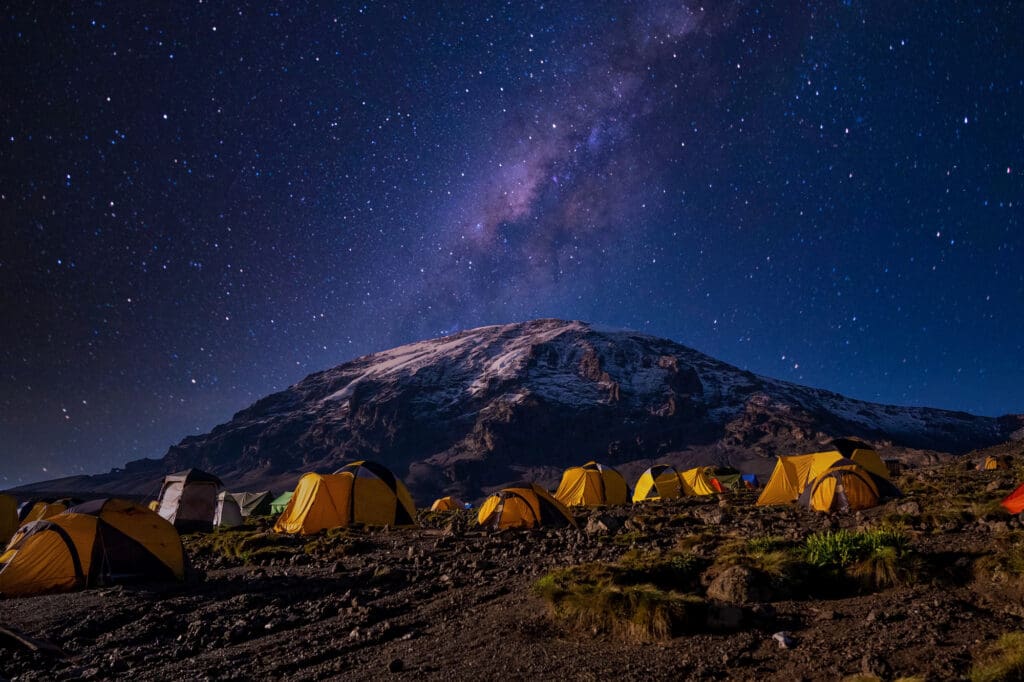
- Climb Mount Kilimanjaro and experience the unforgettable achievement of reaching Africa’s highest peak.
- Escape to Zanzibar for turquoise waters, white-sand beaches and the character of Stone Town.
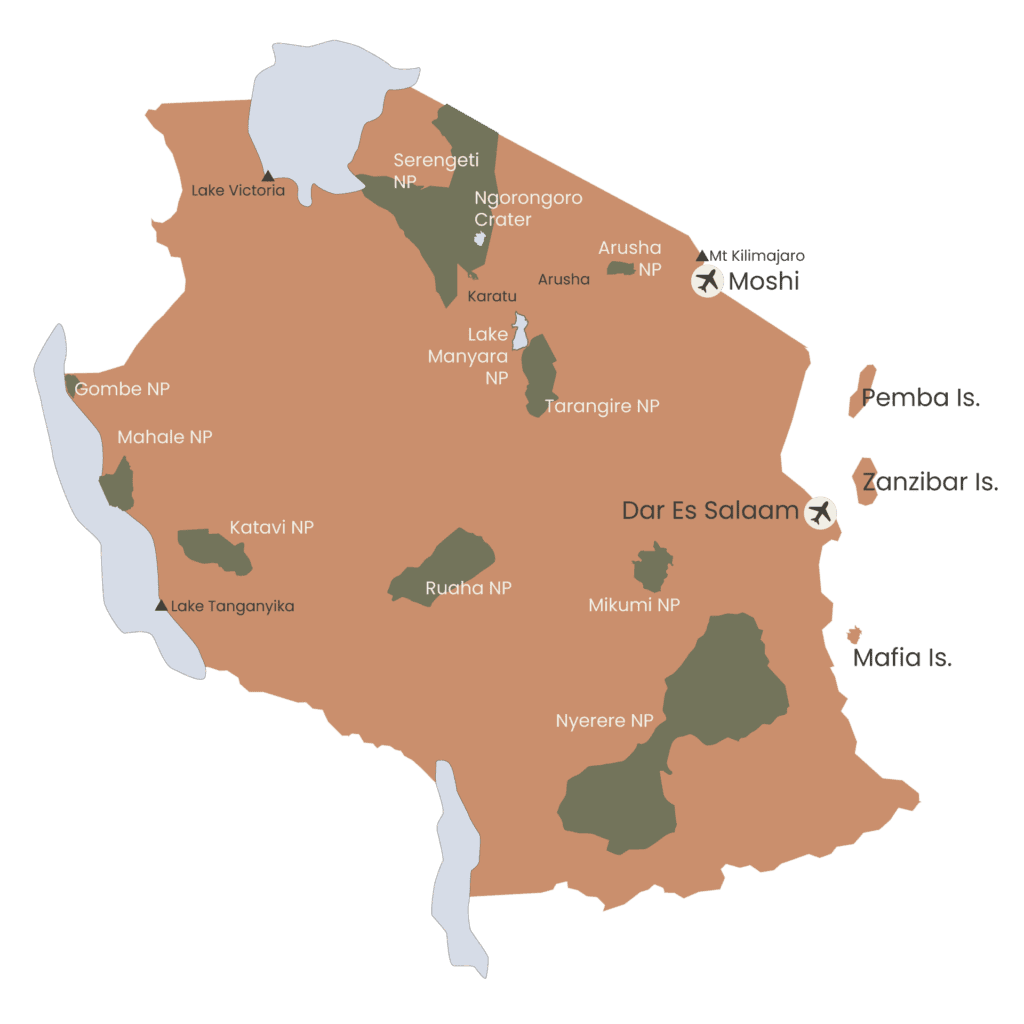
Top Attractions and Activities
Where To Go?
Tanzania is a country of incredible variety, with each region offering a distinctly different experience. From the wildlife-filled plains of the Serengeti and dramatic Ngorongoro Crater to the baobab landscapes of Tarangire and remote wilderness of Ruaha, there is far more to discover than the Great Migration alone. Add the slopes of Mount Kilimanjaro and the tropical shores of Zanzibar, and Tanzania offers an extraordinary mix of safari, scenery, adventure and island escapes. Here are some of the best places to include in your Tanzania journey.
EXPLORE Serengeti National Park
Savannahs & Wildlife
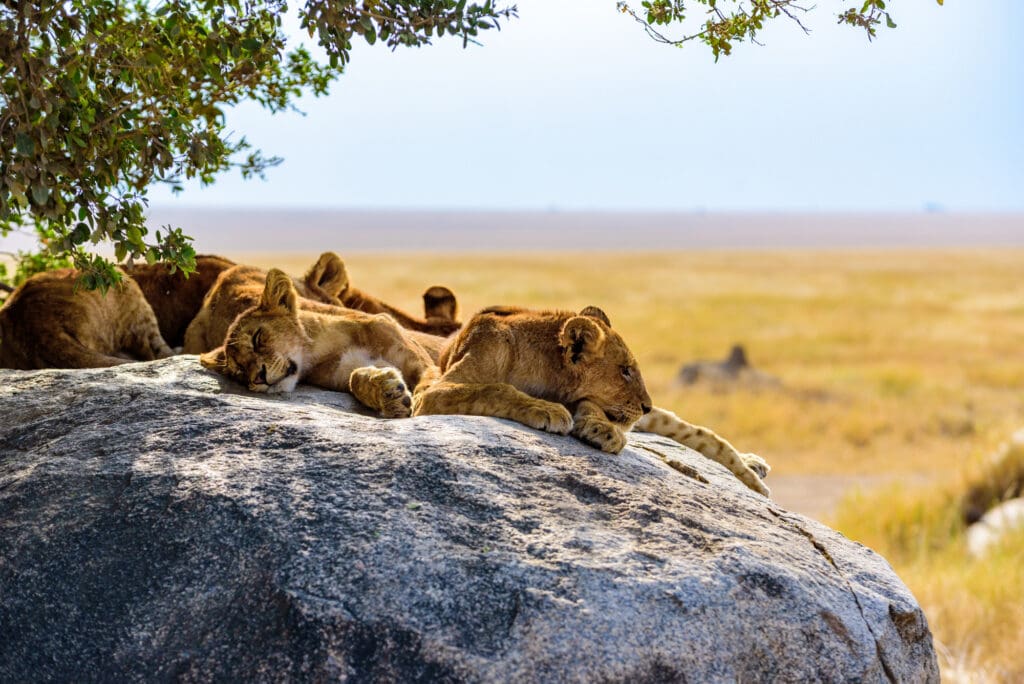
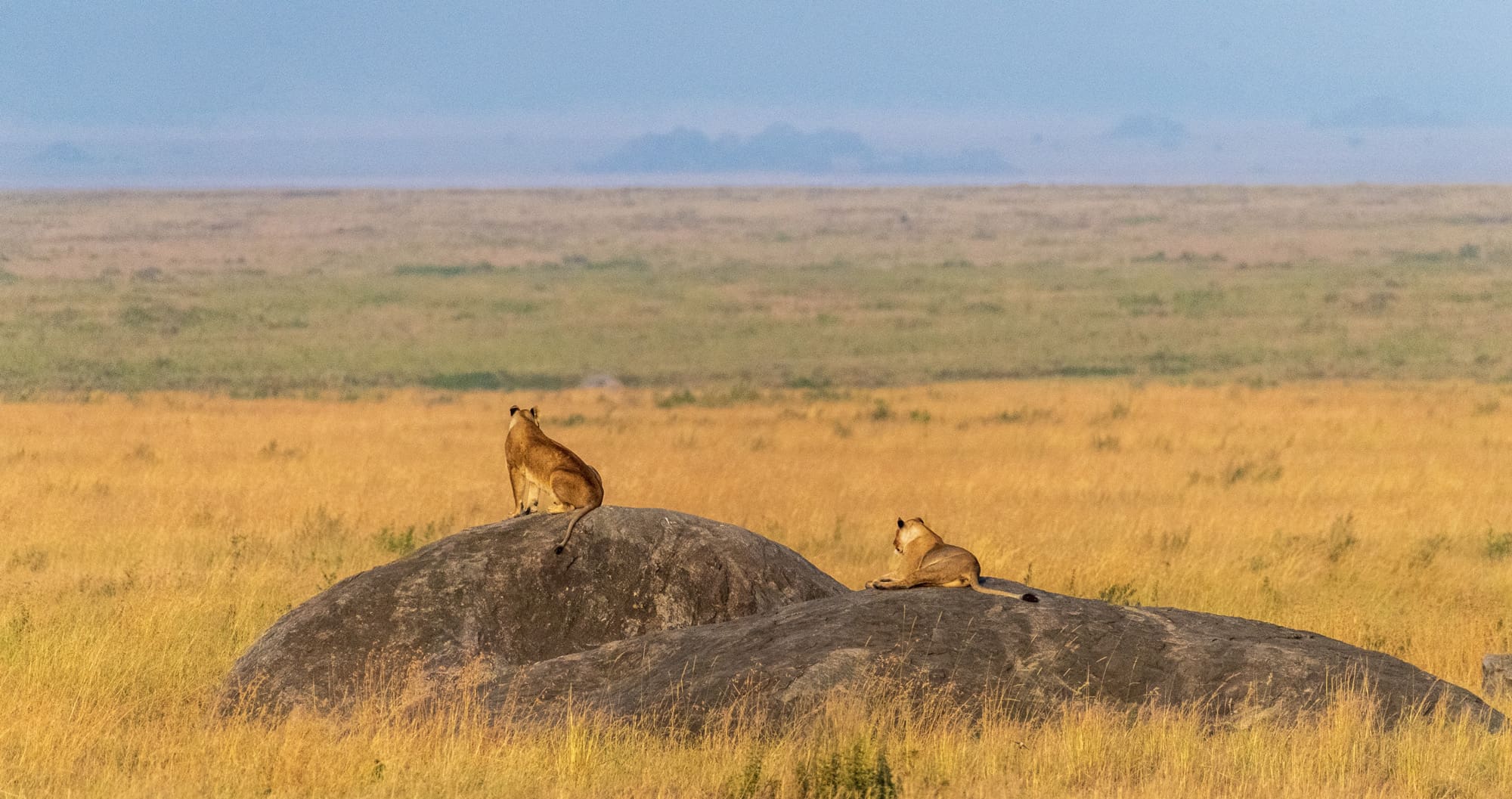
Journey into the Serengeti National Park, where vast grasslands, sweeping horizons and abundant wildlife create one of Africa’s most iconic safari settings. Game drives across these legendary plains reveal lions, elephants, giraffes, cheetahs and countless other species, while the Great Migration brings extraordinary wildlife encounters at different times of year. Beyond the migration, the Serengeti’s sheer scale, beautiful landscapes and incredible concentration of wildlife make every safari here feel wonderfully wild and unforgettable.
EXPLORE Zanzibar Island
White Sand Beaches & Culture
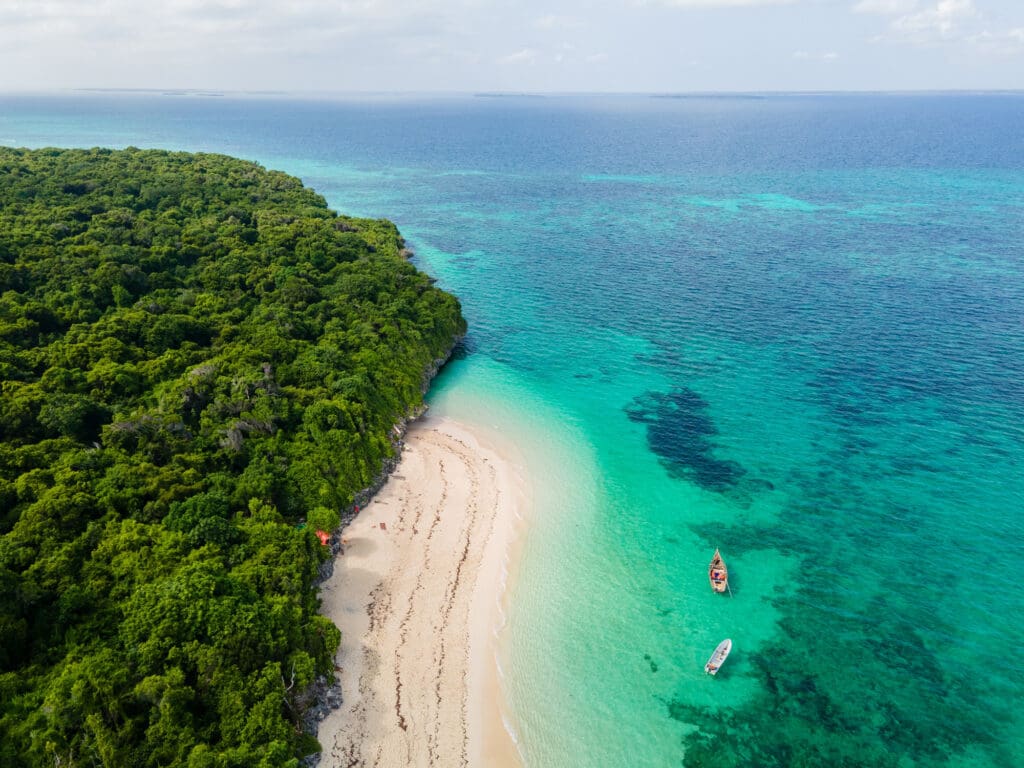
Zanzibar, where white-sand beaches, turquoise waters and swaying palms offer the perfect contrast to a Tanzanian safari. Explore the winding streets and rich heritage of Stone Town, or simply slow down beside the warm Indian Ocean. With its laid-back island atmosphere, vibrant culture and beautiful coastline, Zanzibar is an unforgettable place to end your Tanzania journey.
EXPLORE Ngorongoro Crater
Wildlife & Wonder
One of Tanzania’s most rewarding safari destinations and an easy addition to a northern circuit itinerary. Descend to the crater floor for excellent game viewing, with the chance to see a remarkable variety of wildlife within a relatively compact area. Combined with impressive scenery and its convenient location between Tarangire and the Serengeti, Ngorongoro is a highlight of any Tanzania safari.
Seasons & Temperatures
When To Visit
Tanzania is vast, so the best time to visit depends on which “circuit” you are exploring and what you hope to experience. The northern parks, southern wilderness areas, Mount Kilimanjaro and Zanzibar each have slightly different seasonal patterns, so there is no single perfect month for every journey. Generally, the drier months offer excellent safari conditions, while the greener seasons bring lush landscapes, fewer visitors and their own rewarding wildlife experiences.
BEST SEASON.
Northern Circuit
Dry Season - June To October
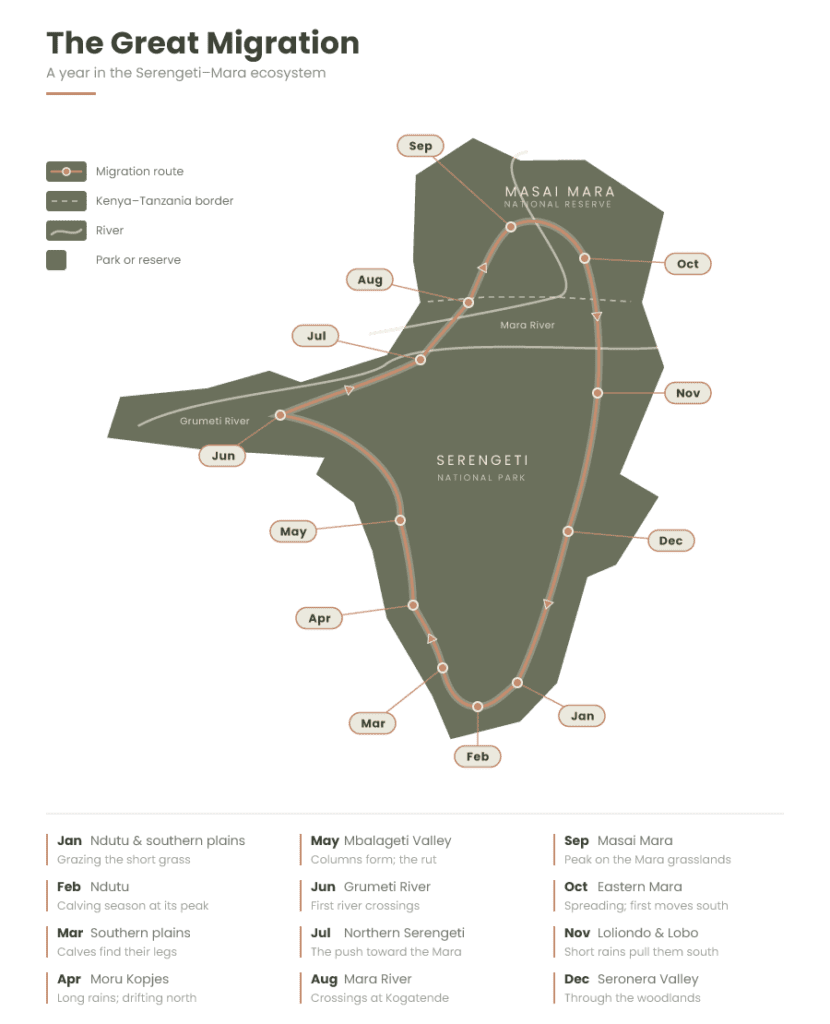
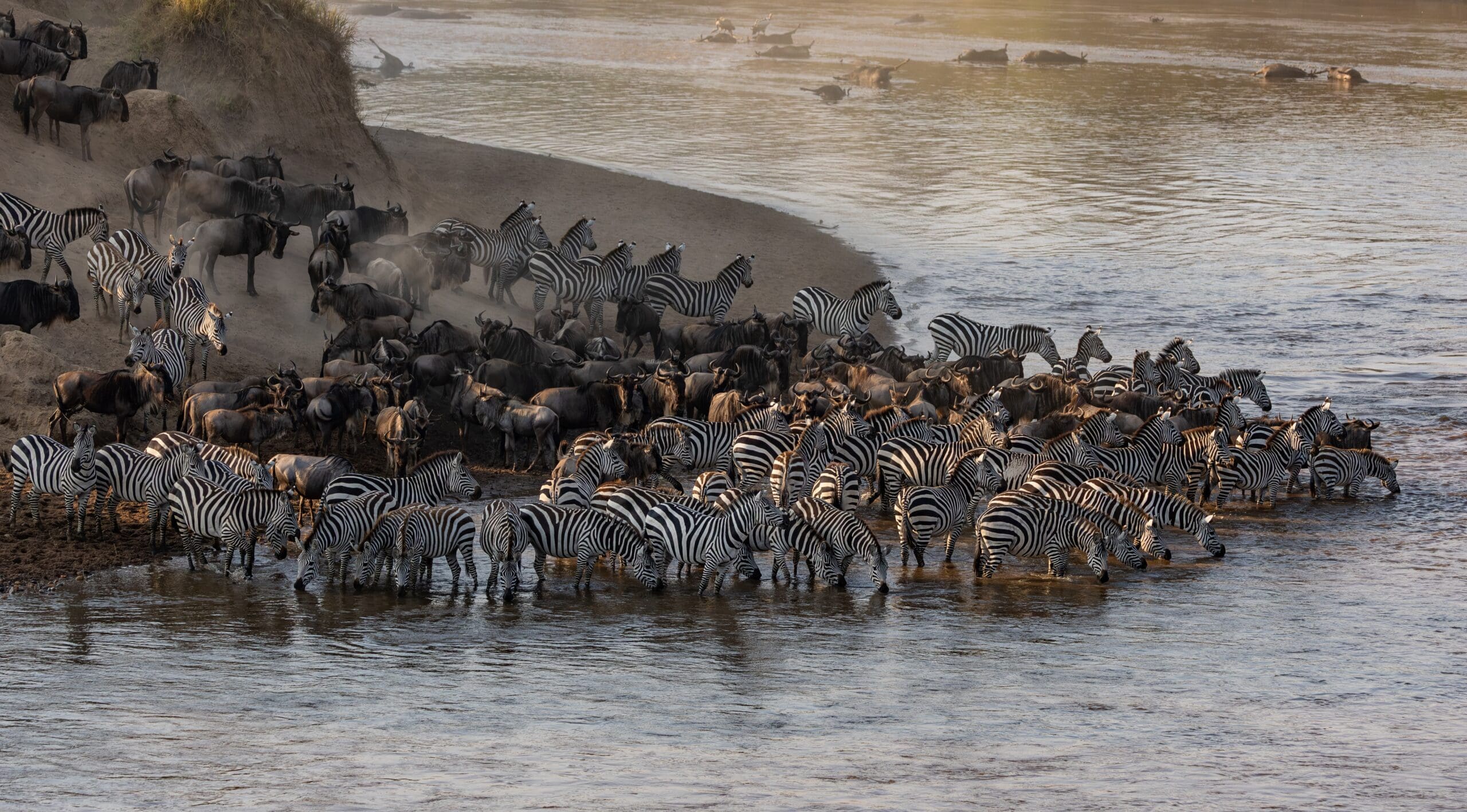
For the Northern Circuit (Serengeti, Ngorongoro & Tarangire), the Dry Season (June to October) is generally one of the best times to visit, with dry conditions, thinner vegetation and wildlife gathering around permanent water sources. Tarangire is particularly rewarding during these months, when large numbers of elephants and other animals are drawn to the Tarangire River. In the Serengeti, the Great Migration follows a seasonal cycle. The calving period takes place on the southern plains around January and February, while the herds move west and north as the year progresses. Grumeti River crossings can occur around June and July, with the famous Mara River crossings in the northern Serengeti generally taking place from July through October. Exact timings vary each year according to rainfall and grazing conditions.
Average temperatures: During the June to October dry season, daytime temperatures across the Northern Circuit are generally around 25°C to 28°C, with mornings and evenings considerably cooler. Ngorongoro’s higher elevations can feel particularly cold, while lower-lying Tarangire is typically warmer.
Southern Circuit
Dry Season - June To October
For the Southern and Western Parks (Ruaha & Katavi), the Dry Season (June to October) is generally the best time to visit. As the landscape dries and vegetation thins, wildlife gathers around the remaining rivers and water sources, making animals easier to find and creating excellent game-viewing opportunities. In Ruaha, wildlife increasingly concentrates around the Great Ruaha River, while Katavi is particularly rewarding during the heart of the dry season. The dry months also provide better access to the more remote areas of these parks. During the wetter months, particularly from March to May, some roads and tracks can become difficult or impassable and a number of seasonal camps may close. In the Serengeti, the Great Migration follows a seasonal cycle. The calving period takes place on the southern plains around January and February, while the herds move west and north as the year progresses. Grumeti River crossings can occur around June and July, with the famous Mara River crossings in the northern Serengeti generally taking place from July through October. Exact timings vary each year according to rainfall and grazing conditions.
Average temperatures: During the June to October dry season, daytime temperatures in Ruaha generally range from around 29°C to 34°C, with cooler mornings and evenings of approximately 16°C to 21°C. Temperatures gradually increase as the dry season progresses, with September and October typically feeling warmer than June and July.lower-lying Tarangire is typically warmer.
GOOD SEASON.
Northern Circuit
We Season - November to May
For the Northern Circuit (Serengeti, Ngorongoro & Tarangire), the Green Season (November to May) brings a very different safari experience. The short rains usually arrive during November and December, followed by a generally drier period in January and February before the longer rains develop from March into May. Landscapes become beautifully green, birdlife is excellent and the parks can feel quieter outside the festive and calving-season peaks. January and February are particularly rewarding in the southern Serengeti, where the Great Migration gathers across the short-grass plains for the annual calving season. Ngorongoro remains an excellent year-round wildlife destination, while Tarangire becomes greener and wildlife disperses more widely as seasonal water sources return. March to May brings heavier rainfall, particularly during April and May, when some roads can become muddy and certain seasonal camps may close.
March to May Average temperatures: Across the Northern Circuit, daytime temperatures during this period are generally around 25°C to 30°C, with mornings and evenings cooler. January and February can reach around 28°C to 32°C in warmer areas, while Ngorongoro’s higher elevations remain noticeably cooler. September to November The shorter rainy season brings generally warm conditions, with average daytime temperatures of around 27°C to 28°C and cooler mornings and evenings of approximately 16°C to 18°C. Rainfall is typically less prolonged than during the main March to May rains, while the countryside becomes particularly lush and green.
Southern Circuit
We Season - November to May
For the Southern and Western Parks (Ruaha & Katavi), the Green Season (November to May) brings warmer temperatures, seasonal rains and lush landscapes. Unlike northern Tanzania, these regions experience a more continuous wet season, generally beginning around November and continuing into April. Wildlife becomes more dispersed as water becomes widely available, but the season offers excellent birdlife, green scenery and a quieter safari experience. As the rains intensify, particularly from March into May, travelling in these remote parks can become more challenging. Some roads and tracks may become difficult or impassable, while a number of seasonal camps close during the wettest months. For travellers considering a green-season safari in the south or west, November and the earlier part of the wet season can therefore offer more practical conditions than the peak rainy months.
Average temperatures: The southern and western parks are generally warm during the Green Season, with daytime temperatures often approaching 30°C or above. Conditions can also feel more humid during the wetter months, with temperatures cooling overnight and following rainfall.
Planning your Tanzania Safari
Before You Go
01
Choose Your Tanzania Experience
Consider what you would most like to experience, from wildlife-filled game drives and the Great Migration to climbing Mount Kilimanjaro or unwinding on Zanzibar’s beaches. Your interests will help shape the perfect route and pace.
02
Find the Right Time to Travel
Tanzania offers rewarding experiences throughout the year, but the best time depends on your chosen destinations, wildlife priorities and budget. Seasonal changes can influence animal movements, scenery, visitor numbers and the overall safari experience.
03
Plan With a Tanzania Expert
Work with one of our Tanzania travel specialists to create a personalised itinerary suited to your interests and travel style. We’ll help arrange your accommodation, transport, safari activities and special touches, making the entire journey feel effortless.
Tanzania brings together an incredible variety of experiences in one diverse destination. Combine classic wildlife safaris, the Great Migration, remote wilderness, Mount Kilimanjaro, cultural encounters and Zanzibar’s beaches in a journey shaped around you.
Explore the Serengeti, descend into Ngorongoro Crater, watch elephants beneath Tarangire’s baobabs or discover the quieter wilderness of Ruaha. Add a Kilimanjaro adventure, a tropical island escape or both.
Whether you prefer an in-depth safari, active adventure, relaxing beach break or a combination of experiences, Tanzania offers the freedom to create a truly unforgettable journey.
DO I NEED A VISA FOR TANZANIA?
Visa requirements depend on your nationality. Many international travellers require a tourist visa, which can usually be obtained through Tanzania’s official eVisa system before travel. Your passport should generally be valid for at least six months. We recommend checking the latest entry requirements for your nationality before departure.
DO I NEED ANY VACCINATIONS FOR TANZANIA?
Vaccination requirements depend on where you are travelling from and your recent travel history. A yellow fever certificate may be required if arriving from, or transiting for an extended period through, a yellow-fever-risk country. Malaria is also present in Tanzania, so travellers should speak to a doctor or travel clinic about appropriate precautions and recommended vaccinations before travelling.
HOW DO I GET TO TANZANIA?
Tanzania is well connected internationally, with flights arriving through major gateways including Kilimanjaro International Airport, Julius Nyerere International Airport in Dar es Salaam and Zanzibar. Your best arrival airport will depend on whether your journey focuses on the northern safari circuit, southern Tanzania, Kilimanjaro or Zanzibar.
WHAT SHOULD I PACK FOR TANZANIA?
Pack lightweight, comfortable clothing in neutral colours for safari, together with a warm layer for cool mornings and evenings. Comfortable walking shoes, sun protection, insect repellent and a hat are useful essentials. If you are visiting Zanzibar or climbing Kilimanjaro, your packing requirements will differ, so pack according to your itinerary.
WHAT CURRENCIES & PAYMENT CARDS ARE ACCEPTED IN TANZANIA?
The local currency is the Tanzanian Shilling (TZS). Cash remains useful for smaller purchases and tips, while major hotels, lodges and tourism businesses commonly accept international payment cards. It is a good idea to travel with more than one payment option and carry some local currency for smaller expenses.
Did You Know?
Nothing else on earth moves quite like this. Close to two million wildebeest, zebra and gazelle turn one vast circle through the Serengeti and the Mara, and have done so far longer than there have been names for the ground they cross. It is not a journey with a destination. The herds follow the rain, and the rain keeps no calendar — only its word. What the map sets out is the shape of an ordinary year: where the herds stand, and what they are about.
Find Your Journey
Ready to experience Tanzania? Follow wildlife across the Serengeti, explore breathtaking wilderness, climb Kilimanjaro or unwind in Zanzibar. Browse our Tanzania tours below and start planning your perfect journey.
 USD 4,240
/ person sharing
Tanzania Signature Safari
Duration
7 Days
Trip Type
Private Guided
 USD 7,320
/ person sharing
 USD 4,920
/ person sharing
Great Migration Safari - Mara River
Duration
7 Days
Trip Type
Private Safari
 USD 5,350
/ person sharing
Great Migration Safari - Ndutu Plains
Duration
9 Days
Trip Type
Private Safari
 USD 3,480
/ person sharing
Selous (Nyerere) Experience
Duration
5 Days
Trip Type
Private Safari
Trip Inspiration
Follow the Great Migration across the Serengeti, experience exceptional wildlife within the Ngorongoro Crater and explore Tarangire’s baobab-filled landscapes. Venture south to the wild beauty of Ruaha, climb Mount Kilimanjaro or unwind beside the turquoise waters of Zanzibar. This is Tanzania…
The Complete Tanzania Safari Guide
One could almost imagine that the term “wanderlust” was born in Tanzania.
Unlike its safari neighbours, this magnificent African country is a place that exists in 2 worlds; in one, it is a world-class place for a luxury, sightings-filled safari, and in the other, it is an alluring and desired tropical destination, complete with sandy beaches and almost stereotypical swaying palm trees.
When I picture Tanzania, I think of a Land Rover moving slowly across dry, crunchy savannah, following a herd of uninterested giraffe, and I also have this hazy vision of walking along a beach showered in a pink-gold light at sunset, with the smell of spices drifting through the air.
Tanzania is an enigma that has become the best place for a luxury African holiday.
BLOG
Ask Our Travel Concierge, Chobi!
Chat To Us
From your first idea to the final detail, our team is here to craft a remarkable African adventure – shaped by expertise and inspired by Africa itself. Tell us about the experience you’re imagining, and one of our experts will reach out to turn it into a truly bespoke African journey.
SCHEDULE A 30 MINUTE MEETING
Not sure where to begin planning your African adventure? Schedule a complimentary 30-minute chat with one of our Africa travel consultants.
1. Choose your preferred length — 15 minute quick questions, or 30 minute proper conversation.
2. Pick a date and time that suits you; adjust the timezone dropdown if you’re elsewhere.
3. Share a few details about the journey you have in mind.
4. One of our travel consultants will confirm your booking by email and be in touch at the appointed hour. No cost, no obligation — just expert counsel. You’ll receive a calendar invitation and a reminder beforeyou meet.
Hello, where shall we take you?
Describe your travel vibe and discover epic regions & crafted itineraries. Africa is here!
Tell our Travel Concierge (Chobi) your dates, budget and dreams… your Safari Aura — it knows every highlight we see, every destination we visit, every safari we run, and every experience we offer.
our relationship with artificial intelligence ATC & AI | Review our Privacy Policy
Chobi Travel Concierge
Continue on full page?