Table of contents
- 0.1 This is our definitive guide to seeing a country that we deeply love, Tanzania.
- 0.2 Did you know?
- 1 Why Tanzania Suits a First Safari so Well
- 2 The Best Time to Travel to Tanzania
- 3 Where to Go on Your First Trip
- 4 Why Private Concessions are the Ultimate Luxury Upgrade
- 5 Climbing Kilimanjaro
- 6 Planning Your Tanzania Tour – The Practical Handbook
- 6.1 Visas and entry requirements
- 6.2 Health and vaccinations
- 6.3 Money, Costs and Tipping
- 6.4 Getting Around Tanzania
- 6.5 Experience the Most Extraordinary Trip to Tanzania!
- 6.5.1 Do first-time visitors need a visa for Tanzania?
- 6.5.2 What is the best time of year for a first Tanzania safari?
- 6.5.3 How many days should a first Tanzania itinerary include?
- 6.5.4 Is Tanzania a good destination for multi-generational family travel?
- 6.5.5 What should first-time visitors pack for a Tanzania trip?
One could almost imagine that the term “wanderlust” was born in Tanzania.
Unlike its safari neighbours, this magnificent African country is a place that exists in 2 worlds; in one, it is a world-class place for a luxury, sightings-filled safari, and in the other, it is an alluring and desired tropical destination, complete with sandy beaches and almost stereotypical swaying palm trees.
When I picture Tanzania, I think of a Land Rover moving slowly across dry, crunchy savannah, following a herd of uninterested giraffe, and I also have this hazy vision of walking along a beach showered in a pink-gold light at sunset, with the smell of spices drifting through the air.
Tanzania is an enigma that has become the best place for a luxury African holiday.
The country is absolutely massive, and the experiences you can have here range from safaris during the Great Migration to secluded getaways so far away from everything that you can be fully yourself and live completely in the moment, especially if you decide to plan your trip from an unconventional perspective.
This is our definitive guide to seeing a country that we deeply love, Tanzania.
Did you know?
- Tanzania formed in 1964 from the union of Tanganyika and Zanzibar
- It is home to Kilimanjaro, Africa’s highest peak, and no technical climbing skills are required to reach the summit
- The Great Migration moves between the Serengeti and Kenya’s Maasai Mara every year
- Around 38% of the country is protected land
- Swahili and English are both official languages
- Zanzibar was once the world’s largest clove producer
- US dollars are widely accepted alongside Tanzanian shillings
- Ngorongoro Crater is the world’s largest inactive volcanic caldera
Why Tanzania Suits a First Safari so Well
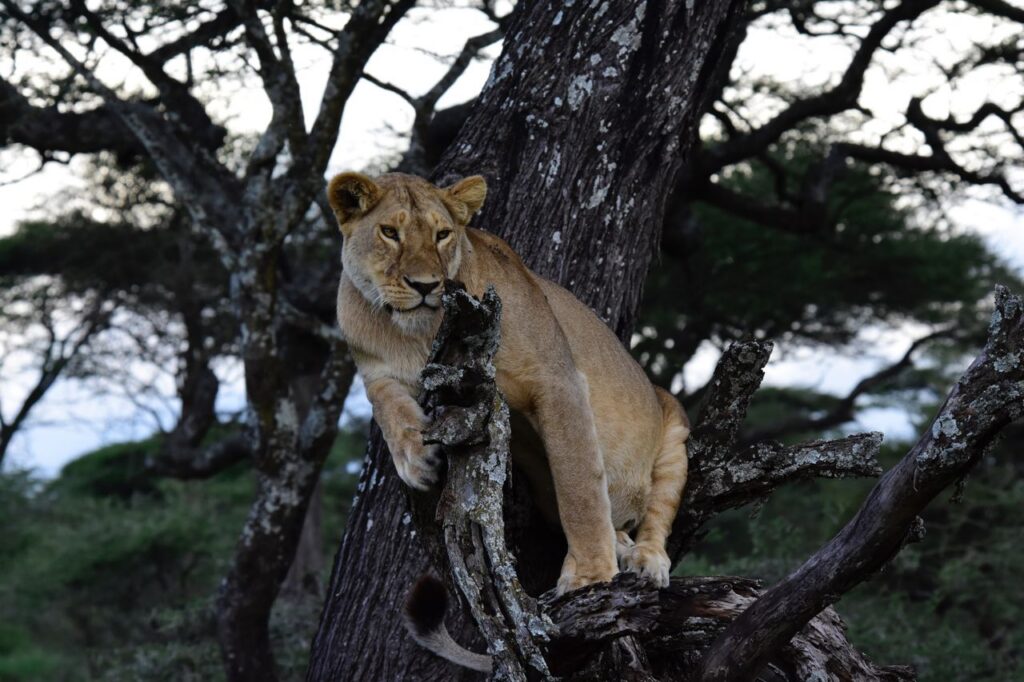
Did you know that the Serengeti has one of Africa’s highest lion densities, along with sizeable populations of leopard, elephant and buffalo, alongside a closely protected population of black rhino?
You might be unfamiliar with Tanzania, but I am sure that you’ve heard of the Serengeti.
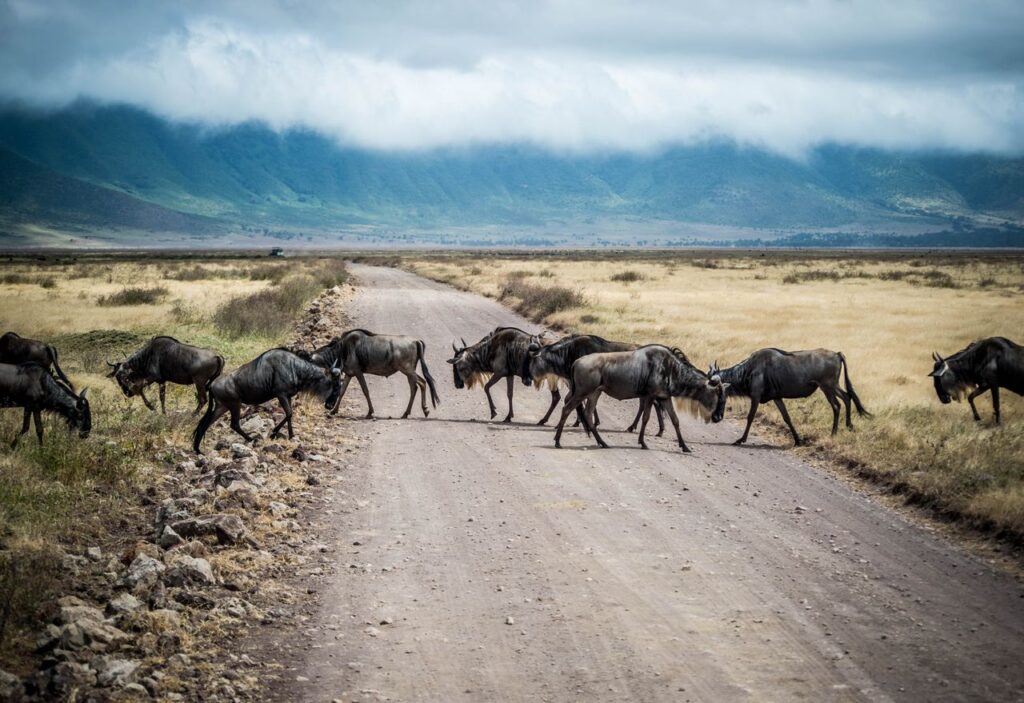
The Serengeti, a huge grassy expanse that gives travellers kilometres of unobscured wildlife sightings, and Ngorongoro Crater have become two of the most photographed places in Africa.
They are Tanzania’s quintessential safari destinations, and both are excellent places to go for first-time visitors.
The wildlife sightings are out of this world, the camps are well-established, and a first-time traveller can move between ecosystems of plains, craters, forests and coasts, all within a single well-planned trip.
There’s also a variety of safari experiences to enjoy here, and the country has also become a wonderful place for anyone travelling with different generations at once.
Walking safaris are permitted more widely here than in neighbouring Kenya, and children from around eight years old can join a short guided walk with a trained ranger.
Private safaris are also extremely popular here, making it easy to plan trips that require a little more personal attention or flexibility.
And none of this requires having previous safari experience. You only need a little planning, which is exactly what the rest of our comprehensive guide to Tanzania covers.
The Best Time to Travel to Tanzania
Tanzania is on Africa’s east coast and its climate is very similar to that of the Kruger National Park.
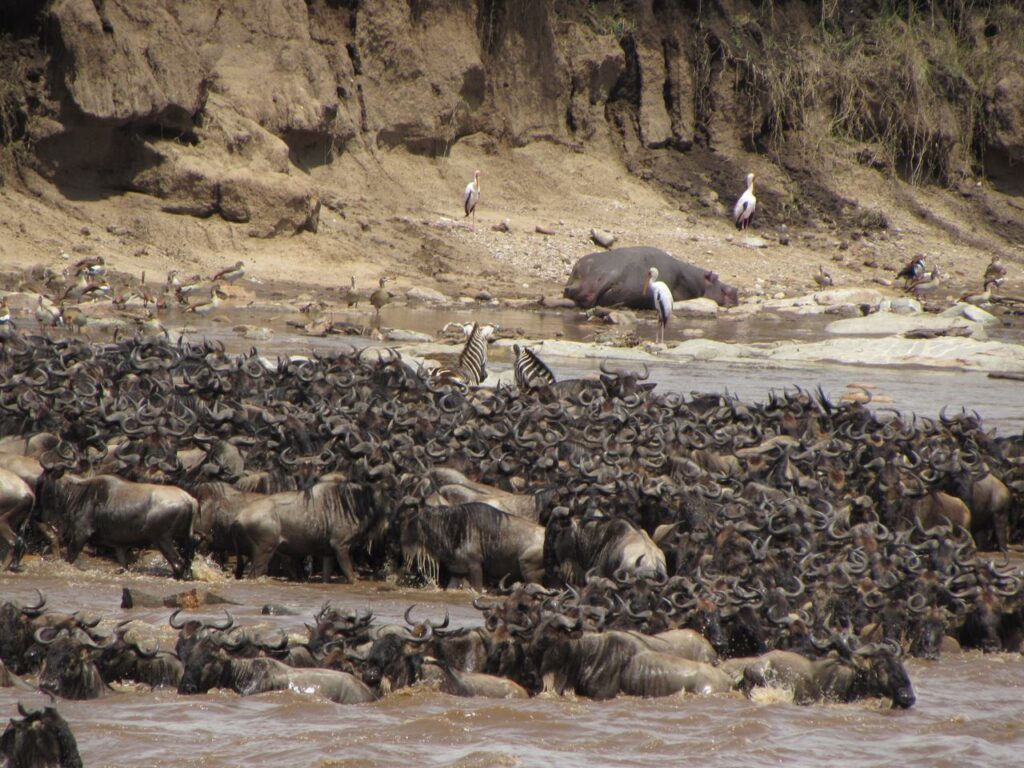
Most first-time visitors have the best experience when travelling to Tanzania in the dry months between June and October, when the wildebeest migration pushes north towards Kenya’s Maasai Mara and camps fill with travellers hoping to see a river crossing.
It is one of the greatest spectacles in all of Africa and it is so popular with travellers that booking a year or more ahead is normal.
January into February, when the herds gather on the southern plains around Ndutu to calve, is another great time for a safari, especially as it is off-peak.
Around eight thousand wildebeest calves are born here each day at the height of the season, watched closely by lions and cheetahs, who can just barely be spotted in the long, swaying grass.
Camps and lodges usually have next to no visitors at this time of the year so rates often drop, and within the Ngorongoro Conservation Area, off-road driving is permitted during this period, so guides have a lot more freedom to get up close and stay with a sighting for as long as it lasts.
The Central Serengeti, around Seronera, has wildlife all year round, since its lion population has no need to follow the rains.
In all honesty, you just can’t go wrong with picking the “best” month to visit Tanzania. This country is spectacular all year round.
Where to Go on Your First Trip
Tanzania is the biggest country in east Africa. It is larger than Kenya and Rwanda put together! This comparison should give you a good idea of just how big it is:
| Country | Size | Roughly equivalent to |
| South Africa | 1,221,037 km² | About five times the size of the UK |
| Tanzania | 945,087 km² | Nearly four times the size of the UK |
| Namibia | 825,615 km² | Just over three times the size of the UK |
| Zambia | 752,618 km² | About three times the size of the UK |
| Botswana | 581,730 km² | Roughly two and a half times the UK |
| Kenya | 580,367 km² | Roughly two and a half times the UK |
| Zimbabwe | 390,757 km² | About one and a half times the UK |
And it’s the size that makes the safari circuit both very different to its neighbours and rather important to give extra thought to during your planning, because you don’t want to spend a good chunk of your precious time on transfers.
The upside is that regardless of where you decide to travel, Tanzania never disappoints and for a first time trip.
The Northern Circuit: Serengeti, Ngorongoro and Tarangire
In general, most itineraries focus entirely on the northern circuit: the Serengeti, Ngorongoro Crater and often Tarangire, three parks close enough together to visit within one trip without excessive time spent on transfers.
Ngorongoro Crater is a fascinating self-contained world, 260 square kilometres enclosed by natural volcanic caldera walls that rise more than 600 metres.
The crater is home to an estimated 25 000 large animals and close to 100 lions that never leave. And because nothing migrates out, a single day inside all but guarantees sightings of the Big Five.
The Serengeti, on the other hand, is completely the opposite.
It covers close to 15 000 square kilometres, of endless wide open plains where herds of wildebeest or zebra can be seen on any given day.
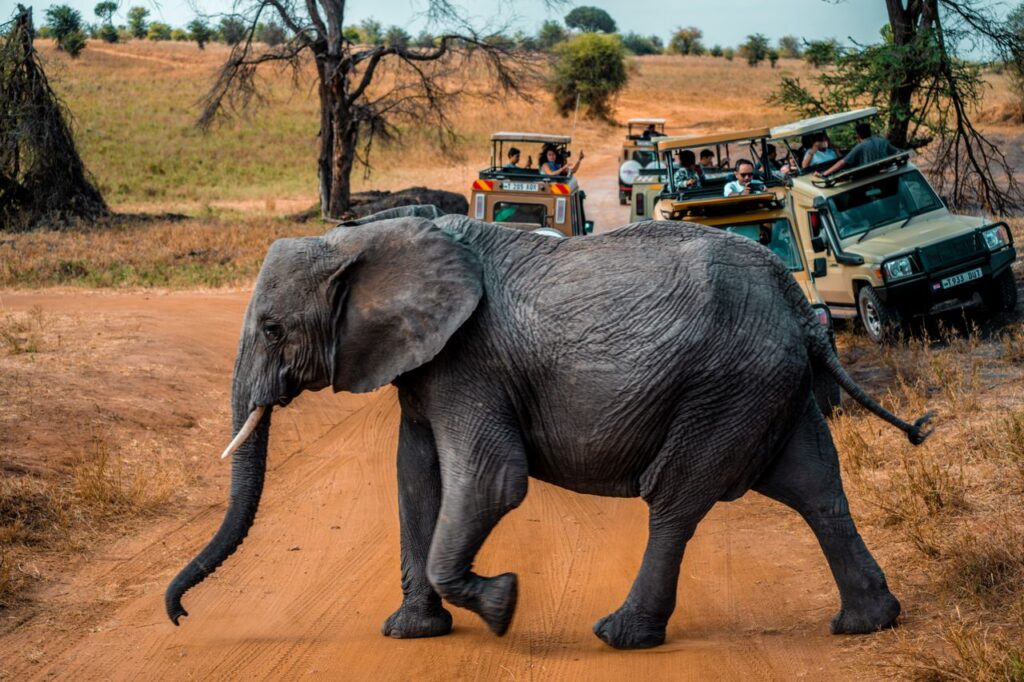
Tarangire, a little further south, adds enormous elephant herds to a tour of the northern circuit, and you’ll see some of Africa’s oldest baobab trees, rounding off an absolutely perfect week or two on safari.
Why Private Concessions are the Ultimate Luxury Upgrade
In the past, luxury looked a lot like fancy on site restaurants, spas and the material good things in life, but as the years have past, what people look for, when planning a luxury trip to Africa, has undergone a complete makeover and is almost unrecognisable.
Luxury safaris are utterly exclusive experiences and a lot of that has to do with the characteristics of a tour, rather than the amenities back at the lodge.
Private concessions, which typically border the national parks, are becoming the place to go for anyone planning a first luxury safari.
While in national parks, there are exceptionally strict rules, such as guides having to stay on roads and night drives being mostly out of the question, private concessions give travellers a lot more freedom and tour packages have a lot more range.
Grumeti Reserves, a 340 000 acre stretch of land managed by Singita along the western Serengeti corridor, is just one example. It allows off-road driving, walking with an armed guide and game drives after sunset.
Another reason why private concessions meet luxury expectations has to do with guest quotas.
To keep an air of exclusivity, most concessions have no more than 6 to 10 tents, ensuring that guests are treated to utmost peace and privacy, while also reducing any possibility of there being a strain on the land.
For first time travellers, staying in a concession is certainly a wonderful choice, but should you decide not to, your tour will still be out of this world. A private concession simply gives travellers who want fewer vehicles at every sighting, and a guide able to shape each day around them, a way to have it.
Climbing Kilimanjaro
You can’t have a guide on Tanzania without talking about Kilimanjaro.
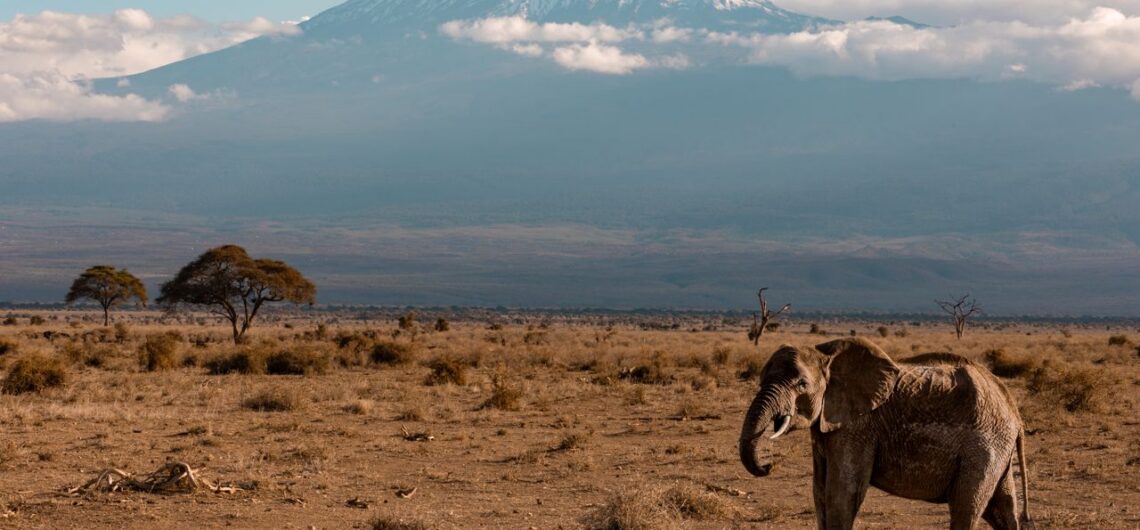
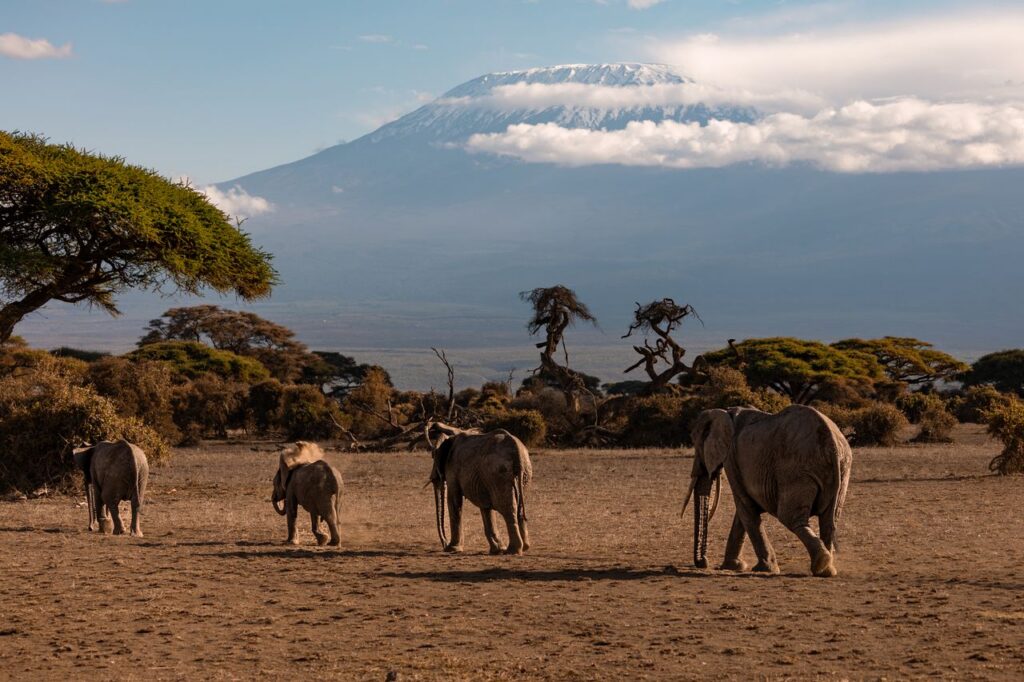
It is a mountain that has intrigued travellers for centuries and there’s nothing that takes your breath away like coming around a corner and seeing its snowy caps. It’s a sight that is completely unexpected in Africa.
Climbing Kilimanjaro is often assumed to require some serious mountaineering experience. But you don’t have to have the spirit of Sir Edmund Hillary to get to the summit.
The main requirement is fitness and enough days on the mountain to adjust to the altitude, since the summit sits nearly 3 500 metres above the trailhead.
For first-time climbers, it is best to take the longer route, like the Lemosho or the Northern Circuit, and to walk it over 7 to 9 days rather than attempt to tackle the shortest 5-day option. Sure, the long way round is slower, but it does give you more of an opportunity to sink into the experience, really notice everything going on around you and it’ll also increase your chances of making it to the top.
You should also make an extra effort to only book your trek with an operator certified by the Kilimanjaro Porters Assistance Project. This organisation sets standards for porter loads, meals and sleeping conditions on the mountain, protecting the very people who make this extraordinary activity possible, while also giving your hike a good purpose.
Planning Your Tanzania Tour – The Practical Handbook
All of the best holidays in Africa begin with some well-thought through planning.
This is the nitty-gritty but completely necessary part of your trip and there’s nothing complicated about it. To make this part even easier for you, it’s worth working with an experienced travel consultant who can guide you through this next part.
Visas and entry requirements
Most international travellers need a visa to enter Tanzania, including visitors from the UK, the US, the EU, Canada and Australia.
A small number of nationalities, including several African countries, are exempt from short stays, though this list changes from time to time.
As with any overseas holiday, you should always confirm directly with Tanzania’s official immigration service before booking flights.
The standard single-entry tourist visa is valid for up to 90 days and can usually be applied for online in advance or obtained on arrival, though applying for the eVisa ahead of travel tends to make travelling so much smoother.
US citizens are generally required to apply for the multiple-entry visa rather than the standard single-entry option.
Passports should be valid for at least six months beyond your date of entry, with at least one blank page free.
Zanzibar does not require a separate visa. It falls under the same Tanzania entry rules as the mainland, so one visa covers both.
The island has, however, introduced a mandatory travel insurance requirement for foreign visitors which applies even to travellers who already hold their own international travel insurance.
Visa fees and entry rules are updated periodically, so keep an eye out for changes in costs.
Health and vaccinations
Tanzania sits firmly in a malaria area. You’ll want to consult your doctor to discuss preventative medication and you’ll want to read up on malaria in general, just as a precaution.
A yellow fever vaccination certificate is only necessary if you are spending more than 12 hours in a yellow fever endemic country, like Kenya, before heading to Tanzania.
Routine vaccinations, along with hepatitis A and typhoid, are recommended when travelling to East Africa.
As for water, you should rather not drink tap water anywhere in Tanzania. Stick to bottled or filtered water throughout your trip. Most luxury camps and hotels provide this as standard.
Money, Costs and Tipping
The US dollar is widely accepted for safari payments, park fees and many hotel bills, though the Tanzanian shilling is the local currency and you’ll need it for smaller purchases, like when visiting the coastal markets.
Notes printed before 2009 are sometimes refused, so have a few newer dollar notes in your wallet.
Tipping is customary, generally expected and mostly importantly much appreciated across the safari and hospitality industry.
As a general guide, you can budget somewhere in the region of 15 to 20 US dollars per day for a safari guide, with a smaller amount for camp staff, though individual camps often provide their own suggested guidelines on arrival.
Getting Around Tanzania
Kilimanjaro International Airport, near Arusha, is the main gateway for the northern safari circuit and the most common first stop for international arrivals.
From there, small aircraft can connect you to airstrips near most safari camps, cutting what would be a long road transfer down to a short flight.
Zanzibar also has its own international airport, and flights between the mainland safari circuit and the coast run several times a day, usually taking around 2 and a half hours including the connection through Arusha or Dar es Salaam.
Experience the Most Extraordinary Trip to Tanzania!
Most international visitors need a visa, including travellers from the UK, US, EU, Canada and Australia. The standard single-entry tourist visa allows a stay of up to 90 days and can be applied for online in advance or arranged on arrival, though applying ahead tends to be the smoother route. A small number of nationalities are exempt, and it’s worth confirming current rules before booking.
Tanzania has two distinct dry seasons rather than one: June to October for the wildebeest migration, and January to February for the calving season on the southern plains. The Central Serengeti holds strong resident wildlife throughout the year, so there genuinely isn’t a wrong month, only the one that suits the kind of trip a traveller wants.
Most first-time itineraries built around the northern circuit run comfortably at seven to ten days. This allows enough time to move between the Serengeti, Ngorongoro Crater and Tarangire without the trip becoming a series of transfer days, and leaves room to add a beach extension on the coast.
Yes. Tanzania permits walking safaris more widely than many neighbouring countries, so children from around eight years old can join a short guided walk while grandparents keep to a gentler morning drive. A private vehicle and guide, rather than a shared one, lets each day bend around whoever in the group needs it most.
Layers are essential, since safari mornings and evenings turn cool even in warmer months, along with neutral coloured clothing, a hat, sunglasses and binoculars. For a coastal extension, light cotton clothing and something to cover shoulders and knees for visits to Stone Town or local villages are worth adding to the case.