Table of contents
Somewhere past midnight, in a camp along one of the delta’s quieter channels, the sound that carries furthest is rarely the roar of a lion.
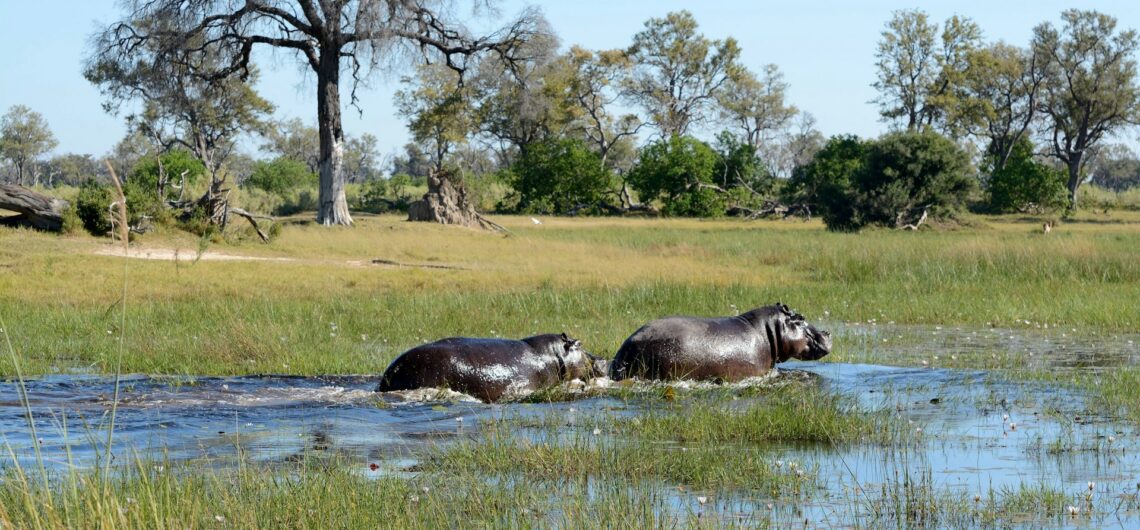
Instead, it is the low, conversational grunt of a hippo working its way along the water, completely unfazed by the deep darkness and entirely at home among the reeds and with water up to its belly.
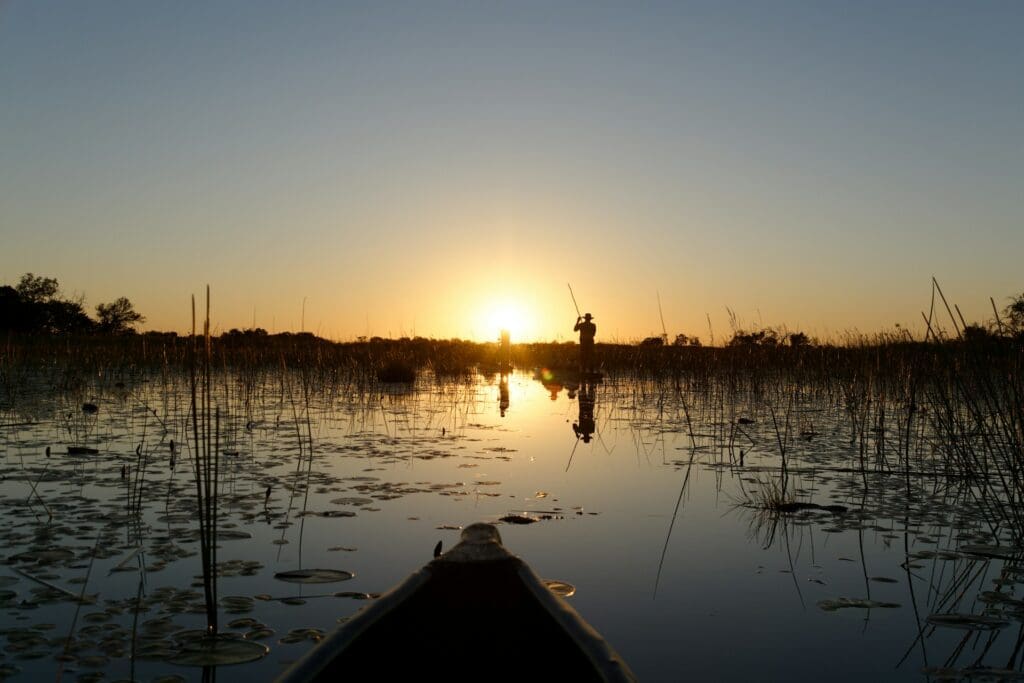
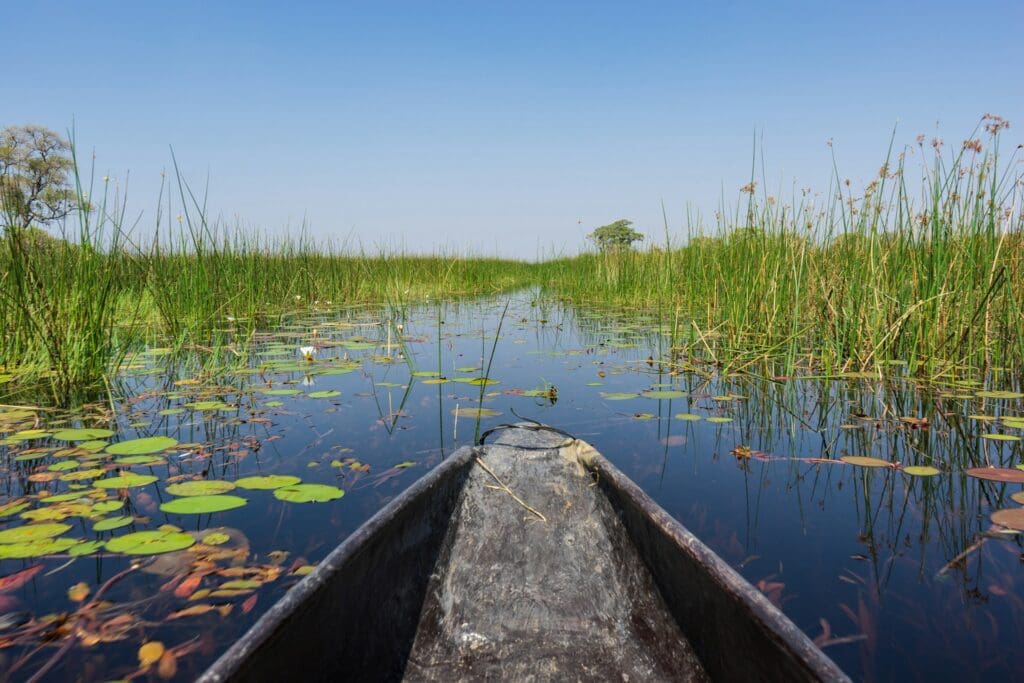
By morning, the same channel might carry a mokoro instead, its poler standing at the stern, following his instinct and the currents, rather than consulting a map.
If ever God made paradise on earth, I like to imagine that he made the Okavango Delta with that intention.
It is a wetland completely out of place in the natural world, an oasis in the middle of a desert, a river that ends abruptly in the sand rather than reaching an ocean, and one of the last places in Africa where the wild outnumbers the tame.
For anyone planning a Botswana safari, the Okavango Delta is not a stop on the itinerary.
It tends to be the very reason for the whole trip.
The Wildlife of the Okavango Delta
The delta is in many ways just like any other wildlife destination in Africa.
The wildlife moves when and as they please, with no regard to schedules or tourist itineraries.
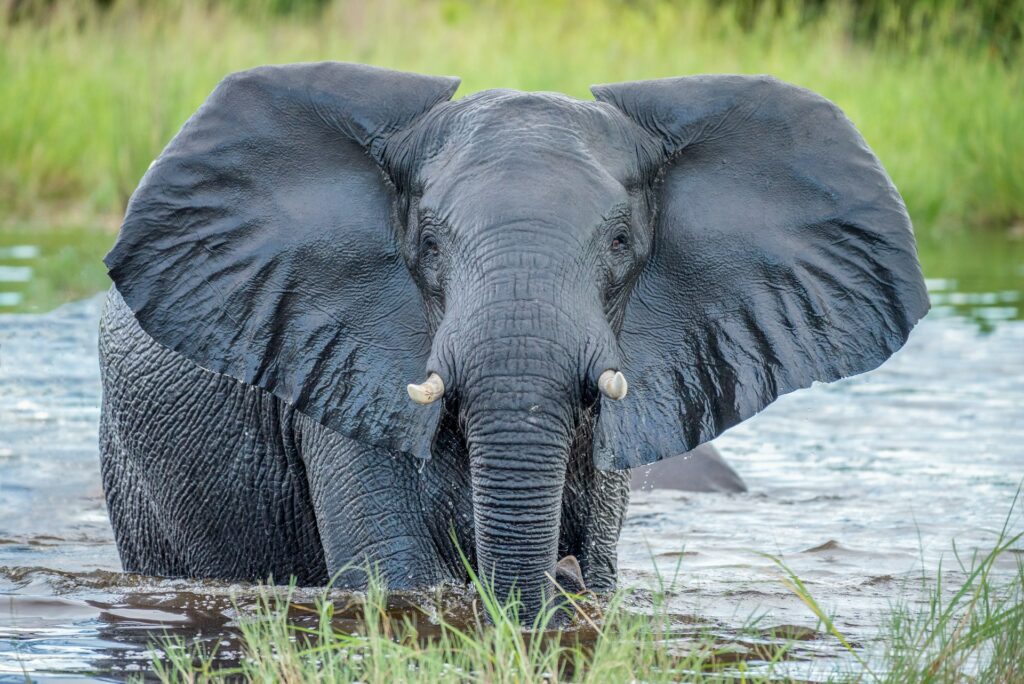
Elephants walk across floodplains that were dry land only months earlier. Lechwe leap through shallow water with a bounding grace built for exactly this terrain. And African wild dogs, also known as painted wolves and which are increasingly endangered, still den here in numbers that have all but disappeared from much of the rest of the continent.
Like other safari destinations, none of these sightings come with guarantees, and any operator who promises otherwise is not being entirely straight with you.
What is reliable, and what makes the delta so different, is variety.
When planning a trip here, you need to almost disregard everything you thought you knew about what a safari should look like, because your experience out in the wild will be anything but conventional.
On a single game drive, you can move from reed bed to island to open water, changing what is possible to see almost by the hour.
You can expect to be away from your lodge for the whole day rather than spending a few hours here and there looking for animals, in the early morning and late afternoon. Unlike more frequented destinations, like the Kruger National Park, wildlife in the delta can be a lot more spread out, requiring you to be on your toes and to spend more time in the surrounding nature.
That said, your time here will never give you a moment to be bored.
Birders in particular tend to leave the delta with far longer lists than they arrived with, given the delta’s standing as one of the richest birding regions in Southern Africa.

Getting There and When to Travel
While a million people might visit the Kruger each year, the Okavango Delta only sees about 100 000 people passing through its waterways.
In all of Southern Africa, it is safe to say that this is one of the more intrepid destinations and getting to it really is half the fun.
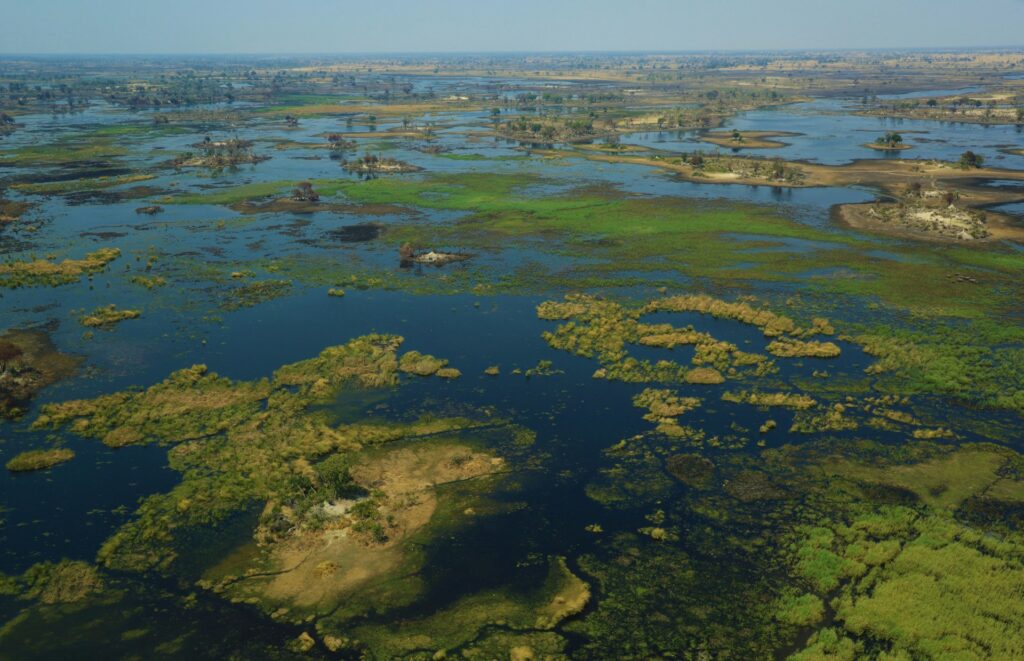
Most visitors arrive by light aircraft, and getting to see the delta from above, watching as a green maze stitched together by silver water comes into view, is an experience all of its own. You’ll definitely want to have a window seat for this flight!
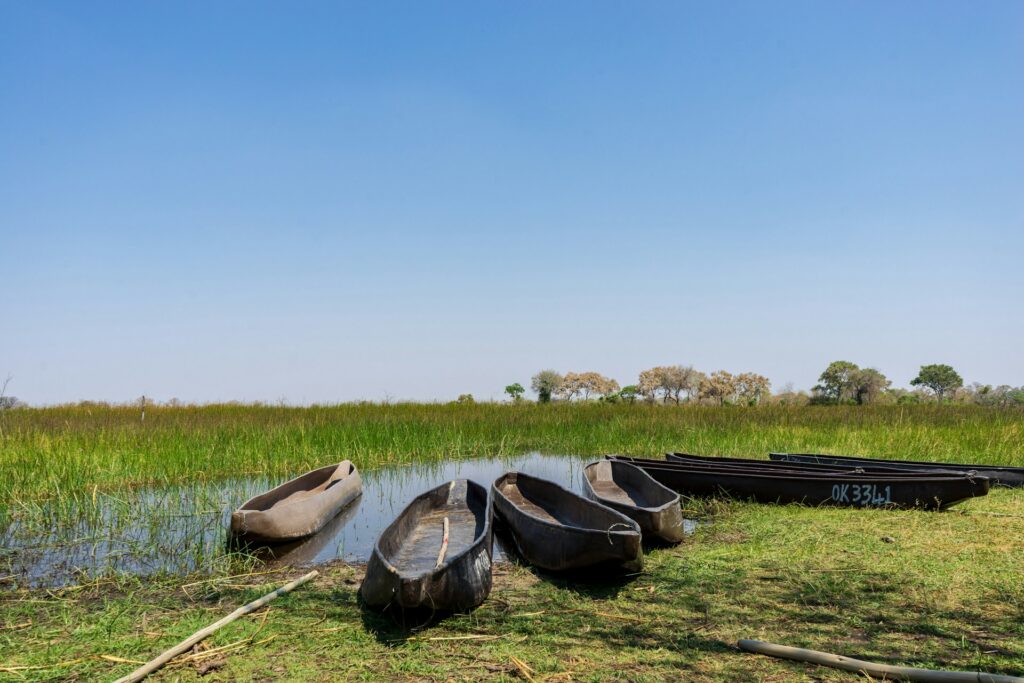
Once back on land, you’ll explore the delta with guided game drives, boat safaris, guided walks, and the mokoro, a traditional dugout canoe once carved from ebony or sausage tree trunks and now, for the sake of protecting those trees, more often made from fibreglass.
Because the delta actually floods during the dry winter months rather than during Botswana’s rainy season, many safaris here are planned on the guide’s instinct.
June to August is the peak of the flood, and the time for the most concentrated game viewing.
The greener months from January to April are best for those chasing birdlife and newborn wildlife instead.
There is no better season to visit, simply different versions of the same place.
Advice You Need to Know About Travelling to the Okavango
Since this is not a conventional safari destination, a visit to the Okavango requires a little more practical planning.
The great thing is that there are plenty of Botswana tour operators who make the whole planning process a lot easier than trying to DIY a trip, but what would be the fun of not getting a little hands-on with your holiday?
After all, this destination is one worthy of every adventure traveller’s bucket list and every adventure traveller likes to know what they are getting into.
Getting there is part of the experience.
Most voyages into the delta start with a flight into Maun, usually connecting through Johannesburg, Cape Town or Windhoek, followed by a light aircraft transfer straight to a camp.
You will want to pack light as most charters only allow around 20 kilograms per person, carried in a soft, collapsible bag rather than a hard-shell suitcase.
Travelling with a backpack tends to add to that adventure travel feeling, and it also happens to make the delta an interesting and accessible choice for solo holidays.
Your passport carries more weight than you might expect.
Many nationalities, including South African, British, American and most European passport holders, can currently enter Botswana without a visa for short tourist stays, though you should please confirm this close to your travel dates, since entry rules do tend to change.
Your passport should be valid for at least six months from your date of entry, and as always, you should have a couple of blank pages to spare.
A quick word on health.
The delta lies within a malaria area, so you must have a conversation with a travel doctor about prophylaxis before you go. You should also read up a little bit on other ways to protect yourself from the pesky mozzie.
You should also invest in comprehensive travel insurance that covers medical evacuation. Camps are remote, and the nearest hospital is often a flight away rather than a drive.
Remember, if you plan for the worst, you will always be prepared for anything.
Know what your rate includes.
Most delta stays are priced on a fully inclusive basis, meaning your meals, activities and transfers within the delta itself are all included.
Drinks, spa treatments, gratuities and your flight to Maun are usually not included in that rate, so you must ask your operator for a clear breakdown of what your package will cover before you commit to making a booking.
Book earlier than is suggested.
With so few beds spread across such a wide wilderness, accommodation for the dry season, June to August, is often reserved many months, sometimes closer to a year, in advance.
An Okavango Delta tour is not a last-minute, impulsive booking.
You will likely lose signal, and you may come to enjoy it.
Wifi and phone reception are limited or even completely absent at most camps.
Rather than seeing this as a drawback, many guests find this part of what makes a stay in the delta feel unlike anywhere else in Africa.
Give some thought to who the trip suits.
Some camps set a minimum age for walking safaris or mokoro outings, and a handful are simply not set up for very young children.
If you are travelling as a family, or with someone who has limited mobility, you need to have a look at the camp’s own policy before booking. If you are booking through a travel operator, make sure that you let them know the ages and abilities of your travel group.
Carry a little local currency.
The Botswana pula is the official currency, though US dollars are widely accepted at most camps.
Having a small amount of cash set aside to tip your guide and poler is customary, and very much appreciated.
Meet the locals.
Community visits, including a stop at Tsodilo Hills, are worth it and best arranged through your guide rather than independently (and always, always ask before you snap a photo of someone).
The delta can be alone on your itinerary (but it doesn’t have to be).
Many travellers add Chobe, the Victoria Falls, or even the Kruger, to their Okavango tour. If you have a similar desire, be sure to mention this to your operator when you book, since flight timings between destinations are often easier to arrange together rather than after the fact.
Ten Fascinating Facts (and the Stories Behind Them)
Even a quick look at photos of the Okavango will tell you this is a special place and like all such places, it has more than its fair share of facts and tales that add to its allure.
- Its source starts far away from Botswana.
The delta’s water starts as rain over the Angolan highlands, travelling close to a 1000 kilometres through Namibia’s Kavango Strip, before it reaches Botswana’s sand.
- It is home to termite architects.
Many of the delta’s islands begin as a single termite mound, which slowly raises the salinity of the surrounding soil, kills off the grass, and clears space for a palm or fig tree to take root, and eventually an island to form around it.
- The river that never reaches the sea.
Rather than flowing onward, the delta’s water simply seeps and evaporates into the thirsty sand of the Kalahari, vanishing without ever meeting an ocean. It is one of only a few rivers in the world that doesn’t reach another water source, and it is the only river to empty out into a desert.
- It “breathes”.
It shrinks to roughly 6 000 square kilometres in the dry months and swells towards 15 000 at full flood. If you recorded this action and then sped up your footage, it would look as though the delta is breathing.
- A reserve born of local resolve.
Moremi Game Reserve, in the delta’s east, was proclaimed in 1963 by the Batawana people under the leadership of Mrs Moremi, making it the first reserve in Africa established by a local community rather than a colonial authority.
- A birder’s paradise, literally.
More than 400 bird species have been recorded here, a figure that puts the delta among the richest birding destinations on the continent.
- A stronghold for the endangered.
The delta shelters one of the largest surviving populations of African wild dog, a predator that has vanished from much of its former range.
- An antelope built for water.
The sitatunga lives in the delta. It is a shy resident rarely seen by visitors, and it has splayed, elongated hooves built for walking across floating vegetation rather than solid ground.
- The thousandth UNESCO site.
The delta became Africa’s one thousandth UNESCO World Heritage Site in 2014, a recognition of how unusual an inland delta of this size actually is.
- A peaceful kind of popularity.
Despite its remoteness, roughly 100 000 people travel here each year, and they are usually spread thinly enough across its camps so that the delta rarely feels crowded.
Did you know that in Botswana the national parks and reserves cover almost 40% of the land? And that most of the 2 and a half million people who live in Botswana live in Gaborone and other urban areas?

The Other Places in Botswana You Have to See
There is so much more to this country than its unusually unique delta, and yet many travellers stick to this one place and see absolutely nothing other than the main tourist attractions.
Don’t be that traveller. These places deserve a spot on your itinerary too:
- Maun. Where most Botswana holidays start, this frontier town sits on the delta’s edge and exists largely as a starting point to get people into the wilderness.
- Moremi Game Reserve. Covering roughly a third of the delta, it remains the only officially protected area of the delta and the most reliable place for big game sightings.
- Chief’s Island. The delta’s largest island, formed along a geological fault line, anchors Moremi from within.
- The Panhandle. Up near Seronga and Shakawe in the delta’s north, this holds the permanent papyrus channels where the Okavango River first fans out.
- Khwai. A community-run concession bordering Moremi, known for open floodplains and unusually confident predators.
- Chitabe. Further south, well regarded among guides for consistent leopard and wild dog sightings.
- Xakanaxa Lagoon. Home to one of Africa’s largest heronries, loud each season with breeding storks, egrets and herons.
- Gomoti. A channel that ran dry for decades and has been flowing again in recent years, with wildlife slowly and visibly returning to its banks.
- Nxamaseri. In the upper Panhandle, quieter still and known chiefly among anglers for its tigerfish.
- Tsodilo Hills. A short flight from the delta, home to more than four thousand five hundred San rock paintings across four sacred hills, sometimes called the desert’s own gallery.
The Okavango Delta is one of Africa’s most extraordinary places.
Many nationalities, including South African, British, American and most European passport holders, can currently enter Botswana without a visa for short tourist stays. Requirements do shift from time to time, so it is worth confirming close to your date of travel.
Yes. The delta lies within a malaria region, and a conversation with a travel doctor about prophylaxis, along with comprehensive travel insurance, is a sensible step before you go.
As early as you reasonably can, particularly for the dry season peak between June and August. With so few beds spread across such a wide wilderness, camps for that period are often reserved many months in advance.
Most safaris begin with a flight into Maun, usually connecting through Johannesburg, Cape Town or Windhoek, followed by a light aircraft transfer directly to camp. Luggage is limited to a soft bag of around twenty kilograms.
It depends on the camp. Some set a minimum age for walking safaris and mokoro outings, so it is worth checking a camp’s own policy directly if you are travelling as a family.