Inhaltsübersicht
This comprehensive overview will introduce you to the wild places that define South Africa and its precious wildlife heritage
At the start of October 2026, South Africa christened a new national park, adding to its litany of protected habitats.
Grasslands National Park brings the total number of SA national parks to 19, and the total number in the beautiful Eastern Cape to 5.
While these parks only cover about 3% of the country’s landmass, for the discerning traveller, the national parks in South Africa are a playground of experiences, and the first step to designing a safari that is laid-back, intimate, and utterly unforgettable is choosing the right one to visit.
How Many National Parks Are There in South Africa?
South Africa has 20 national parks, though that number varies depending on the source you are reading, and all are protected and managed by South African National Parks (SANParks), a staunch conservation body formed in 1926.
Now, the Kruger might be the best known, and it might also be the best choice for a Große 5 safari, but if you dare to look a little further, you’ll see that in a country as diverse as this one, the national parks are as fascinating, unique and welcoming as its people.
All you have to do is decide what experiences you’d like to add to your travel memoirs and then pick your park.
South Africa’s National Parks (Listed By Province)
Ostkap
Addo-Elefanten-Nationalpark
- Standort: Near Gqeberha, Eastern Cape
- Best For: Big 7 safaris, elephant encounters and a malaria-free family escape
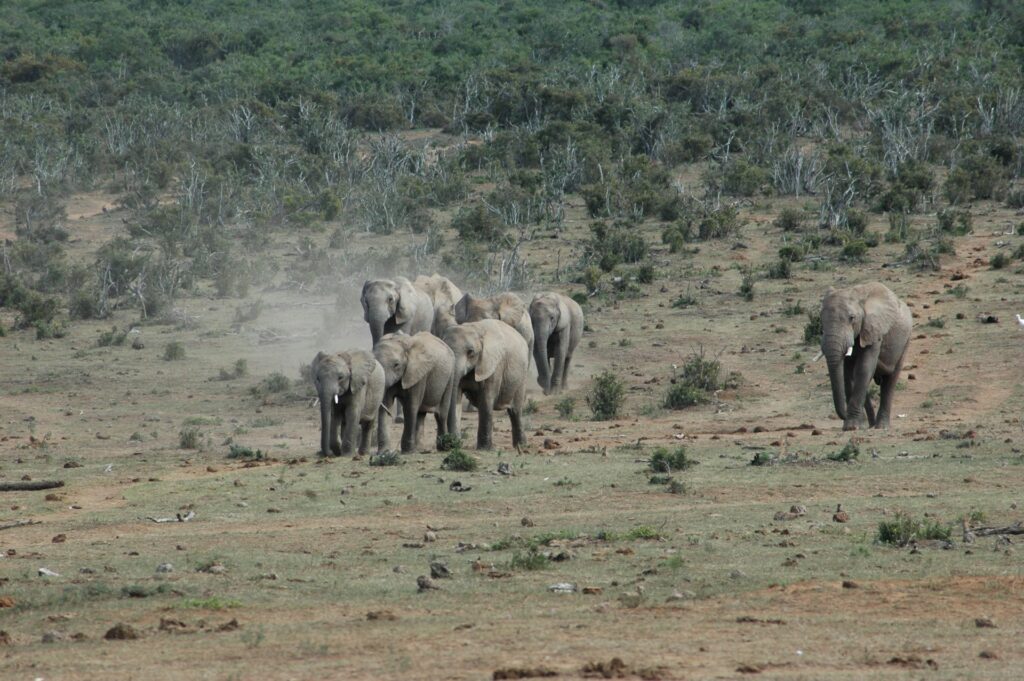
Addo was founded in 1931 to protect the last 11 elephants in the region, and today it is one of Africa’s best conservation success stories, with a thriving population roaming more than 1 600 square kilometres of thicket and open plains.
Elephants are not the only animals you’ll see here; you may also encounter lions, leopards, buffalos, black rhinos and spotted hyenas.
The park extends into the sea, where southern right whales and great white sharks add to its claim as being South Africa’s only “Big 7” destination.
Camdeboo National Park
- Standort: Surrounding Graaff-Reinet, Eastern Cape
- Best For: Sunrise and sunset views, Karoo scenery and photography
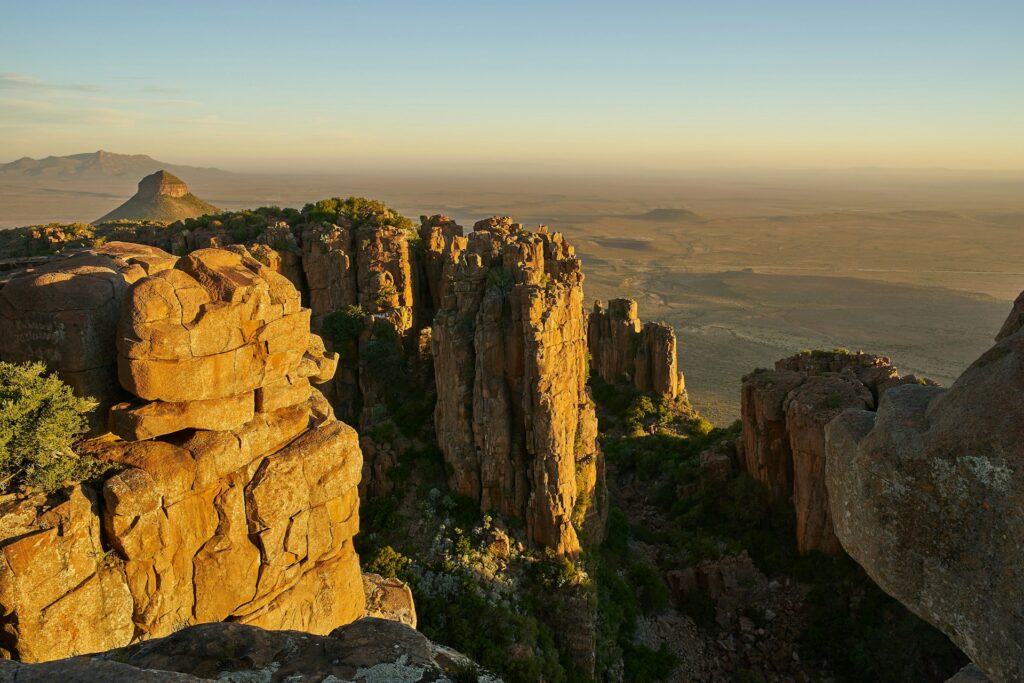
Wrapped almost completely around the historic town of Graaff-Reinet, Camdeboo is a dramatic destination and one of the country’s lesser-known parks.
Its most fascinating feature is the hauntingly beautiful Valley of Desolation, a cluster of dolerite columns rising around 120 metres above the plains. The best time to visit the valley is between sunrise and sunset, when the light is absolutely astounding.
Wildlife you might see here includes Cape Mountain zebra, red hartebeest, kudu and buffalo, while the Nqweba Dam draws a wealth of colourful and loud birdlife.
Grasslands National Park
- Standort: Eastern Cape highlands, between Nqanqarhu and Rhodes, near the Lesotho border
- Best For: Untouched high-altitude grassland scenery and off-the-beaten-path travel; check SANParks for visitor access, as the park is newly declared
This is the country’s newest national park, formally declared in October 2026, and it protects more than 10 000 hectares of high-altitude grassland in the Eastern Cape highlands between Nqanqarhu (formerly Maclear) and Rhodes.
It is the first national park established primarily through biodiversity stewardship, an approach in which landowners keep their land and commit to agreed conservation arrangements, while working farms continue to grow alongside it.
The park forms part of the Eastern Cape Drakensberg Strategic Water Source Area and protects one of the country’s least-protected biomes.
Grasslands Park is rich in endemic plant and animal life, and highland species typical of the Drakensberg, such as grey rhebok, oribi and bearded vulture, can be seen here.
Mountain Zebra National Park
- Standort: Near Cradock, Eastern Cape
- Best For: Cape mountain zebra, cheetah and peaceful mountain scenery
Situated close to the town of Cradock, this park was proclaimed in 1937 specifically to rescue the Cape Mountain zebra from the brink of extinction, when only a handful remained.
And it worked; their numbers have since recovered beautifully.
The spectacular mountains that surround the park shelter zebra alongside reintroduced cheetah and lion, as well as black rhino, buffalo and red hartebeest, making it one of the most incredible stops in the Karoo.
Free State
Golden Gate Highlands National Park
- Standort: Eastern Free State, in the Maluti foothills near the Lesotho border
- Best For: Golden sandstone landscapes, birdwatching and slow, scenic getaways
The Free State of South Africa is best known for its farmlands, but it also has a rather incredible national park.
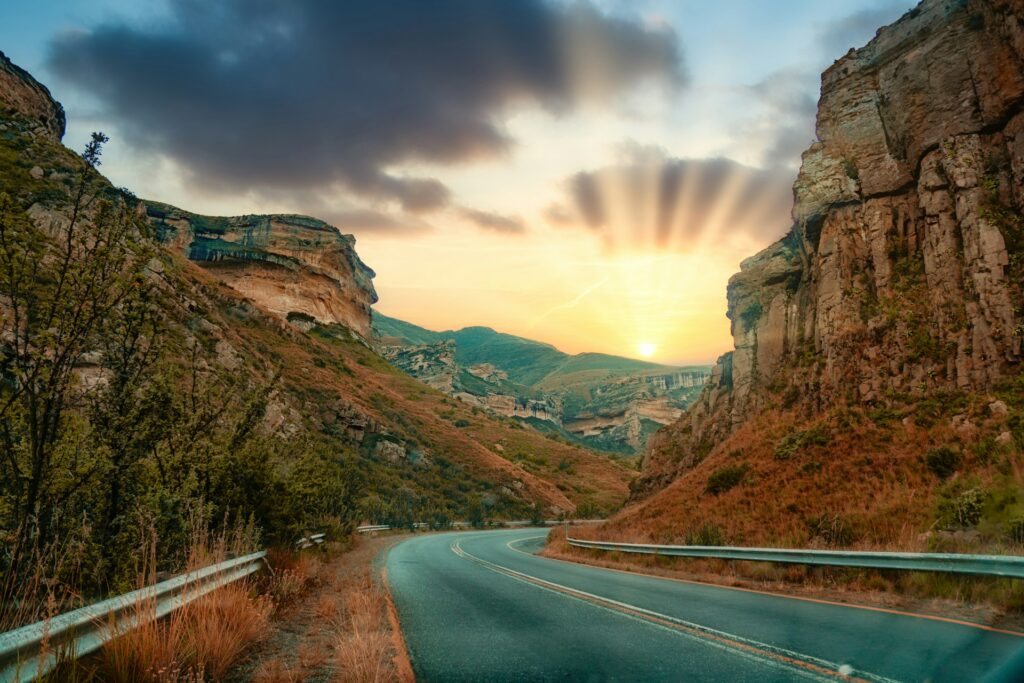
Proclaimed in 1963, Golden Gate sits in the shadows of the foothills of the Maluti Mountains, and it gets its name from the sandstone cliffs that glow honey, amber and rose in the late daylight.
It is a place for slow, scenic days rather than big game drives.
On a visit, you may encounter black wildebeest, eland, blesbok, Burchell’s zebra and oribi, along with rare birds such as the bearded vulture and the southern bald ibis.
The surrounding highlands have plenty of fascinating fossils, and while you tour the park, you’ll also learn something about the local Basotho culture.
Limpopo
Mapungubwe National Park
- Standort: Northern Limpopo, where South Africa meets Botswana and Zimbabwe
- Best For: History and culture, baobab landscapes and crowd-free wilderness
- Malaria Risk: Low and seasonal, highest from November to April
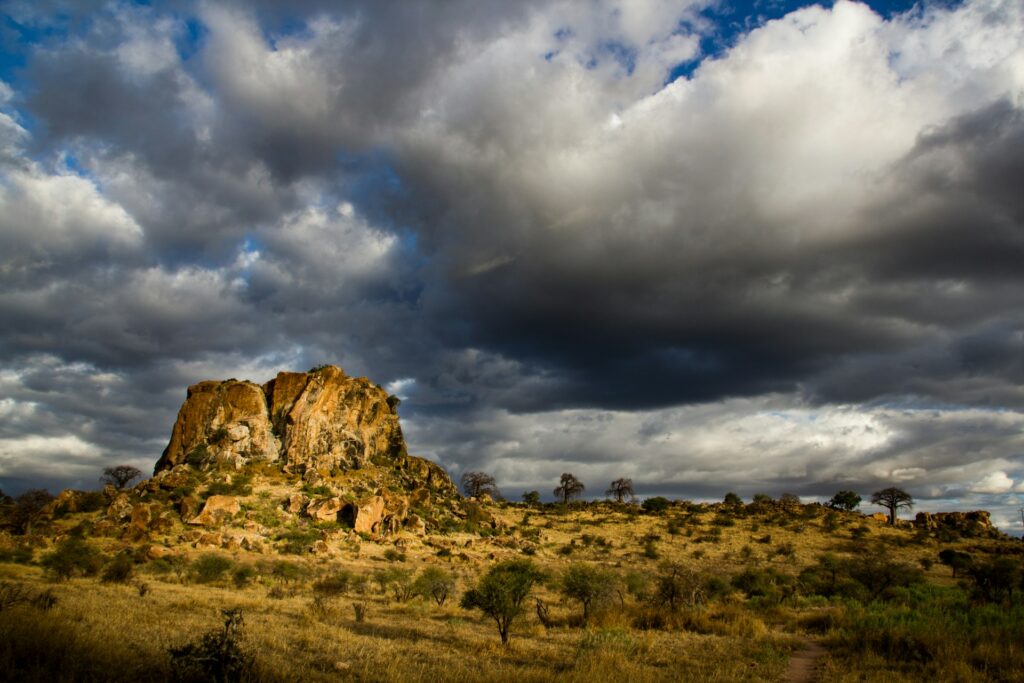
Set at the meeting of the Limpopo and Shashe rivers, where South Africa, Botswana and Zimbabwe come together, there’s Mapungubwe National Park, a UNESCO World Heritage Site that has become quite famous for its sense of serenity and its rather warm climate.
It protects the remains of an Iron Age kingdom that flourished here a 1000 years ago and gave the world the celebrated golden rhino artefact.
The artefact, which is a wooden rhino statue covered in the thinnest layer of gold foil, dates back 800 years and was excavated from the grave of a royal buried on Mapungubwe Hill.
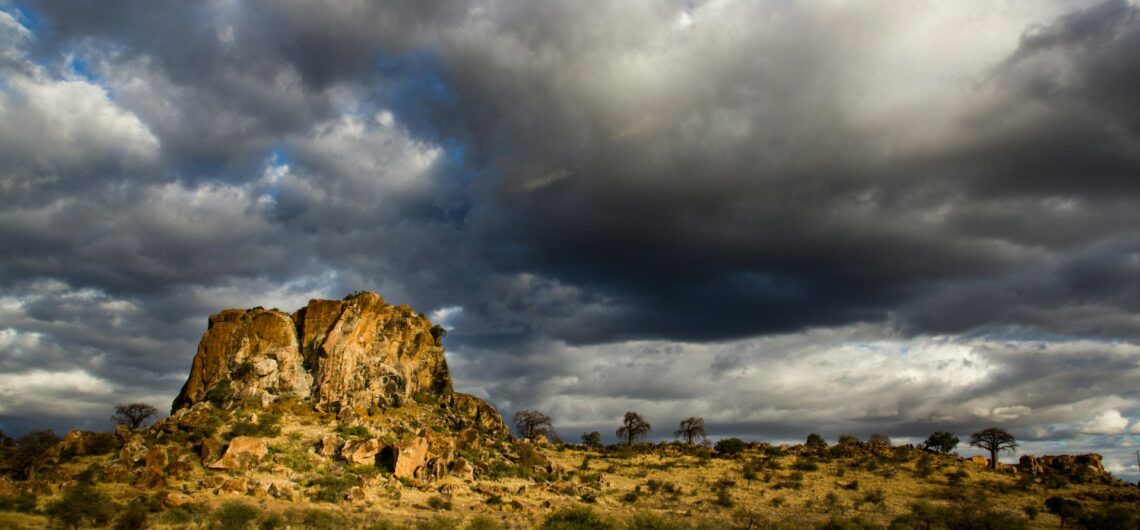
The park has a number of ancient baobabs and sandstone formations, and as for wildlife, you’ll see elephants, giraffes, elands, leopards, and some of the more than 400 bird species during a game drive.
Marakele National Park
- Standort: Waterberg Mountains, Limpopo
- Best For: Big 5 sightings without the crowds, Cape vultures and mountain views
Marakele takes its name from the Tswana word for “place of sanctuary”, and the name is appropriate.
The soaring peaks that rise above grassland and bushveld have created a sanctuary for one of the largest breeding colonies of Cape vultures in the world.
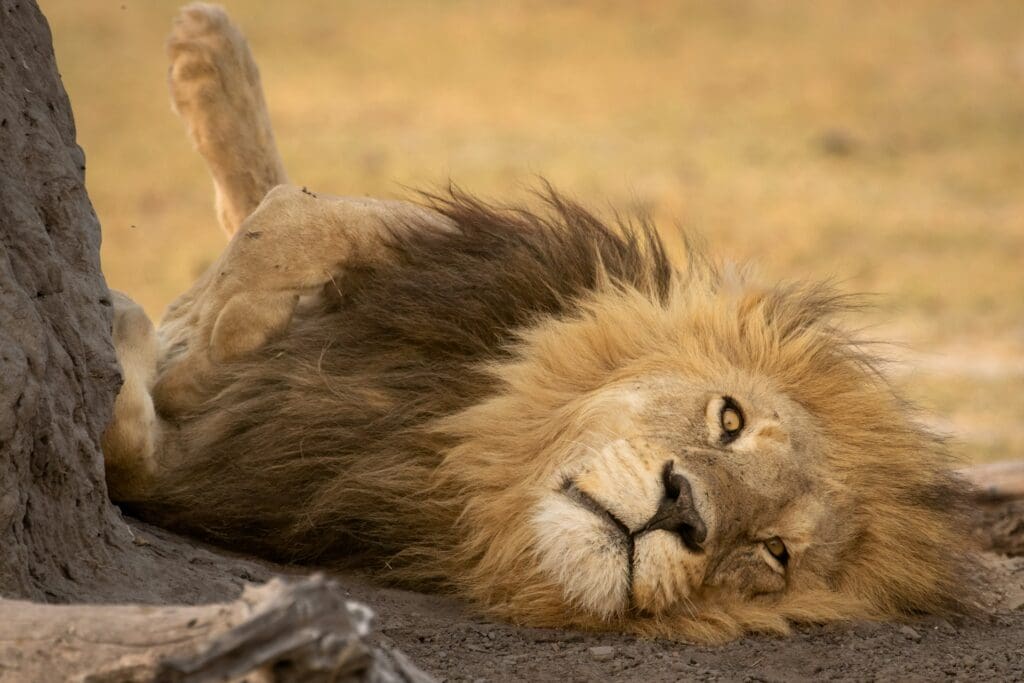
All of the Big 5 live here, as well as sable and roan antelope. It is a peaceful, uncrowded alternative to busier safari regions.
Mpumalanga and Limpopo
Krüger-Nationalpark
- Standort: North-eastern South Africa, across Mpumalanga and Limpopo, bordering Mozambique
- Best For: Classic Big 5 safaris, the widest variety of wildlife and access to luxury lodges and private concessions
- Malaria Risk: Low and seasonal, highest from November to April
South Africa’s flagship park began life in 1898 as the Sabie Game Reserve and was proclaimed a national park in 1926.
Stretching across nearly 2 million hectares of pristine, perfectly preserved African wilderness, it is one of the largest game reserves in Africa and home to the Big 5.
Along with the Big 5, the Kruger is also home to more than 140 mammal species and over 500 bird species, and the park’s shared open fence lets wildlife follow their natural migratory patterns.
Along its borders, in select private Konzessionen that are collectively known as the Greater Kruger National Park, you will find some of the country’s most exquisite luxury safari lodges.
Nordkap
Augrabies Falls National Park
- Standort: Along the Orange River, Northern Cape, near Upington
- Best For: Dramatic waterfall scenery, desertscapes, and astounding birdlife
Where the Orange River gathers itself and plunges 56 metres into a granite gorge, creating a thundering spectacle that gave the park its Khoekhoe-inspired name, meaning “place of great noise”, you’ll find a slice of heaven on earth.
The river is a life force in this otherwise dry part of the country, and much of the park is dotted with ancient quiver trees and rocky outcrops, home to klipspringers, springboks, giraffes, black rhinos and a lively collection of lizards and birds.
It’s a great place to go hiking, stargazing, and pretending that there’s nothing on earth but you and the park’s wide open spaces.
Kgalagadi Transfrontier Park
- Standort: Far north-western Northern Cape, bordering Botswana and Namibia
- Best For: Remote wilderness, black-maned lions, cheetah and red dune scenery
One of the world’s last great wilderness areas, Kgalagadi was formed in 2000 when South Africa’s Kalahari Gemsbok National Park joined forces with Botswana’s Gemsbok National Park, creating Africa’s very first transfrontier park.
Red dunes ripple towards the horizon in almost every direction, dry riverbeds trace silver lines through the sand, the light is extraordinary, and so is the wildlife.
The transfrontier park is home to black-maned Kalahari lion, cheetah, leopard, gemsbok, springbok, meerkat and an impressive array of raptors. It is wild, remote and deeply romantic, so if you are looking for a dreamy place to have a honeymoon, this park should be up there on your list.
Mokala National Park
- Standort: Near Kimberley, Northern Cape
- Best For: Rare antelope, rhino and relaxed, crowd-free game viewing
Proclaimed in 2007, Mokala is close to Kimberley and named after the Tswana word for the camel thorn tree.
It has become an important sanctuary for rare species, and has breeding herds of sable, roan, tsessebe and black and white rhino, as well as buffalo, giraffe, kudu and eland.
Namaqua National Park
- Standort: North-west coast of the Northern Cape, in Namaqualand
- Best For: Spring wildflowers from August to September, photography and windswept coastal scenery
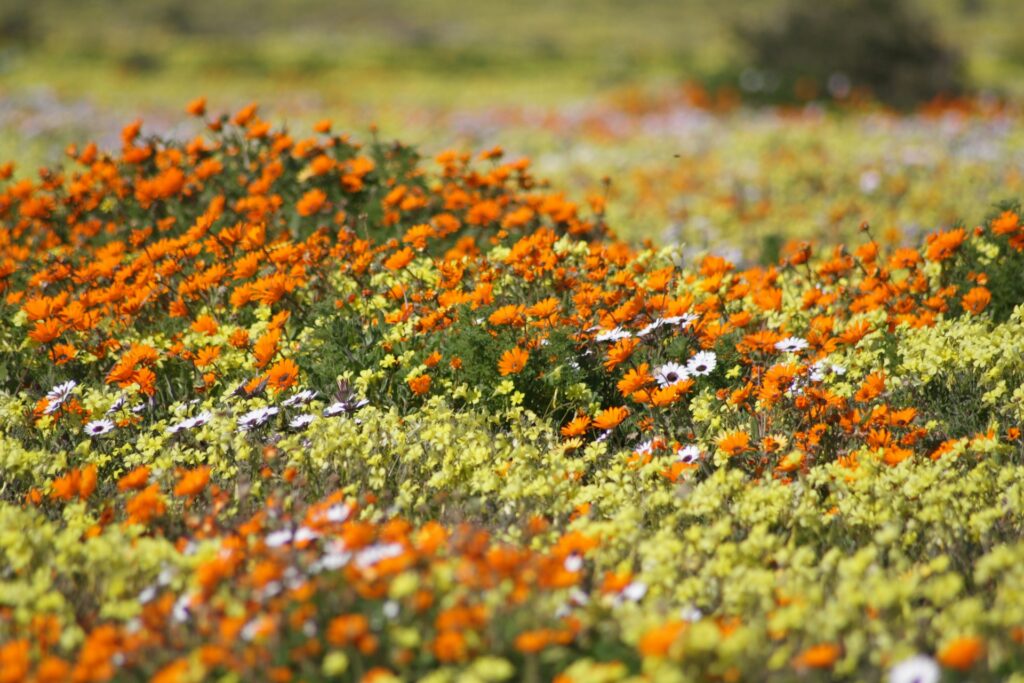
Each year between August and September, Namaqua, which for most of the year stays close to desert dry, suddenly blushes with colour as carpets of orange, pink and white daisies bloom all at once, turning the park into one of the most beautiful flower shows on earth.
The park is in the Succulent Karoo, a globally recognised biodiversity hotspot with thousands of plant species.
And while you are gazing at the flowers, you might also see springbok, gemsbok and ostrich wandering past, at a curious distance.
The park sits on the coastline of the ice-cold Atlantic, and the contrast between the dry weather and parched sands, and the soft swooshing of waves makes the conservation area extraordinarily different from the other national parks in South Africa.
Richtersveld National Park
- Standort: Far north-western Northern Cape, along the Orange River and the Namibian border
- Best For: Weather-beaten desert wilderness, off-road adventure and cultural heritage
One part of the |Ai-|Ais/Richtersveld Transfrontier Park is in a mountain desert setting in the far north-west, close to the Orange River and managed in partnership with the Nama people, whose pastoral traditions continue here. The other part runs right up into Namibia, making it South Africa’s second transfrontier park.
It is recognised as a UNESCO World Heritage cultural and botanical landscape, and you can expect to see dramatic scenery, the curious halfmens tree, mountain zebra, klipspringer, baboon and, if luck is on your side, the occasional glimpse of an elusive leopard.
Tankwa Karoo National Park
- Standort: Semi-desert Karoo on the border of the Northern and Western Cape
- Best For: Stargazing, solitude and wide open spaces
On the border with the Western Cape, Tankwa Karoo covers a huge area of flat lands and dramatic mountains, and has the most dazzling night skies, some of the clearest and brightest in the country.
The park protects the Succulent Karoo and its exceptional plant life, along with springbok, gemsbok, red hartebeest, Cape Mountain zebra and ostrich.
Westkap
Agulhas National Park
- Standort: Southernmost tip of Africa, near Bredasdorp, Western Cape
- Best For: Coastal scenery, whale watching, birdlife and a Cape road trip stop
Established in 1999, and sitting at the southernmost tip of Africa, where the Indian and Atlantic oceans meet, Agulhas is a windswept coastline of fynbos, limestone and shipwreck history, as well as one of South Africa’s oldest working lighthouses.
It is one of the best places in the country to do a spot of birding, and while travelling here you can see blue cranes, Cape sugarbirds and African black oystercatchers.
Southern right whales pass offshore in the cooler months, just visible from the beach or a lookout point, adding to the Agulhas experience.
Bontebok National Park
- Standort: Near Swellendam, Western Cape
- Best For: Gentle day visits, fynbos, birdlife and picnics beside the Breede River
Found near Swellendam, this small park was founded in 1931 to protect the bontebok antelope at a time when fewer than 20 animals remained.
The species has since been brought back from the edge and lives freely and safely among the rolling fynbos and renosterveld.
The Breede River and mountain views create a pretty backdrop for sightings of bontebok, Cape Mountain zebra, red hartebeest, grey rhebok and many, many birds.
Garden Route National Park
- Standort: Southern Cape coast, from Wilderness and Knysna in the Western Cape to Tsitsikamma in the Eastern Cape
- Best For: Coastal hiking, forests, lagoons and scenic road trips
Formed in 2009 from the Tsitsikamma, Wilderness and Knysna lake areas, this park follows one of the loveliest stretches of coastline in the country, running through the Western and Eastern Cape.
Wenn du bist travelling through the Garden Route, this park definitely needs to be on your bucket list, especially after you’ve spent a couple of days on the move.
The park is a place of ancient forests, lagoons, river mouths and cliffs, with the famous Otter Trail and the Storms River suspension bridge among its icons. The scenery here will easily have you thinking that you have been transported to another world.
Wildlife that you can see in the Garden Route National Park includes the cute Cape clawless otter, bushbuck, Knysna turaco and, offshore, you can often see dolphins and, at the right time of year, whales.
Karoo National Park
- Standort: Outside Beaufort West, Western Cape
- Best For: A stopover between Cape Town and Johannesburg, Karoo landscapes, black rhino and stargazing
Outside Beaufort West, this park will introduce you to the best of the Karoo, South Africa’s largest ecosystem.
Proclaimed in 1979, it is home to Cape Mountain zebra, gemsbok, black rhino, buffalo and reintroduced lion, while klipspringer and Verreaux’s eagles favour the rocky heights.
Table Mountain National Park
- Standort: Cape Peninsula, Cape Town, Western Cape
- Best For: Iconic views, hiking, penguins and the city
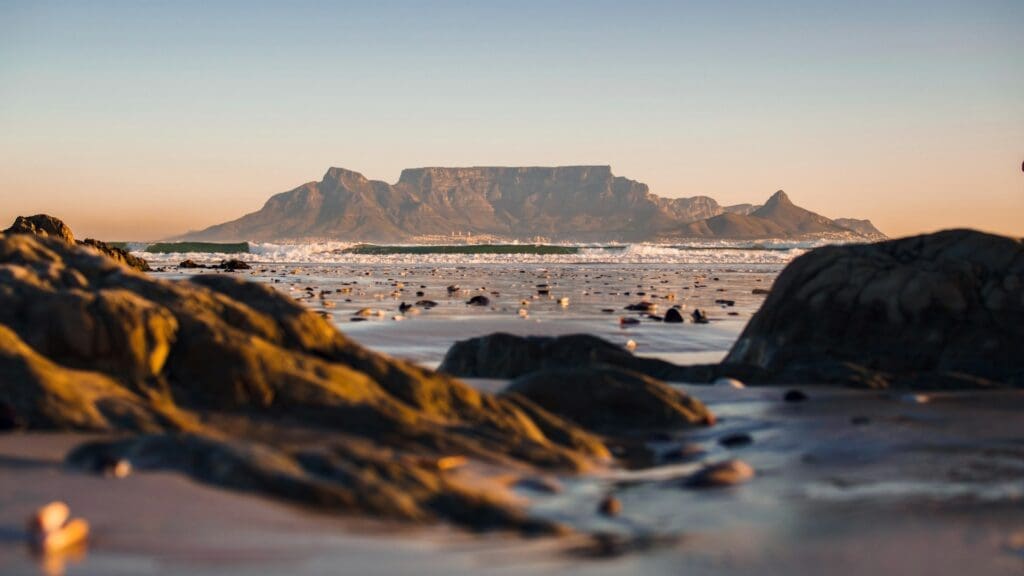
Stretching from Signal Hill to Cape Point, this iconic park wraps around the Cape Peninsula and includes the city of Cape Town.
It protects a precious portion of the Cape Floral Region, the smallest and richest floral kingdom on earth, and the wildlife that calls the park home includes the endearing African penguins at Boulders Beach, along with eland, bontebok, Cape Mountain zebra, baboons and rock hyrax.
West Coast National Park
- Standort: North of Cape Town, on the Atlantic coast around Langebaan Lagoon
- Best For: Birdwatching, spring wildflowers and relaxed Cape Town day trips
Centred on the shimmering turquoise waters of the Langebaan Lagoon, a Ramsar-listed wetland, this park was established in 1985 and is a paradise for birdwatchers, with flamingos, migratory waders and seabirds gathering there regularly in their thousands.
In spring, the Postberg area of the park becomes absolutely covered with the most beautiful wildflowers, and you may spot eland, bontebok, zebra and gemsbok drifting through the blooms.