Table of contents
Enhance your reading experience—immerse yourself in the adventure with our audio version. Click play and let the sounds of Africa captivate you!
The French village of Franschhoek, just over an hour’s drive from Cape Town, is one of the best-known and most visited towns in the Western Cape.
During the weekdays, the town is quiet. The village’s few residents go about their business; international tourists travel around the wineries in groups; and in the nearby vineyards, local farmers and their workers prune and maintain, or, when the season comes to an end, harvest their grapes to create their critically acclaimed wines.
But on the weekends, Franschhoek becomes a hub of activity, as travellers arrive in their droves to enjoy the sights and the tastes that have made the town so famous.
Franschhoek is well worth visiting, and if you have been planning a trip to this spectacular village, the 6 facts we’re going to share will make your holiday simply unforgettable.
What Is It About Franschhoek That Makes It Such a Special Place?
Tucked into a sun-warmed valley, this small village manages to feel like a very grande dame, one that is gracious, soft, and full of all sorts of stories from her flavoured past.
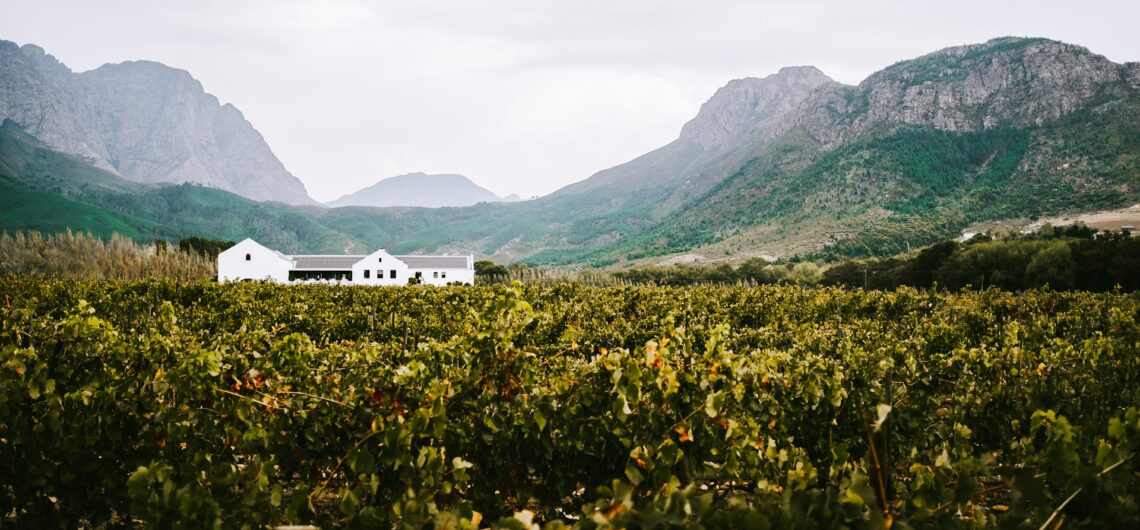
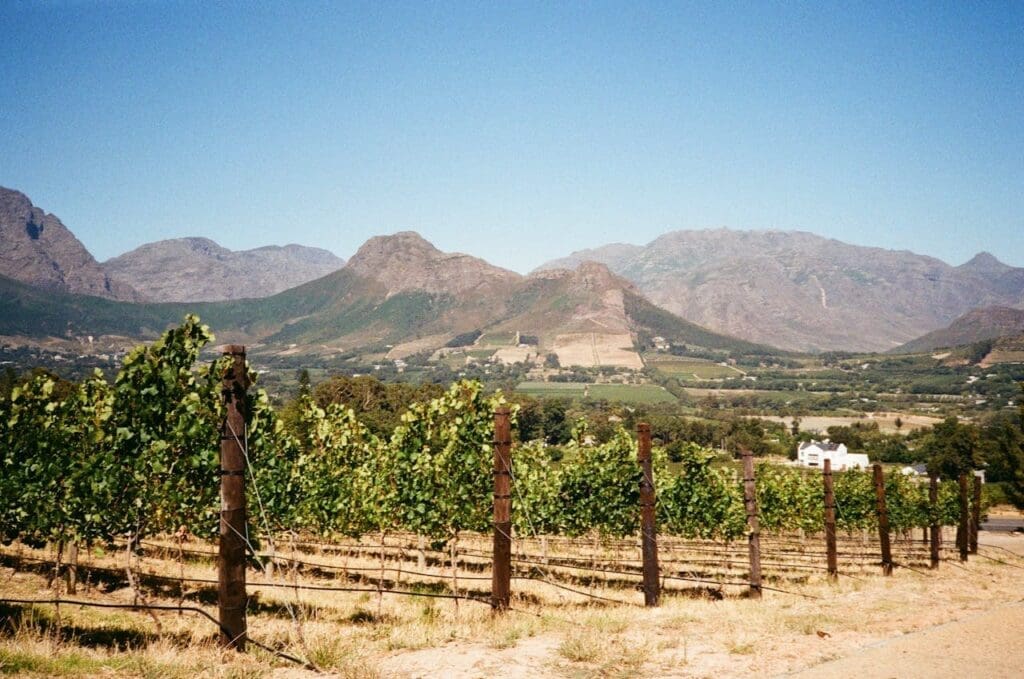
Mountains, which are often snowcapped in winter, rise steeply on all three sides of the town, enclose the valley, creating the perfect climate for the patchwork of vineyards that spills between them and which have been tended to for more than three centuries.
A visit to Franschhoek is just the trip that will make you want to slow down, to linger over that second glass of red, and to take the long route back.
6 Fun Facts About Franschhoek You Probably Did Not Know
For travellers planning Cape Town vacations and considering a foray into the Winelands and to Franschhoek, having some knowledge of the area can make the whole trip that little bit more interesting, especially if you are the only one in your group who can share a couple of fun facts.
- Its name used to be Elephant’s Corner
Long before the French arrived, the valley was called Olifantshoek, which literally translates to “Elephant’s Corner”.
It was named for the massive herds of elephants that once migrated through this sheltered terrain.
When 176 French Huguenot refugees were settled here by the Dutch East India Company in 1688, the name changed to le Coin Français and eventually to Franschhoek, meaning “French Corner.”
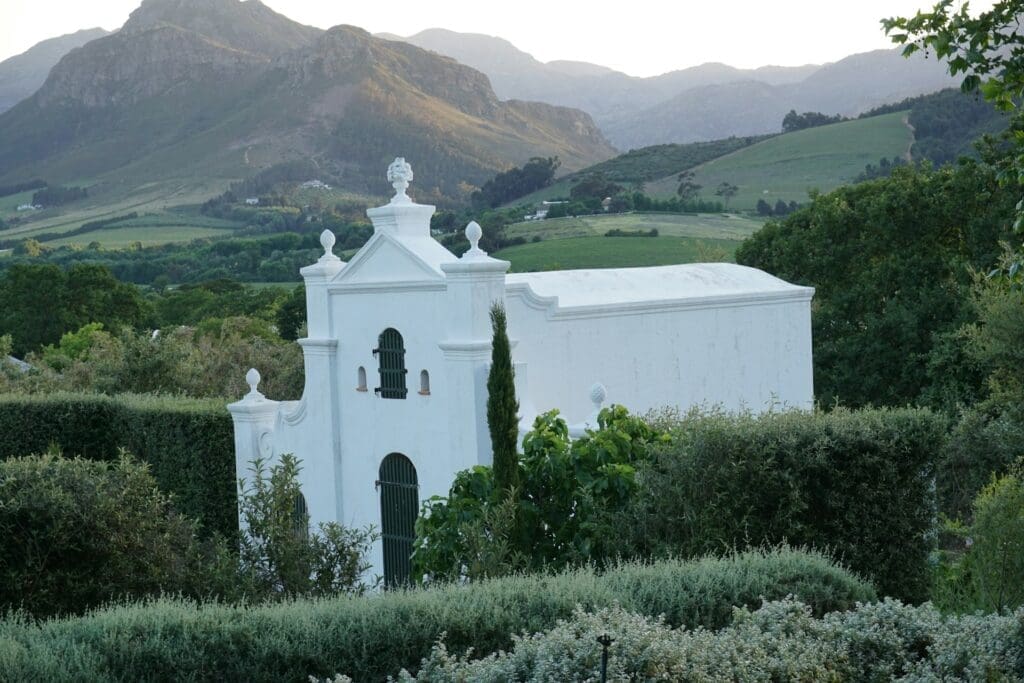
The elephants are now long gone, as are the original French inhabitants, but with French surnames like Du Toit and Marais, and farm names like La Provence, La Motte, and Cabriere, the origins of the town are still there to see.
- The Franschhoek Pass was also originally an elephant path
The scenic mountain pass that winds out of the valley has some of the most breathtaking views in the Western Cape.
But what many travellers don’t know is that it was not entirely engineered from nothing.
This stunning pass was built along a route that migrating elephants had worn into the mountain slopes over many centuries, long before any human settler thought to formalise the path.
Today, the Franschhoek Pass is a beloved drive for those on Cape Town vacations, with panoramic views over the valley that unfurl in every direction.

- It is the only Southern African member of an elite global food network
Franschhoek holds a rather remarkable title: it is the sole southern hemisphere member of the Délice Network of Good Food Cities of the World, an invitation-only international network dedicated to promoting culinary excellence across cities of gastronomic significance!
The town was given membership in October 2014, placing this small Cape Winelands village alongside Lyon, Beirut, and Toronto as a recognised capital of good food.
For anyone with a serious appetite for fine dining, that designation alone should be enough to encourage you to make that booking.
- South Africa’s signature sparkling wine style was pioneered here
Because the name Champagne is legally protected and may only be used for wines produced in the Champagne region of France, South African winemakers, using the South African “maak n plan” mindset, developed their own term for sparkling wines made in the traditional méthode champenoise style.
They call it Cap Classique.
This technique was championed in Franschhoek by winemaker Achim von Arnim of Haute Cabrière, and the valley still celebrates this heritage every December during the Franschhoek Cap Classique and Champagne Festival.
Watching a sommelier perform sabrage, opening a bottle with a single sweep of a sword, at Haute Cabrière is one of the valley’s most theatrical experiences.
- Franschhoek has South Africa’s only perfume museum.
Built into the Huguenot Memorial Museum complex is the First South African Perfume Museum, a place that traces the history of fragrance from ancient civilisations through to the iconic parfums of the modern era.
The museum is home to what is regarded as one of the world’s finest collections of antique perfume bottles, and a single entrance ticket will give you access to the Huguenot Memorial Museum, the Perfume Museum, the Huguenot Monument, and the surrounding nature garden, so you can make a whole day of it.
Although it might not be the sort of attraction everyone enjoys, it is a beautifully unexpected addition to a valley better known for its wines, and a perfect stop for those who appreciate the finer, more sensory pleasures of travel.
- It celebrates Bastille Day every July
Since 1994, Franschhoek has marked the anniversary of the French Revolution with its own annual Bastille Festival, held each July.
The Franschhoek version is steeped in all the joie de vivre one would expect from a village with such deep French roots.
Both locals and visitors gather to celebrate with gourmet food, award-winning wine, live music, and a general sense of occasion that is entirely at home in this corner of the Cape Winelands.
It is one of the more wonderfully warm cultural quirks of Cape Town vacations, one that extends into the Winelands, a very French celebration, staged very beautifully, in a valley in South Africa.
Absolutely. Franschhoek is consistently regarded as one of the most rewarding day trips or short stays available to those on Cape Town vacations. Between its world-class restaurants, historic wine estates, mountain scenery, and French-inflected village charm, it offers a depth of experience that far exceeds its small size. Many travellers find it to be the highlight of their time in the Cape Winelands.
Franschhoek is approximately 80 kilometres from Cape Town, roughly an hour’s drive along the N1 towards Paarl, turning onto the R301, which leads directly into the valley. It is also accessible via Stellenbosch along a scenic mountain route. Many visitors choose to travel with a private driver or as part of a guided Cape Winelands tour, which allows for a more relaxed and immersive experience.
Franschhoek is a year-round destination. The summer months of November through February bring warm, sun-drenched days ideal for vineyard picnics and outdoor dining. The winter months of May through August are quieter, more intimate, and beautifully green after the rains, with some estates running special winter tasting experiences. The Bastille Festival in July and the Cap Classique and Champagne Festival in December are both worth planning around.
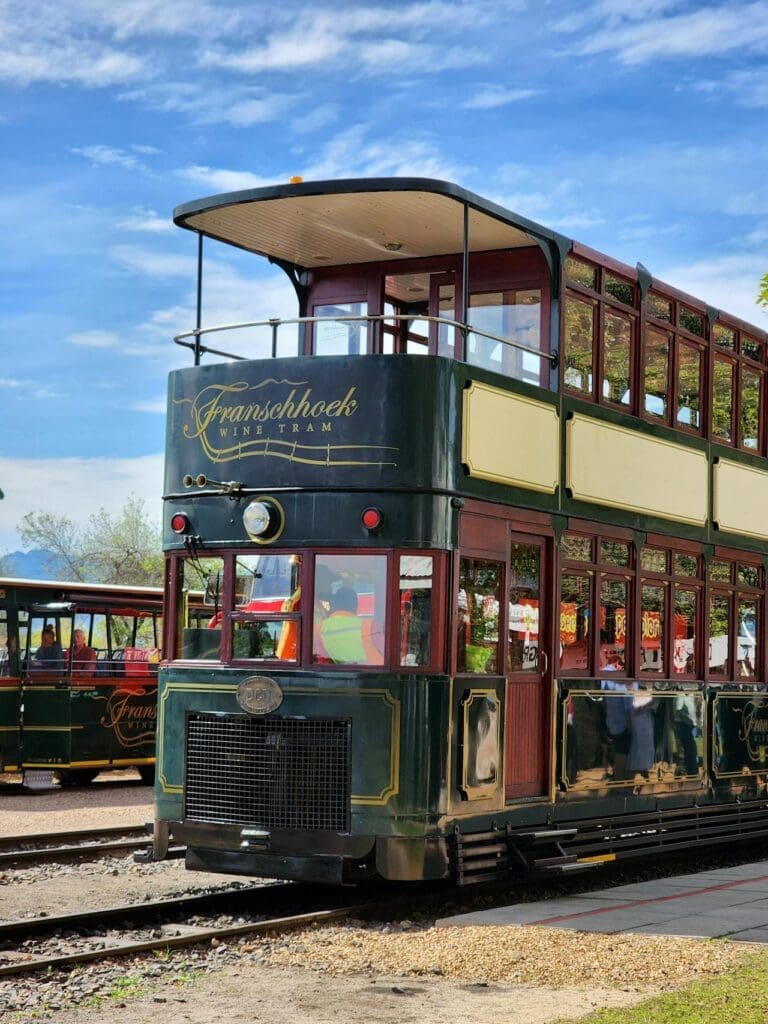
Yes. The Franschhoek Wine Tram is a beloved way to explore the valley’s wine estates without driving, with several hop-on hop-off routes with stops at a selection of renowned estates. For those travelling as part of Cape Town vacations, many tour operators, including private guides and day-tour companies, include Franschhoek on curated Winelands itineraries with comfortable transport included.