Table of contents
- 1 Who founded the Kruger?
- 2 What is the origin story of the Kruger National Park?
- 3 Who owns the Kruger National Park?
- 4 Why is the Kruger so famous today?
- 5 How many visitors does the Kruger play host to annually?
Enhance your reading experience—immerse yourself in the adventure with our audio version. Click play and let the sounds of Africa captivate you!
The history of the Kruger National Park doesn’t begin with a man called Paul Kruger. It doesn’t start in 1898, and it doesn’t kick off with the arrival of the first tourists in 1927.
The Kruger National Park is far older than the history books have jotted down.
The land is ancient, primaeval, and it holds the stories of the San, the Nguni tribe and raiding Arabs, peoples who have left a mark here and whose presence, although just about vanished, has left faint traces that can be seen, if you know where to look.
There is a reason why this conservation area, which covers a mammoth 19 485 square kilometres, is considered sacred.
As the world’s oldest wildlife reserve, it is a place where you can experience culture, take historical walks and see indigenous animals, living freely in a place where they are fiercely protected.
The history of the Kruger National Park is long, dating back to 1,500,000 BC rather than 1898, and while the park as we know it today was founded by a few wise men who understood the importance of preserving the animals and the land for future generations to enjoy, the ancient background story is just as worth knowing.
In this guide, we’re taking a walk back in time and introducing you to the Kruger as you might not know it.
Who founded the Kruger?
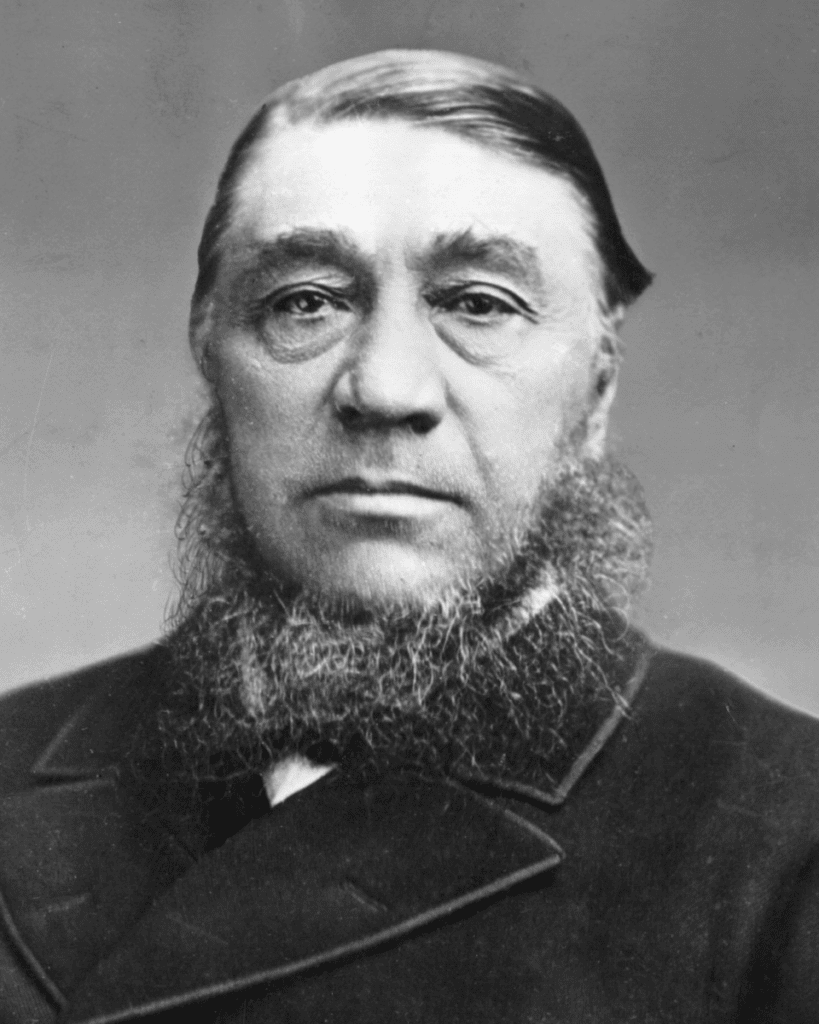
The Kruger National Park’s story is old, but the history of the park that we know begins with one man: Paul Kruger, the fifth President of the South African Republic in the late 19th century.
A man of grit and a deep love for his homeland, Kruger recognised early on that the country’s wildlife was disappearing at a worrying pace.
Game hunting at that time was rampant, with no laws in place to control how many animals were hunted, and natural habitats were quickly being stripped away by the encroachment of farms.
Seeing that the only way the wildlife and the land could be saved from total destruction, in 1898, he, along with a few other like-minded men, established the Sabie Game Reserve, and in doing so, they planted the first seed of what would later become the Kruger National Park.
Though Kruger himself wouldn’t live to see the full realisation of his dream, his legacy has shaped one of the world’s most celebrated conservation areas.
The history of the Kruger owes much to his foresight and stubborn passion for protecting South Africa’s wild heritage, and his memory and care for the animals’ lives on with the name of the park, as well as the few statues that have been erected of him.
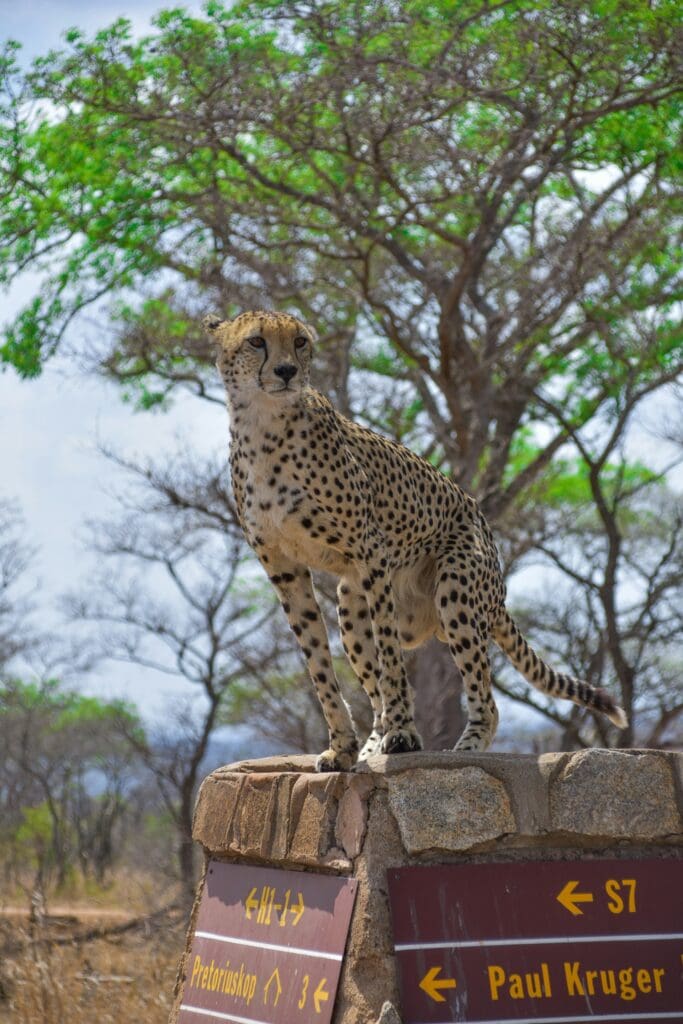
You can see his visage at Skukuza Camp, along with James Stevenson-Hamilton and a minister, and at Paul Kruger Gate.
What is the origin story of the Kruger National Park?
The history of the Kruger stretches far beyond its formal proclamation in 1926.
Long before the National Parks Act merged the Sabie and Shingwedzi reserves into what we now know as the Kruger National Park, these plains were shaped by many lives.
Early Stone Age hunters roamed the region over half a million years ago, followed much later by San communities who left behind exquisite rock paintings, and more than a hundred of these sacred sites still lie hidden across the park.
The first recorded European to attempt an expedition into the area was Dutchman François de Cuiper of the Dutch East India Company.
His party, however, was swiftly turned back near Gomondwane by local communities who were not impressed by these foreign trespassers.
It wasn’t until around 1838 that Voortrekker leaders Louis Trichardt and Hans van Rensburg managed to push further into the Lowveld and establish early outposts.
Then came the gold hunters.
The rumours of precious metals and the lure of ivory, skins, and horns brought waves of fortune-seekers into the Lowveld and with them came the heavy hunting pressure that decimated wildlife numbers at an alarming rate.
It was this crisis that, when it finally reached the ears of President Paul Kruger, he began to campaign fiercely for a protected sanctuary in the region.
Eventually, he persuaded the Transvaal parliament to set aside land for conservation, laying the foundation for what would become South Africa’s most iconic wildlife refuge.
In 1926, the transition from scattered reserves to a unified national park officially took shape.
Under the leadership of the first warden, James Stevenson-Hamilton, nicknamed “Skukuza”, or “he who sweeps clean”, the land was restored from over-hunted terrain into a thriving sanctuary.
During his 44 years of service, he banned hunting, worked to suppress poaching, and slowly rewilded the region into the extraordinary ecosystem we treasure today, cementing his role in the history of the Kruger.
Who owns the Kruger National Park?
The Kruger is owned and managed by SANParks (South African National Parks), a government body tasked with conserving South Africa’s natural and cultural heritage.
SANParks runs 19 national parks throughout the country, but the Kruger is without a doubt its biggest project, as the park welcomes over 2 million travellers each year!
SANParks is responsible for overseeing everything from anti-poaching units, which have become sophisticated over the years, in light of an increase in rhino poaching, to eco-tourism initiatives, ensuring the park remains a sustainable and protected destination for generations to come.
Several private concessions also operate within the park’s boundaries, making up what is known as the Greater Kruger National Park Concession, an area that has no fences and allows wildlife to migrate along their natural routes.
These concessions are not run by SANParks, but are instead owned by private organisations.
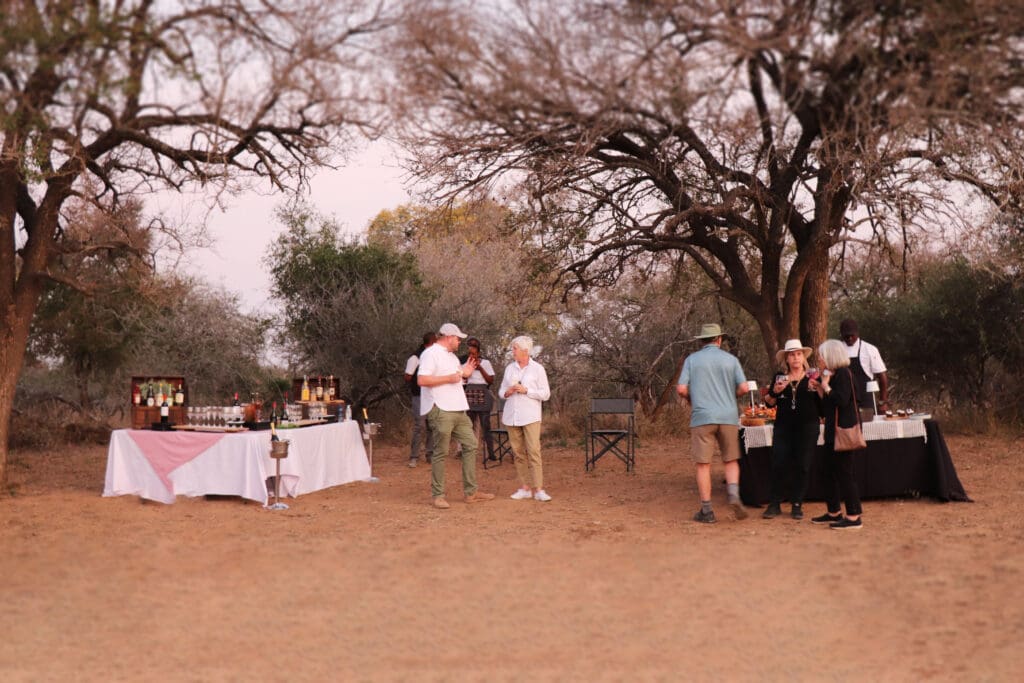
Within the concession areas, guests are treated to exclusive, quieter and far more luxurious safaris.
Why is the Kruger so famous today?
There’s something deeply magnetic about the Kruger, and all who visit the park can attest to the undeniable feeling of peace and freedom that one gets when entering the park.
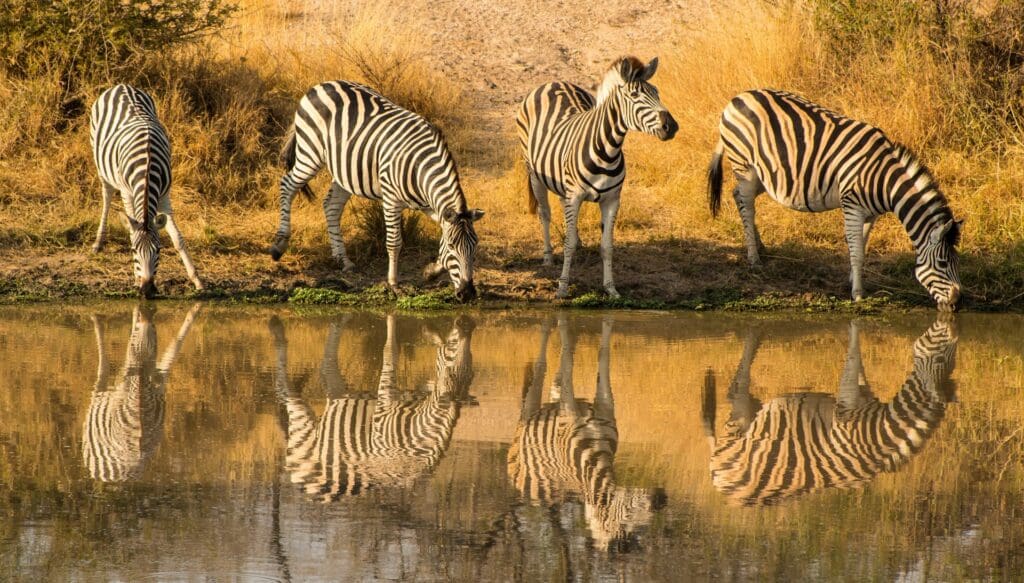
Aside from the special way that the park will make you feel, the park is famous for its abundance of wildlife and for being home to the Big 5. These animals are among the most sought-after sightings, and if you set aside about 5 or so days to explore the Kruger, your chances of coming across these iconic animals increase.
The park has also become synonymous with giving its guests real safari experiences, where the most exciting moments unfold naturally and unhurriedly.
Modern travellers come not only for the wildlife but also for the story, the history of the Kruger.
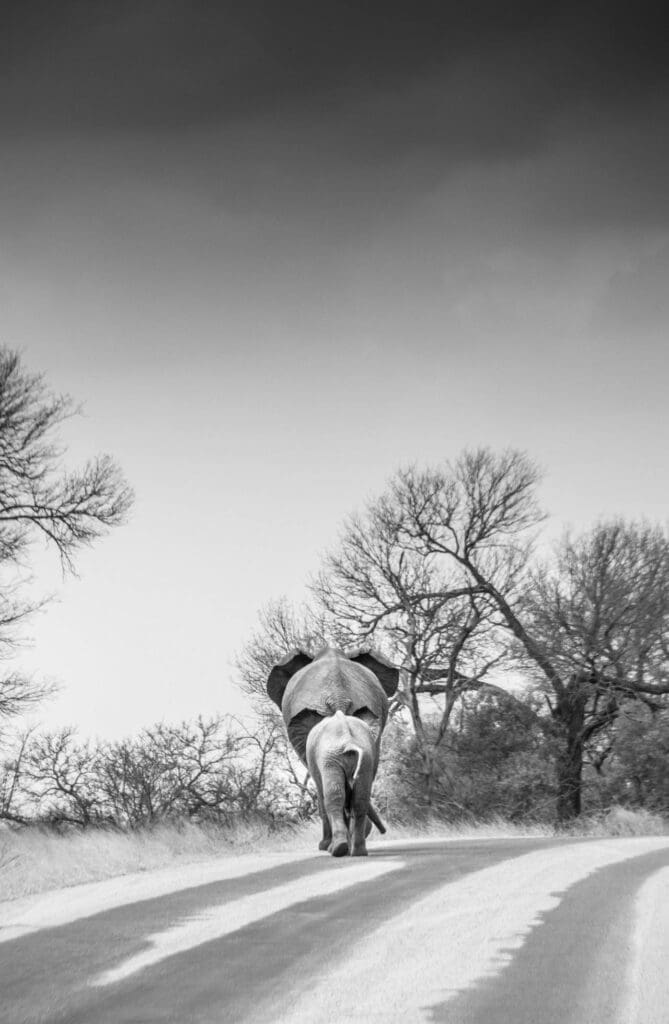
Essentially, the park is a living museum, where elephants walk the same paths their ancestors did a hundred years ago, where you can see ancient rock art painted by the San, and where you can visit actual museums, of which the park has a few.
In recent years, the Kruger has also become a hotspot for eco-conscious travel, digital detoxes, and walking or hiking safaris that connect people back to the earth.
The Kruger is also one of the best places to slow down. The pace is unlike the rush you might experience outside of the park, making it just the place to rest.
How many visitors does the Kruger play host to annually?
In the early days of the history of the Kruger, only a handful of guests visited. But now, every year, over 2 million visitors pass through its gates.
From families in self-drive vehicles (something that has been popular throughout the history of the Kruger) to honeymooners in private lodges, the Kruger welcomes travellers from every corner of the world.
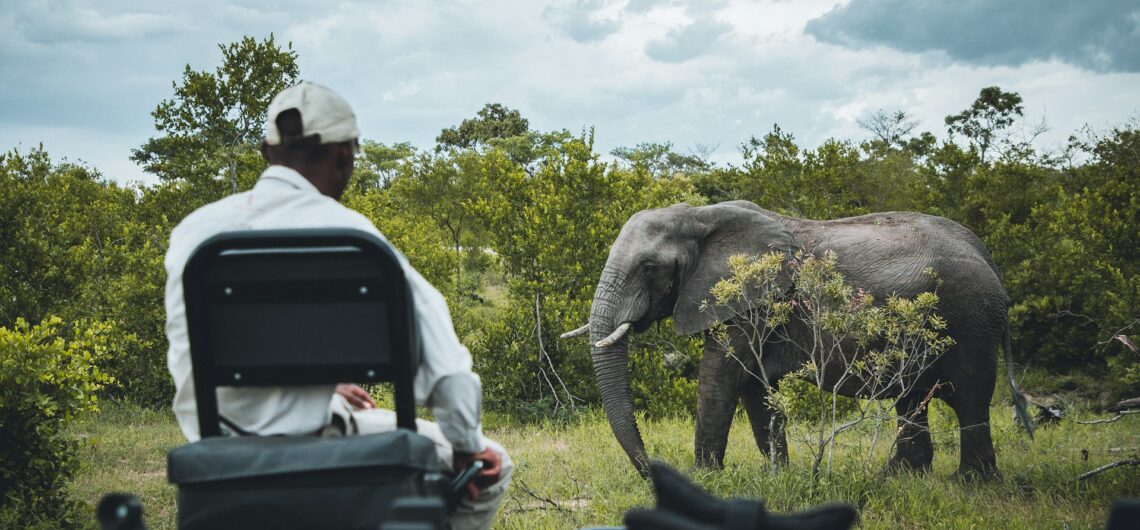
The most popular way to see the Kruger National Park is to book a safari game drive.
There are plenty of reputable safari tour operators working in the park, and they offer a wide variety of safari options. Booking a guided tour takes the pressure out of having to drive yourself, and since it includes transfers, the whole experience is a lot more relaxing and enjoyable.
The infrastructure is superb, there are nine main gates, 12 main rest camps, and dozens of picnic spots, many with braai facilities if you wish to eat like a local, and some truly spectacular viewpoints, some of which allow you to exit your vehicle and have a walk around, if you are brave.

The Kruger National Park is a destination that everyone should visit at least once.
If the history of the Kruger has stirred something deep in you, maybe it’s time you did more than just read about it and start living it.
Join us on a Kruger safari, and experience a corner of Africa that has been loved by locals and international travellers alike for over 100 years.
- The park is roughly the same size as Wales.
- In 2002, the Kruger National Park joined forces with two neighbouring reserves to form the Great Limpopo Transfrontier Park. Today, this park connects South Africa’s Kruger National Park with Mozambique’s Limpopo National Park and Zimbabwe’s Gonarezhou National Park, creating one of the largest cross-border wildlife sanctuaries on the continent.
- The first tourist road opened in 1927, with just three cars visiting that year.
- South Africa protects around 93% of the world’s remaining black and white rhinos, and the Kruger National Park is home to roughly half of them.
- The park is a botanical treasure trove, drawing plant enthusiasts from around the world. Among South Africa’s six recognised biosphere regions, the Kruger to Canyons Biosphere is not only the country’s largest but also the third-largest on the planet.
Paul Kruger went into exile in 1900 during the Second Anglo-Boer War after the British invaded the Transvaal. He fled to Europe to find support for the Boer cause but never returned to South Africa, passing away in Switzerland in 1904.
Paul Kruger founded the original game reserve in 1898, alongside other pioneering men, which later evolved into the Kruger National Park under James Stevenson-Hamilton’s stewardship.
The Big Five are lion, leopard, rhinoceros, elephant, and Cape buffalo. They were named the Big 5 by hunters for being the most difficult animals to track on foot, and now the Big 5 are known for being the most iconic sightings for safari-goers.
Legend has it that Paul Kruger’s fortune, known as the “Kruger millions”, was hidden during his flight from South Africa. Despite numerous searches, the treasure has never been found, making it one of the country’s most enduring mysteries.