Buffalo, Bushcamps and the Birthplace of the Walking Safari: Welcome to South Luangwa
By the middle of the twentieth century, much of Africa’s wilderness had already been “conquered”, divided, fenced and measured.
Zambia’s Luangwa Valley, however, was one of the few places left unaffected.
The earliest history of the park dates back to a story from the 1800s that told of the arrival of the Kunda people who settled on the eastern bank of the Luangwa River.
Much later on, in 1904, the first game reserve was created, and then failed.
The reserve was established 3 more times before the area was finally, officially declared a national park in 1972.
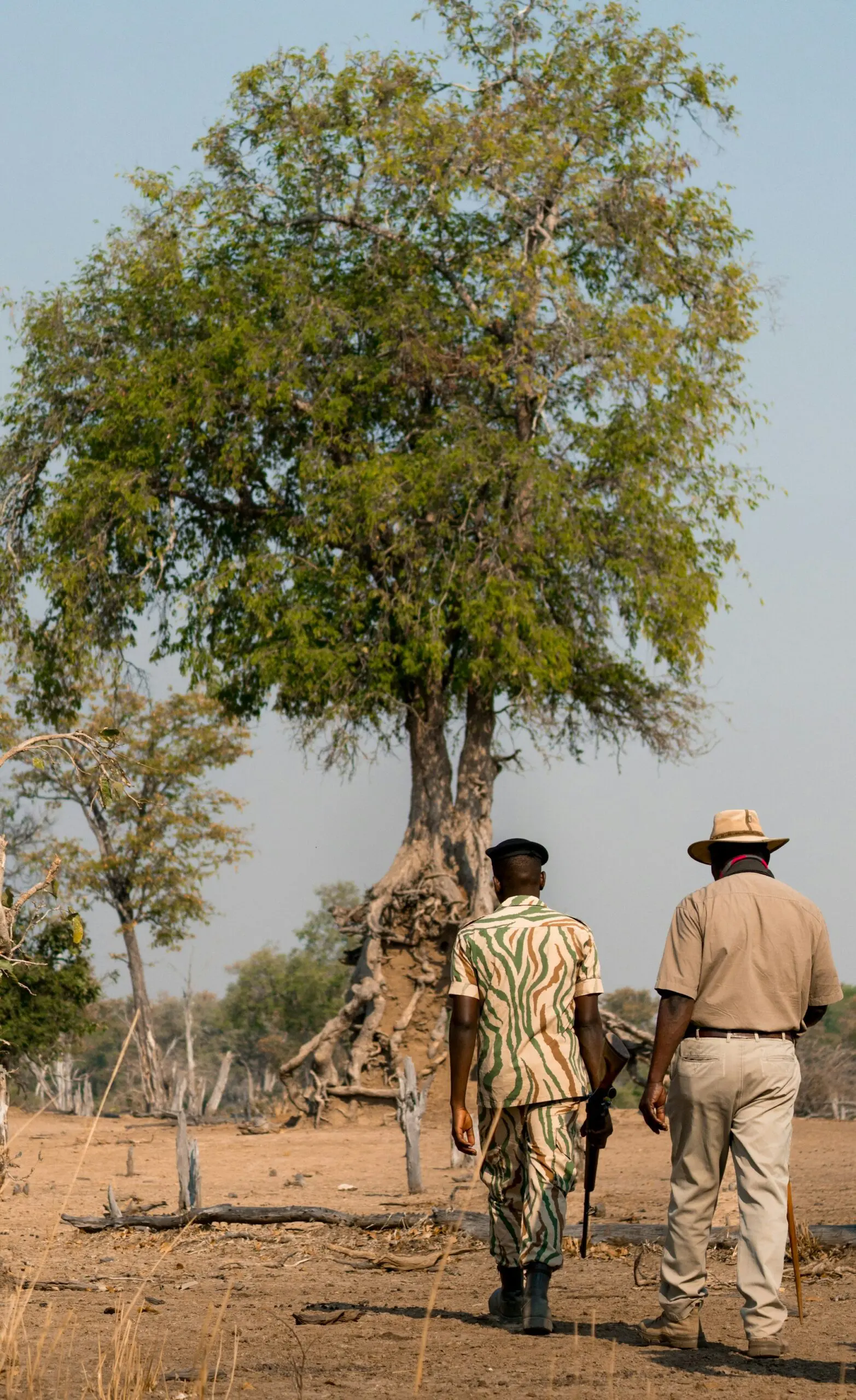
It was also here in the 1950s that conservationist Norman Carr began taking visitors into the bush, on foot, with local guides. The idea was simple, and for the era, quite radical.
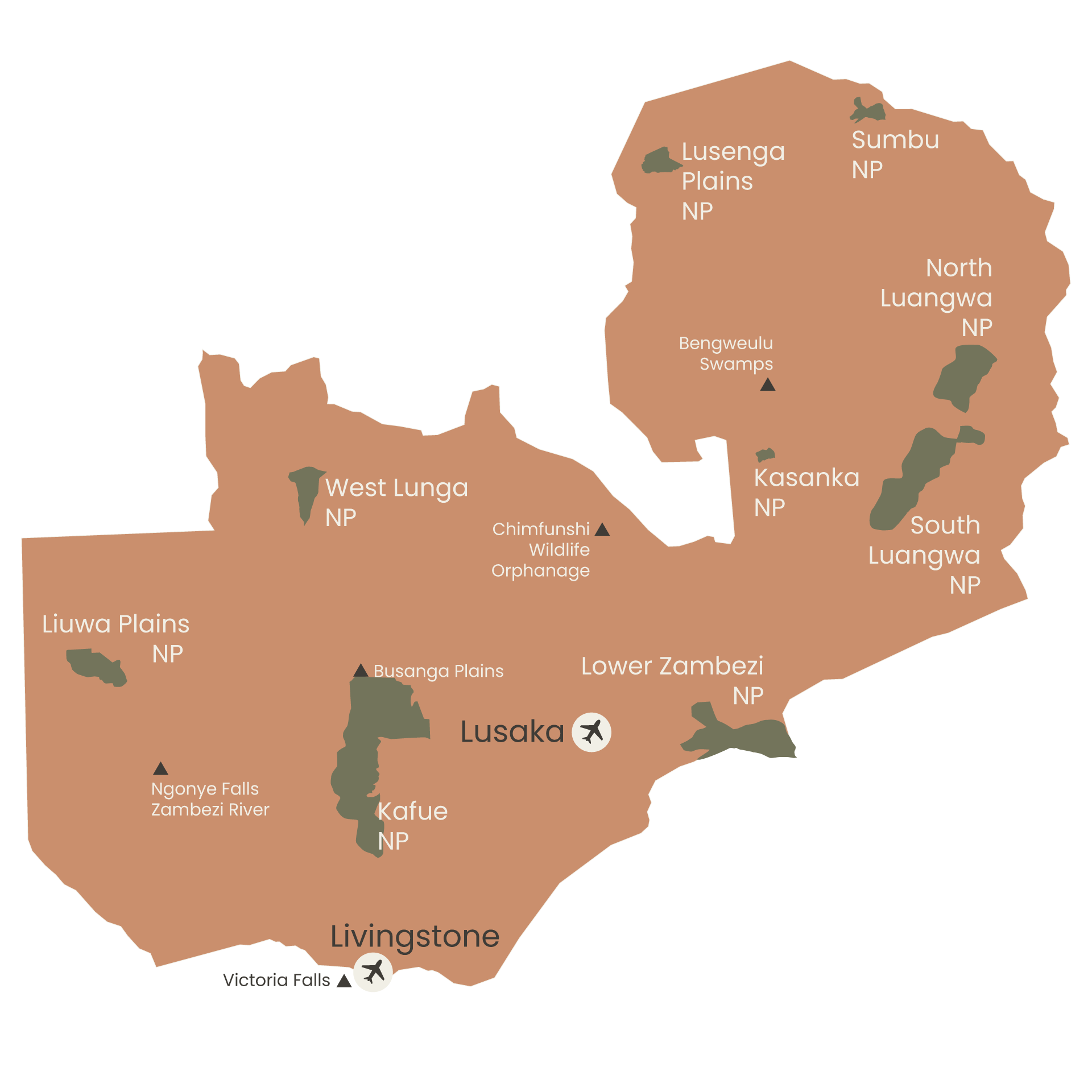
Today, South Luangwa National Park protects roughly 9 050 square kilometres of eastern Zambia, following the Luangwa River through woodland, floodplain, lagoon and escarpment country.
It is one of Africa’s great wildlife sanctuaries, yet it has never quite reached the same star status as the Kruger National Park, which is precisely why it has become such an alluring destination for those who want a more refined safari.
In this guide, you will find everything needed to plan a luxurious and responsible visit, from the park’s intricate history and its abundant wildlife to our favourite lodges, the best time to travel and how to make the most of a destination best known as the birthplace of the walking safari.
The Park that Invented the Walking Safari
Norman Carr is often credited as the mind behind the walking safari, but the truth is that people had walked there for millennia, just not technically to see wildlife.
What Carr did was rethink the safari experience, making it something far more novel than the game drive, which by the 1950’s was the only way to see wildlife in Africa.
Carr believed that a safari should be more than ticking off a list of animals, seen at a distance from a vehicle.
Along with trained local guides to lead the way, and using his knowledge as a conservationist, he began taking guests out into the park on foot, showing them how to follow various wildlife tracks, teaching them how to identify calls and now to understand animal behaviour, and also how to move through the bush without scaring animals away or causing damage to the vegetation.
The walking safari was born from a “leave only footprints” philosophy, and South Luangwa became its spiritual home.
A walking safari is about as close to wildlife as you can safely get, and it is a wonderful way to slow you down. On foot, you notice the finer details of just about everything, from the colour of a beetle whose shimmering wing just caught your eye, to the unfamiliar but unmistakable scent of a hyena.
And while you might not think it, a walking safari in Zambia also happens to be one of Africa’s most luxurious holiday experiences. Few people sign up for such an expedition that it has become a bit of an exclusive activity, one that places you among the very few who get to say they’ve come almost face to face with a lion watching them through a thicket of grass.
Why South Luangwa is Unlike any other African Park
The Luangwa River is the park’s lifeblood.
Over centuries, it has changed its course, creating oxbow lagoons that have become vital water sources in the dry season.
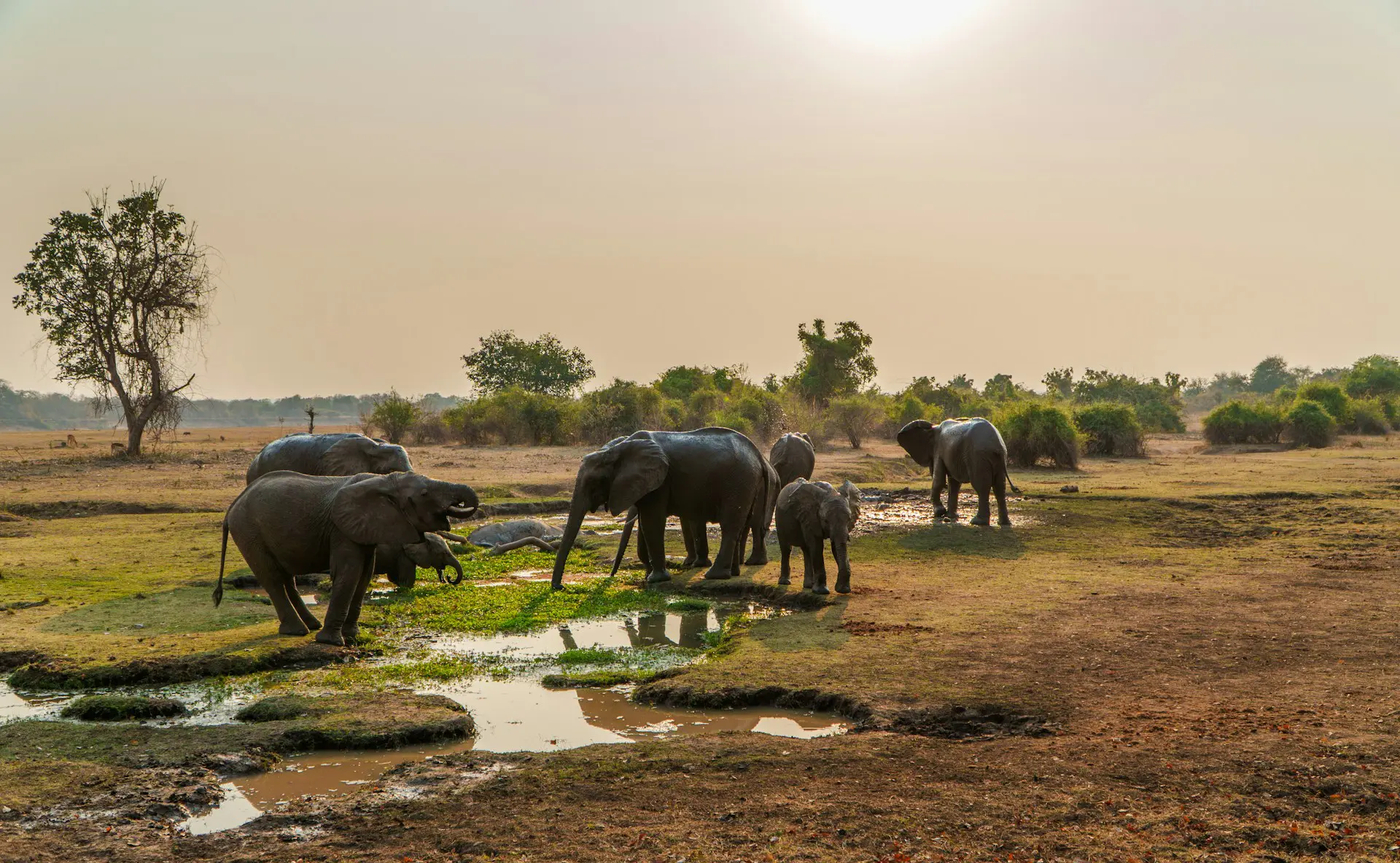
When the rains arrive, the river floods the valley and renews the grasslands, and when the water recedes, wildlife gathers along its banks in extraordinary concentrations, treating those on safari to some of the most memorable sightings.
The ebb and flow of the river gives South Luangwa its character. It is a park defined by water, season and the migration of its animals, rather than by anything man-made.
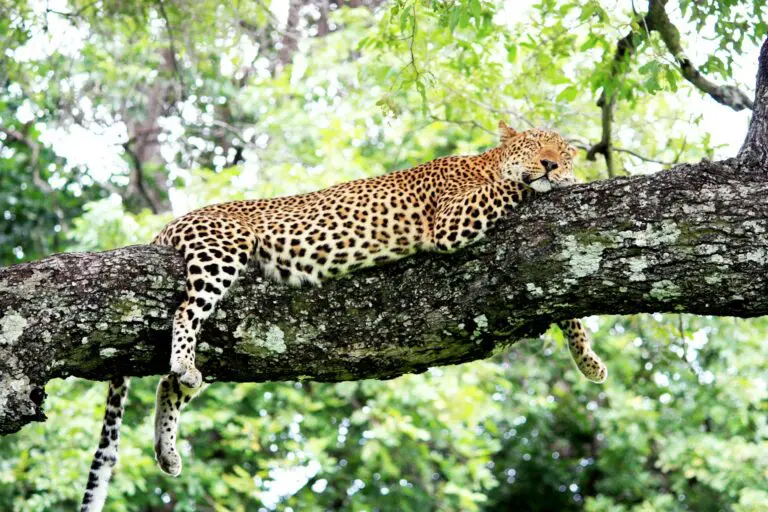
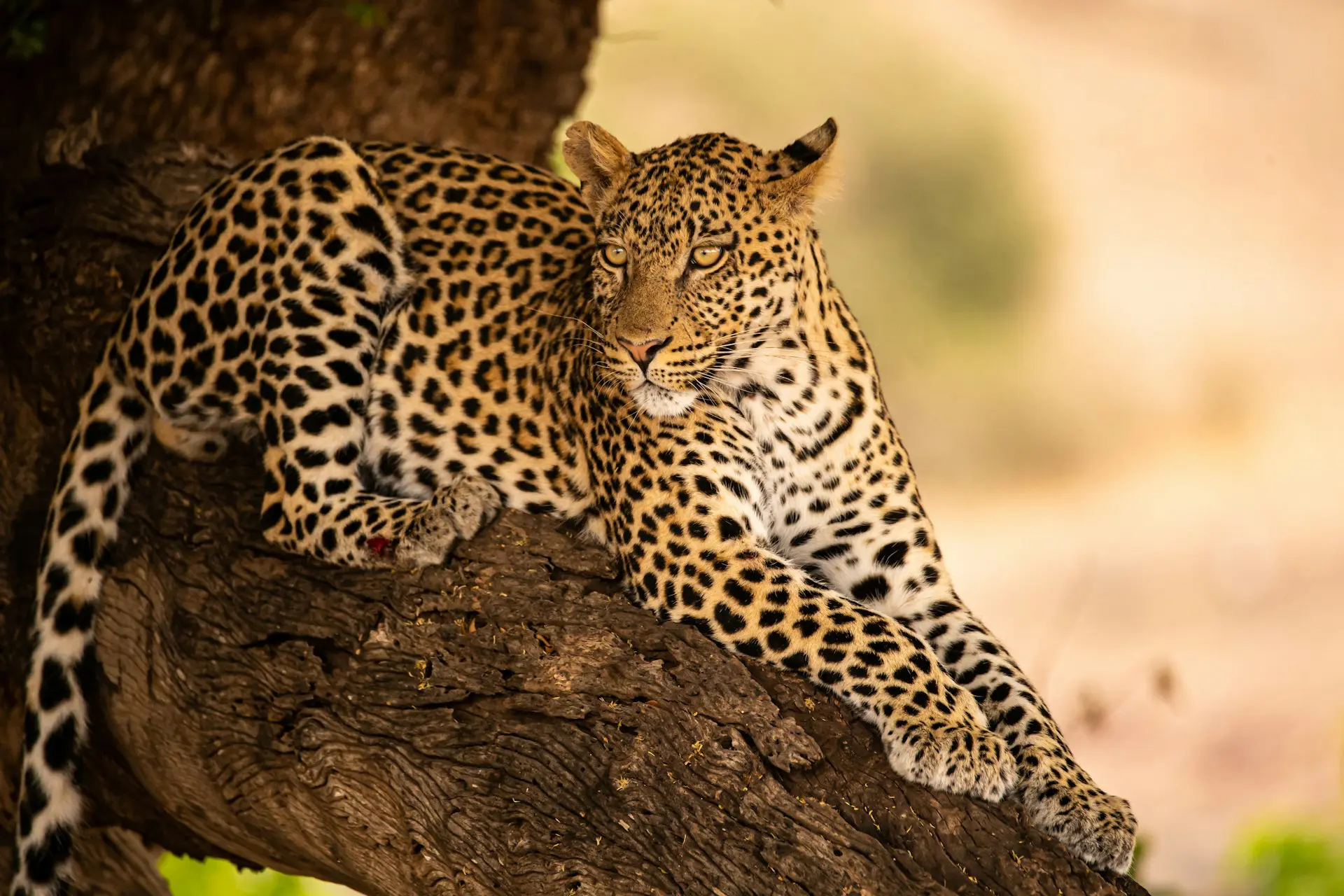
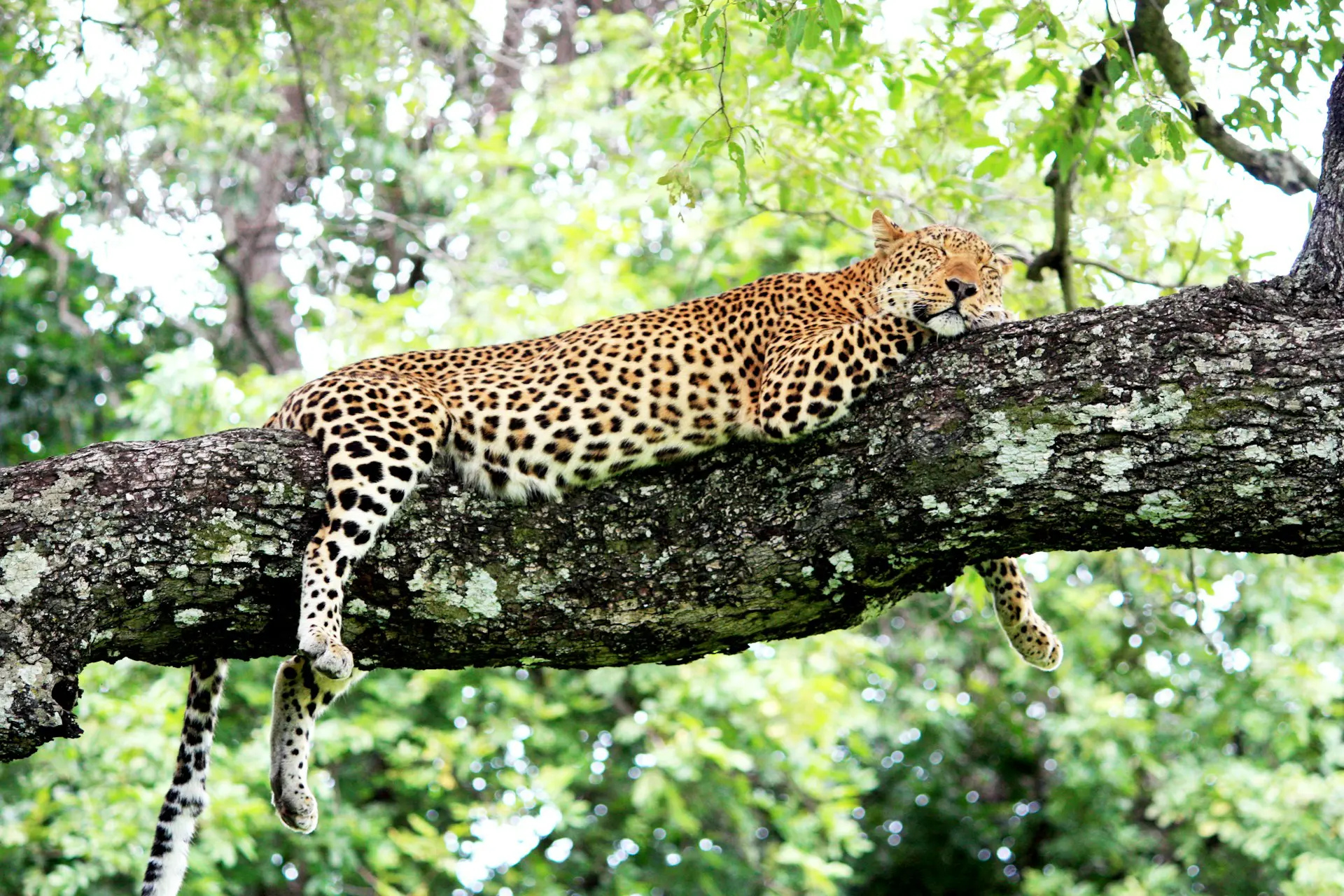
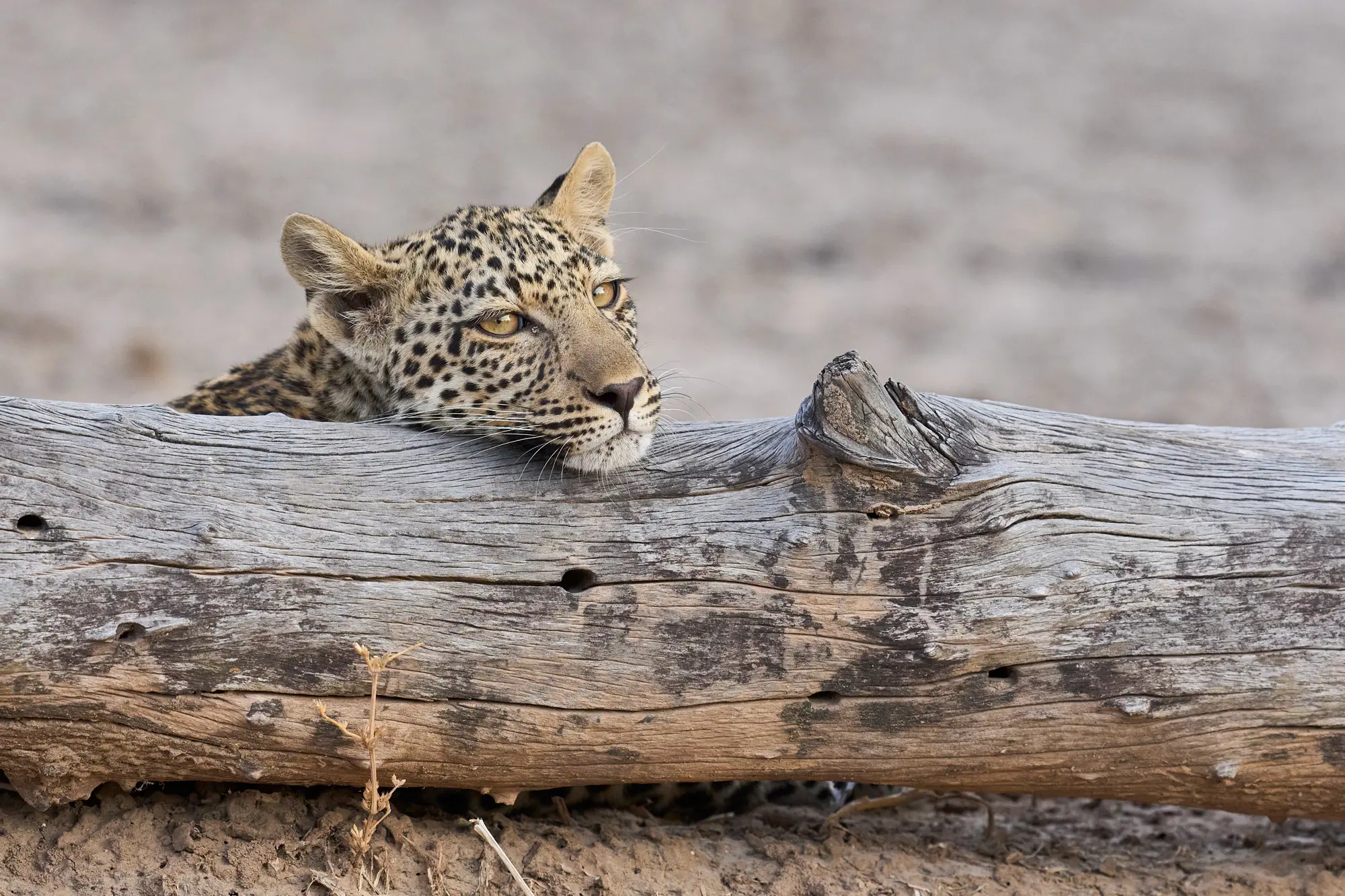
It is also one of the best places in Africa to see leopards.
The riverine forest, dense thickets and abundant prey make the valley an ideal habitat, and sightings are frequent enough that South Luangwa is often called the Valley of the Leopard.
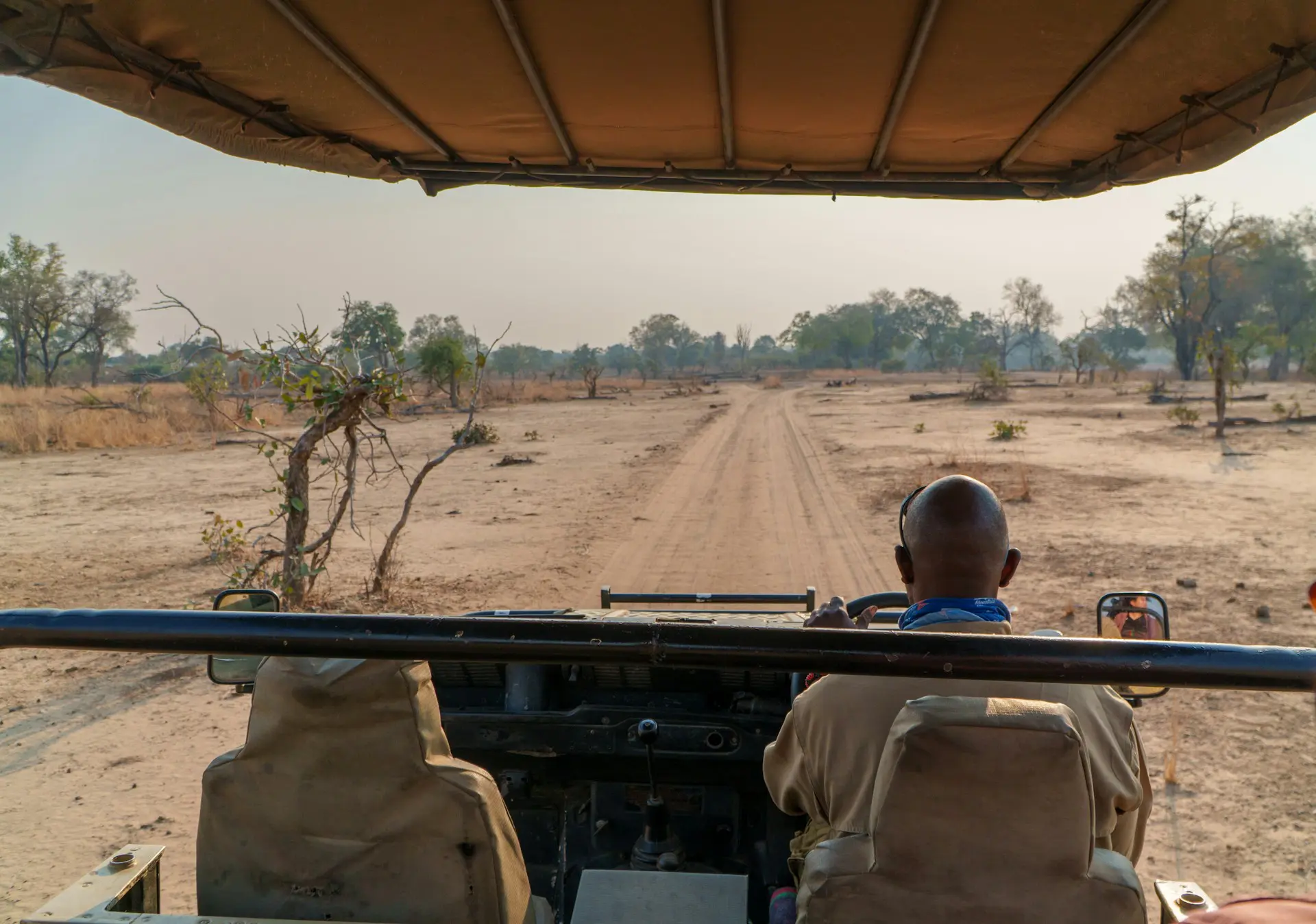
And while in many other African parks, visitors must return to camp before dark, in South Luangwa, and when in the company of a safari guide, the sightings can continue into the night, with the guide using a filtered spotlight to find genet, civet, bushbaby, hyena and leopard beginning the night’s hunt.
Wildlife You May Encounter in the Luangwa Valley
South Luangwa is home to Thornicroft’s giraffe, a subspecies found only in the Luangwa Valley. Its darker, more irregular markings make it one of the park’s most distinctive residents.
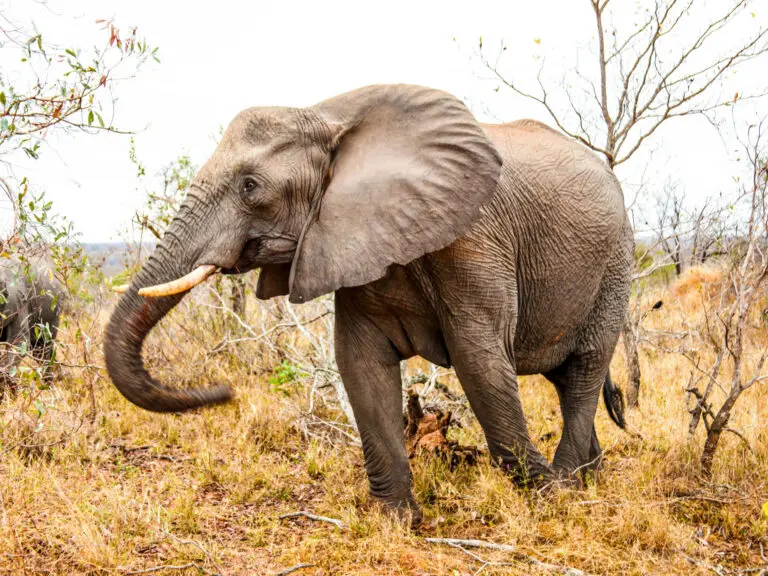
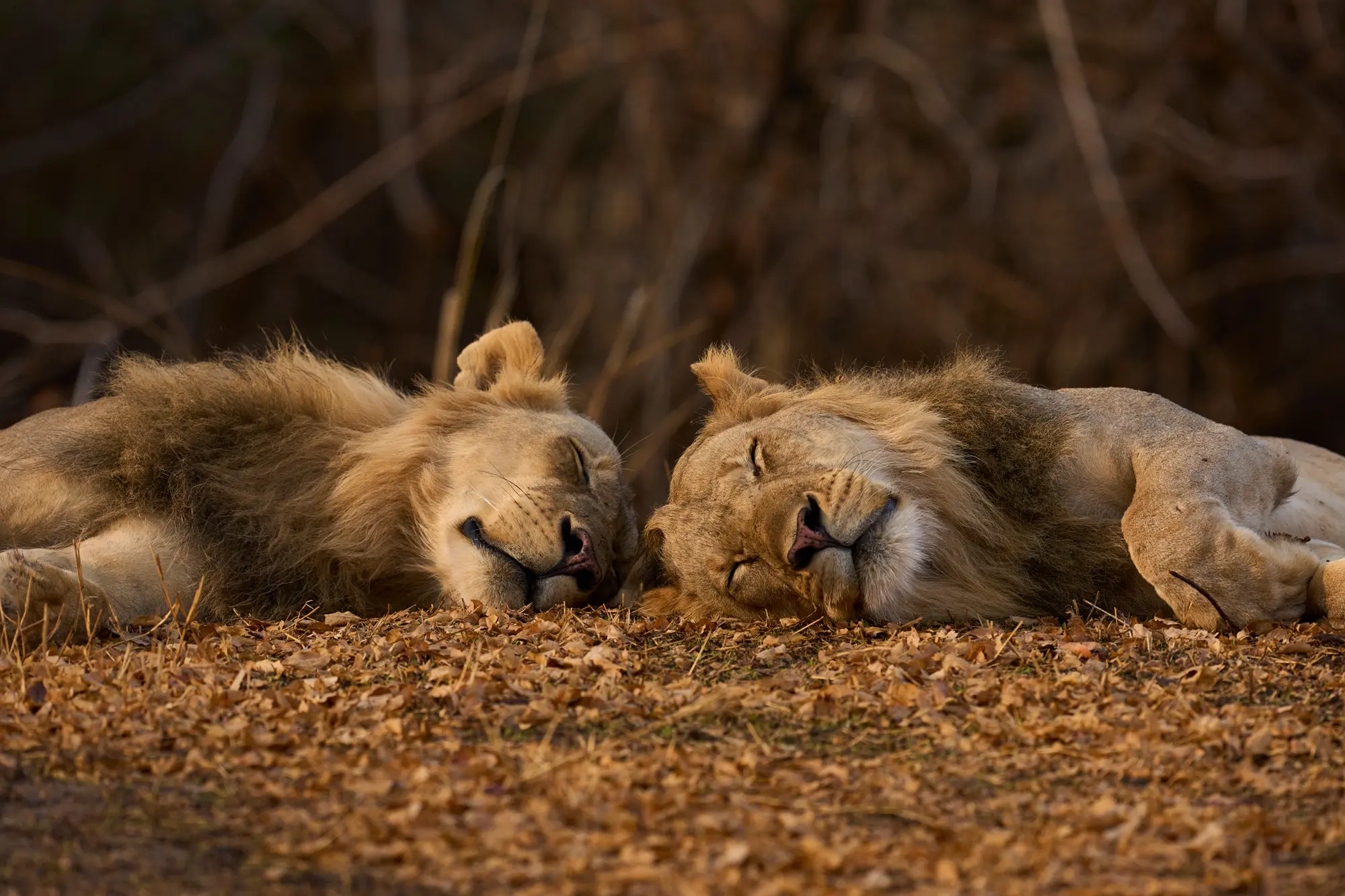
The wildlife in Luangwa Valley includes most of Africa’s classics, 4 of the Big 5 (there are hardly any rhinos left in the park), and it is home to a few special species that you won’t come across elsewhere on the continent.
Big Game and Predators
- Leopard (the park is one of Africa’s best places to see leopards)
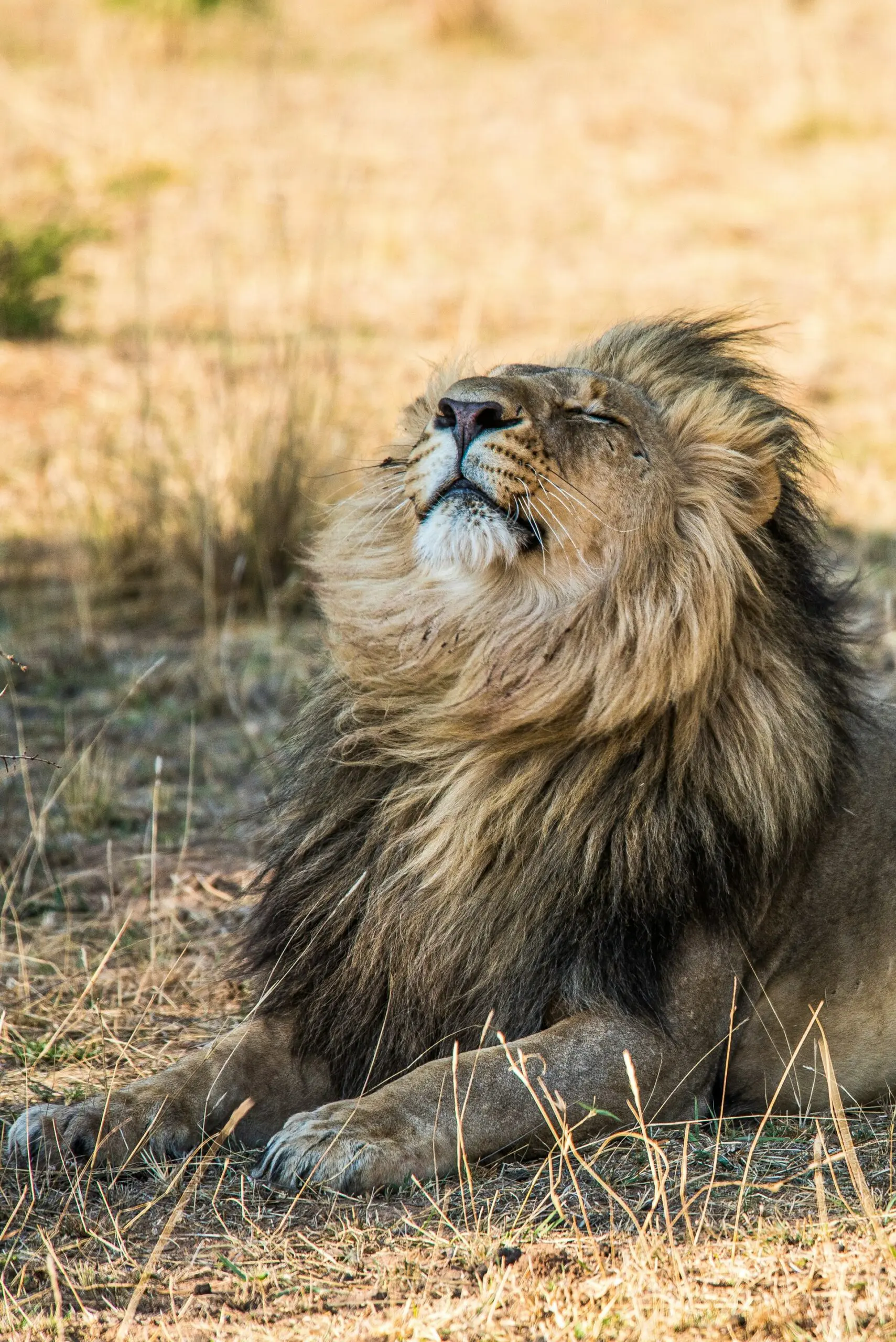
- Lion
- African wild dog
- Spotted hyena
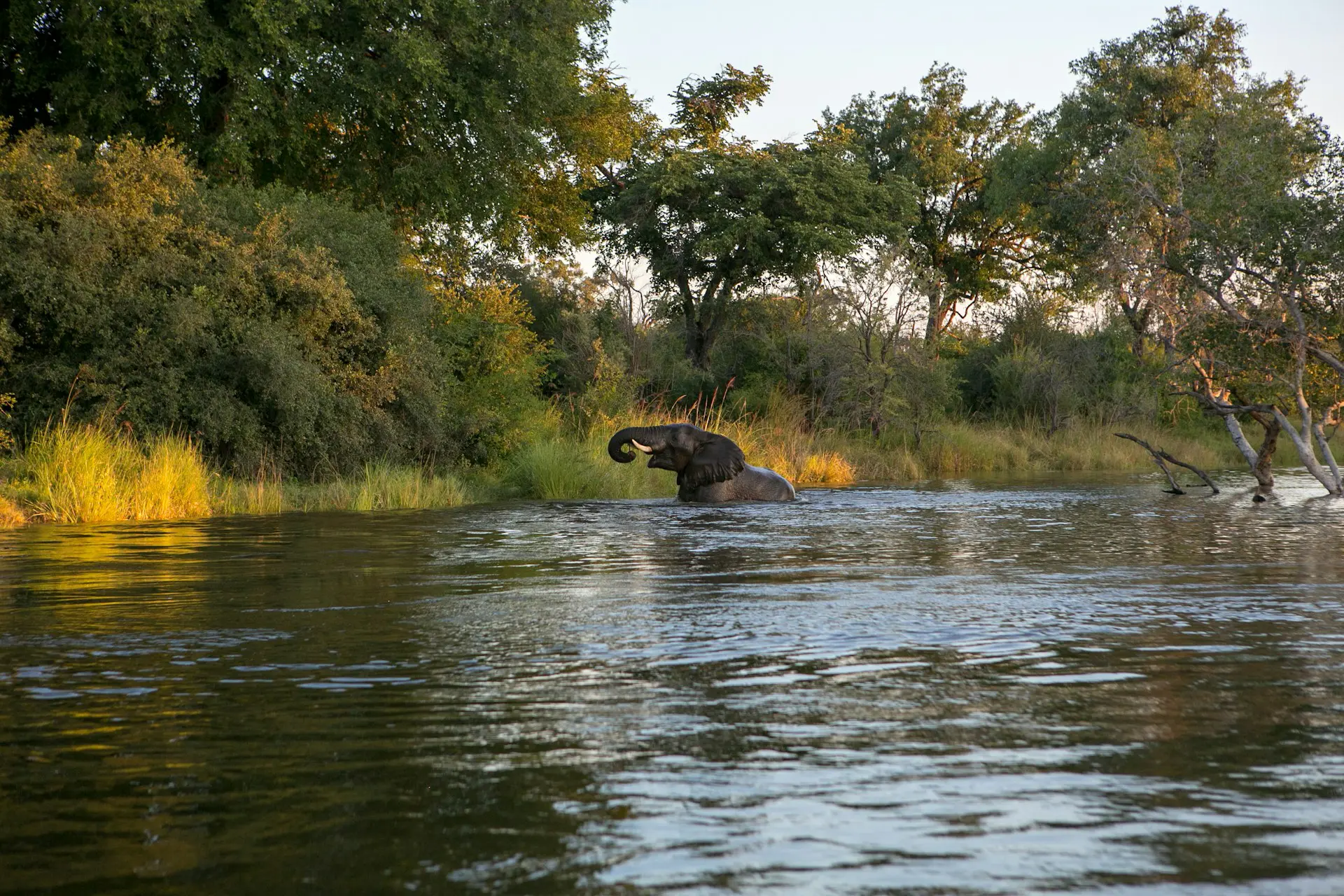
- African elephant
- Cape buffalo
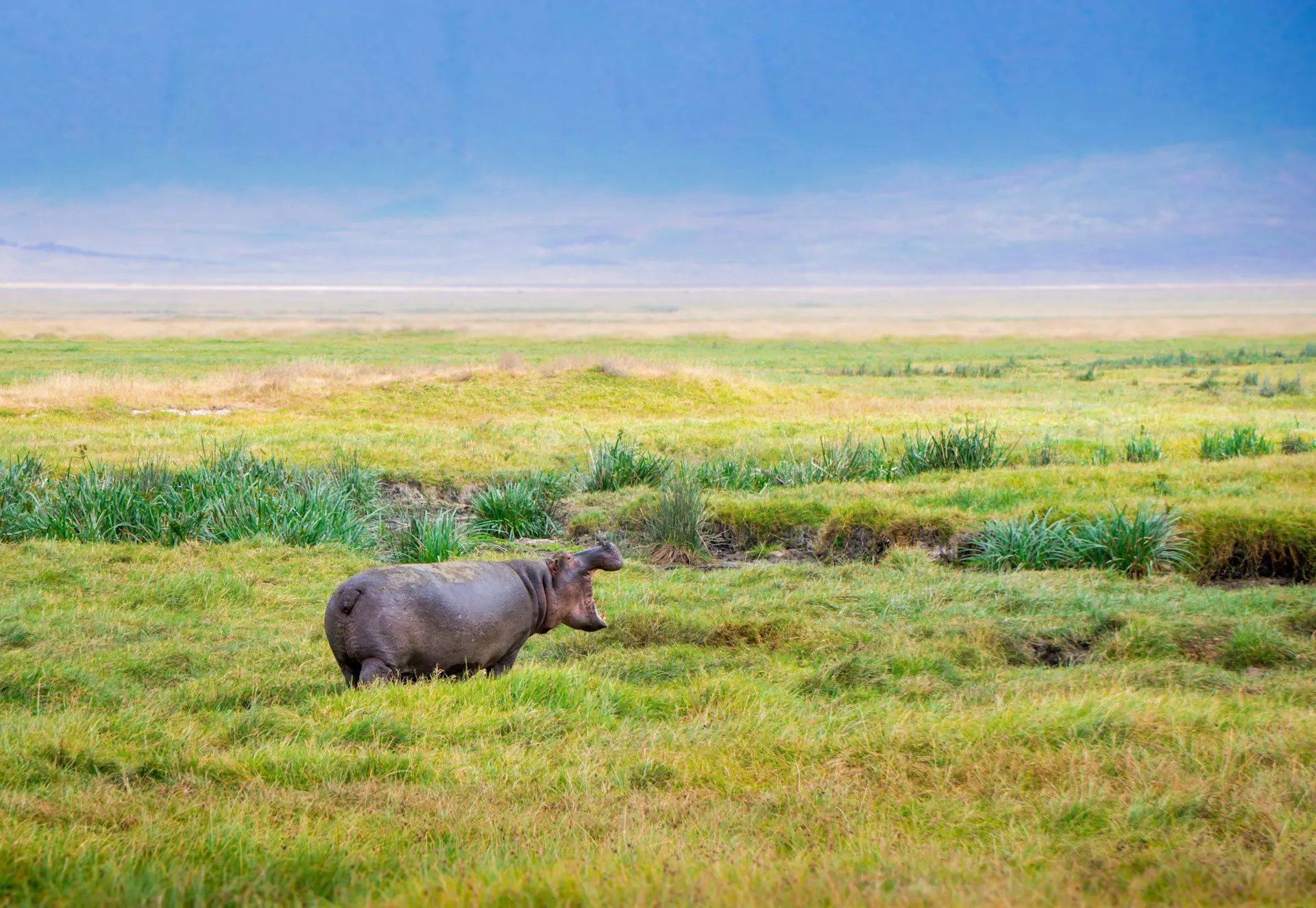
- Hippopotamus
- Nile crocodile
Antelope and Plains Game
- Impala
- Puku
- Waterbuck
- Greater kudu
- Bushbuck
- Eland
- Roan antelope
- Sable antelope
- Oribi
Luangwa’s Unique Species
These are the animals that make a South Luangwa checklist different from most other safari destinations.
- Thornicroft’s giraffe, found only in the Luangwa Valley and known for its distinctive darker patterning.
- Cookson’s wildebeest, endemic to the valley and smaller and more compact than blue wildebeest elsewhere.
- Crawshay’s zebra, a regional zebra subspecies with clean, narrow striping and no shadow stripes.
Smaller Mammals and Nocturnal Species
Night drives are one of South Luangwa’s great advantages, making these species far more likely sightings than in many other parks.
- Large spotted genet
- African civet
- Serval
- Caracal
- Honey badger
- Porcupine
- White-tailed mongoose and banded mongoose
- Bushbaby
- Vervet monkey
- Yellow baboon
- Moloney’s monkey, a rarer sighting.
The birdlife is exceptional too, with more than 400 species recorded, and most seen along the banks of the river.
South Luangwa vs the Kruger
The Kruger is, and always will be, one of Africa’s greatest wildlife destinations.
For a first safari where the aim is to see as much game as possible, it should be at the top of any African travel list.
South Luangwa, on the other hand, suits the traveller who has already seen some of Africa and now wants a more personal, immersive experience.
Where the Kruger is expansive and often busy, South Luangwa is smaller in scale, with fewer vehicles, more intimate camps and a wonderful sense of seclusion.
The safari styles differ too.
The Kruger is known for its road network, the freedom to easily go on a self-drive, and exceptional predator viewing. It is also famous for its Big 5 sightings.
South Luangwa is defined by walking safaris, night drives and small camps, where the guide’s knowledge and the time of year will usually determine how a day plays out.
Neither park should be seen as a replacement for the other. Instead, add both to your must-visit destination list and make plans to see both. You’ll never regret the experiences you’ll have on safari.
Helpful Things to Know About South Luangwa
As with all holidays, there’s always some “paperwork” to keep in mind, like where you’ll be flying to, where to stay and other details.
These are some of the basics to know before you go:
- The main gateway to the park is Mfuwe Airport, which is usually reached by light aircraft from Lusaka.
- Many visitors need a Zambian visa, often available online through the e-visa system or on arrival, though requirements should be checked before travel.
- Zambia is a malaria area, so getting some antimalarial advice, having a good quality repellent and knowing a little something about malaria and how to avoid it, is a must.
- The Zambian Kwacha is the local currency, but US dollars are widely used for some tourism services and for tips.
- Camps are small and seasonal. Many of the finest bushcamps close during the heavy rains, so you must get on top of your travel dates so you don’t miss the window. Booking early is not simply a luxury habit here; it is often the difference between securing the right guide, the right room and the right camp.
Where to Stay
South Luangwa has a couple of lodges and camps that are full of character and focused on giving guests a luxurious experience.
Nkwali Camp, built right beside the Luangwa River, has just 6 chalets made from local materials, open-air bathrooms and views across a lagoon where you’ll often see hippos. It is an excellent place for your first stay.
Nsefu Camp is situated on a bend of the river and holds a special place in Zambian safari history as it is the country’s first game camp, established in the early 1950s. Its rondavels look out over the river, and its private rooms and verandas make it ideal for travellers wanting seclusion.
Luangwa River Camp is a higher-end camp, and its main areas look over the park and river. It suits couples and travellers who want to stay at an authentic camp without giving up their comfort.
Mfuwe Lodge is known for its lagoon-side setting and, famously, for elephants that sometimes walk through the lobby, following their seasonal route. It is an excellent choice for travellers looking for a larger lodge with spa facilities and a little more modernity.
There is also the option of booking a mobile walking safari, where you’ll move between well-equipped walk-in tents and spend each night in a new part of the bush, settling in after a day of walking through the bush.
Where to Eat
Safari dining in South Luangwa is dining at its very best; slow, indulgent and full of flavours to excite the senses.
Breakfast, accompanied by strong Zambian coffee, is usually taken early, before the morning activity, because the best time to be out exploring the bush is always just before sunrise. Brunch or a quick refreshing snack follows later in the day.
Afternoon tea is a bit of a ritual in higher-end Zambian lodges, with delectable delights like cake, biscuits and tea served before the evening drive.
And dinner is generally a shared affair, with candles, lanterns and conversation about the day’s sightings, unless, of course, you are on a romantic trip, in which case you can look forward to a private dinner.
The best camps will usually try their best to source produce from local growers and sellers, and menus will often be seasonal. You can expect grilled meats, fresh vegetables, homemade bread and a well-chosen wine list, with the vintages coming from Zambia’s far south neighbour, South Africa.
What to Pack for South Luangwa
In many ways, South Luangwa is a typical safari destination, so what you’d pack for the Kruger or Etosha, you can pack for your safari here. To help you with your packing list, make sure that you include the following in your luggage:
Clothing
- 2 or 3 lightweight, breathable shirts in khaki, olive, brown or grey
- 2 or 3 pairs of lightweight trousers, including one pair for cool evenings
- A warm fleece or insulated jacket for June to August mornings and night drives, when open vehicles can feel very cold
- A light windproof jacket for dusty game drives
- A lightweight scarf or buff for dust, sun and early morning chill
- A wide-brimmed, crushable hat
- A swimming costume for camp pools
- Neutral socks, with a few thin pairs rather than one thick pair
Footwear
- Comfortable, broken-in walking shoes or lightweight hiking boots with ankle support, especially if you are joining a walking safari
- Camp sandals or slip-ons for around the tent and pool
South Luangwa Specifics
- Don’t bring along blue and black clothing, as they can attract tsetse flies
- Avoid white and bright colours, which stand out in the bush
- Pack a small soft daypack for walks, camera gear, water and sunscreen
- Bring a torch or headlamp for moving between tent and main area after dark
- Include a dust cover or dry bag for camera equipment, as dry season drives create fine dust
- Carry tissues or a small personal pack for bush walks, plus a reusable water bottle
Health and sun Protection
- Antimalarial medication, arranged with a travel clinic before departure (South Luangwa is a malaria risk area all year)
- High-quality insect repellent
- Lip balm and high SPF sunscreen
- Long sleeves and trousers for dusk, night drives and walking safaris
- Personal medication, basic first aid items and travel insurance with air evacuation cover
Camera and documents
- Binoculars
- Camera, zoom lens, spare batteries, memory cards and a power bank
- Passport, visa or eVisa confirmation, insurance details and any required medical documents
The Best Time to Visit South Luangwa
The prime season runs from June to October.
At this time of the year, the weather is dry, the bush is thin, and wildlife can be seen more regularly around permanent water sources.
June and July are cooler, with daytime temperatures around 25°C and chilly early mornings. September and October become a lot hotter, often exceeding 35°C, but game viewing can still be outstanding as animals gather along the river to quench their thirst.
If it is a good season, November and December arrive with the start of the summer rains, and it’s a great time to travel if you want to see newborn animals and pay lower rates, though some camps begin to close. From January to March, the heavy rains settle in and many camps close because the roads become impassable.
For a luxury walking safari, late June to early September is difficult to beat.
The Ideal Amount of Time to Spend in South Luangwa
Unlike more accessible safari destinations, South Luangwa takes a little more time to travel to.
This means you want to give yourself ample time to have that complete safari experience without rushing through the downtime side of your holiday, the part of your trip that allows you to rest between the excitement of seeing wildlife.
3 nights is the bare minimum, 5 nights is better, but 6 or 7 nights is the ideal amount of time, enough to combine a riverbank camp stay with a more remote bush camp, and to experience both driving and walking safaris.
Some Final, Quick and Helpful Tips for Your South Luangwa Trip
- Book small camps at least 9 to 12 months ahead for the best rooms and guides
- Choose at least one walking safari, even if it is only a gentle morning walk, and pack a warm layer, even in September
- Carry US dollars in small denominations for tips and incidentals
- Ask your camp about conservation contributions before booking a trip if eco travel is something you are invested in
- Keep two afternoons unplanned
- Travel with a specialist who understands seasonal camp openings, flight timings and guiding quality