Table of contents
Enhance your reading experience—immerse yourself in the adventure with our audio version. Click play and let the sounds of Africa captivate you!
A guide for the discerning traveller who wants to see the Real Africa
If you’ve travelled the Kruger from north to south, floated through the labyrinths of the Okavango Delta, and walked the sands of the Namib in search of the desert elephants, and you’re yearning for something new, there’s one destination you might not have stumbled upon yet.
The Zambia safari is unlike any trip.
While so many corners of the African continent have become over-commercialised and even overcrowded, Zambia is still one of the wildest places.
The safari destinations are off the beaten track, the camps are remote and rustic, and the wildlife is famous for being abundant, especially elephants.
A Zambia safari is for anyone who values the sort of experience that is the epitome of wild and free, and in this guide, we’ll help you decide if this is the place for you.
Is Zambia Good for Safari?
Some destinations promise a safari that is private, exclusive and well away from the crowds; Zambia actually delivers one.
While other corners of Africa grow busier each season, Zambia has proudly and steadily held its ground as one of the continent’s most rewarding and genuinely unspoilt wildlife destinations, making it the best place for a safari.
It is, after all, the birthplace of the walking safari, a legacy that says everything about how deeply this country respects the wild.
A Zambia safari is not contained by fences or put together in such a way that you’ll have every convenience. A trip through Zambia is beautifully unpredictable, totally hands-on and utterly unique.
The country’s national parks collectively cover roughly 30% of its landmass, and with international visitor numbers still relatively modest compared to its neighbours, like the Kruger, what you find here is space, silence, and an intimacy with nature that is sadly becoming increasingly rare.
It is also the sort of place that caters to all kinds of travellers. While the country is not as developed as other African safari places, and although it’s all a bit wild, luxury travellers are well looked after.
There are plenty of ultra luxurious lodges to choose from, and most of the best safari companies have a variety of luxury package options.
What Animals Do You See on a Zambia Safari?
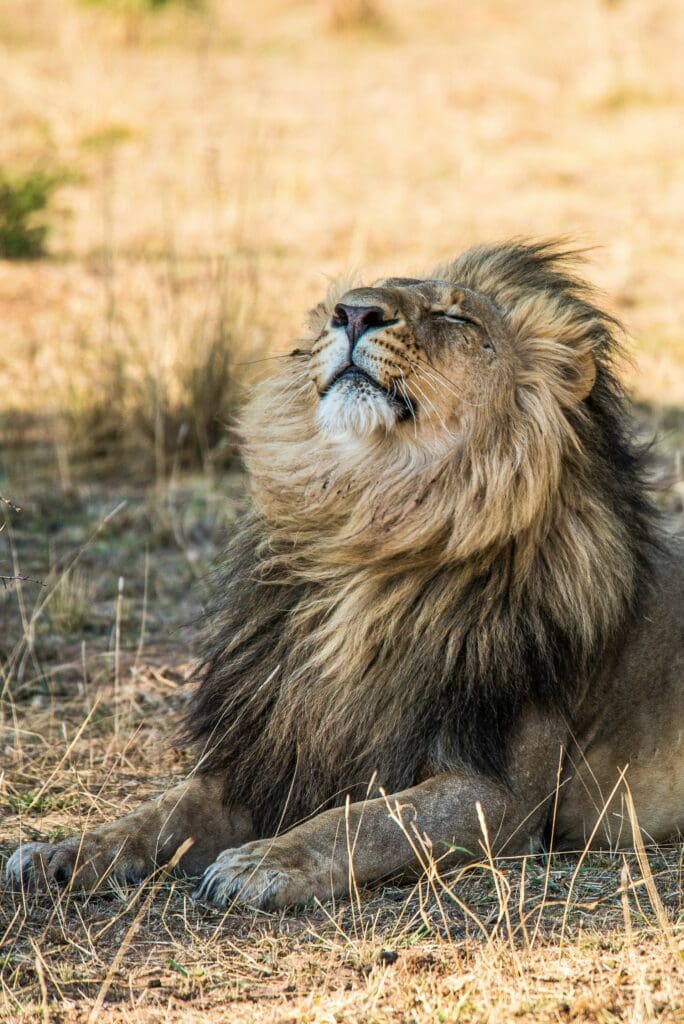
A Zambia safari will give you plenty of sightings, as the wildlife here is prolific and the species are varied.
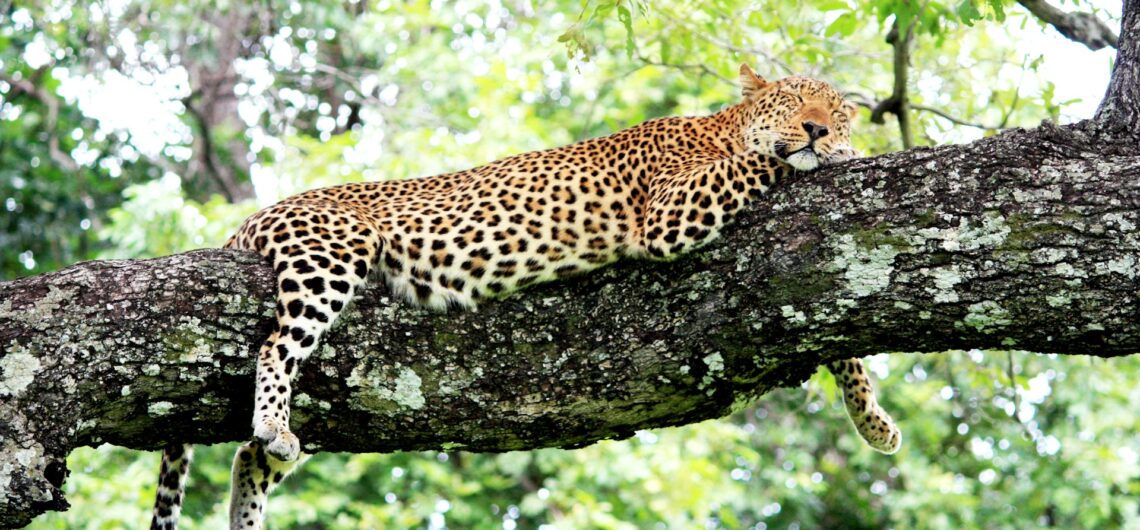
South Luangwa National Park, often regarded as the ultimate Zambian park for a safari, is home to one of Africa’s greatest concentrations of leopard, as well as lion, elephant, buffalo, zebra, and the endearingly awkward Thornicroft’s giraffe, a subspecies that is found nowhere else on Earth.
The Luangwa Valley is also celebrated for its walking safaris, where you might be lucky to encounter crocodiles sunning themselves on the riverbank and hippo splashing in the shallows.
The Lower Zambezi National Park, another exceptional choice for a Zambia safari, is framed by the great river and the Zambezi Escarpment.
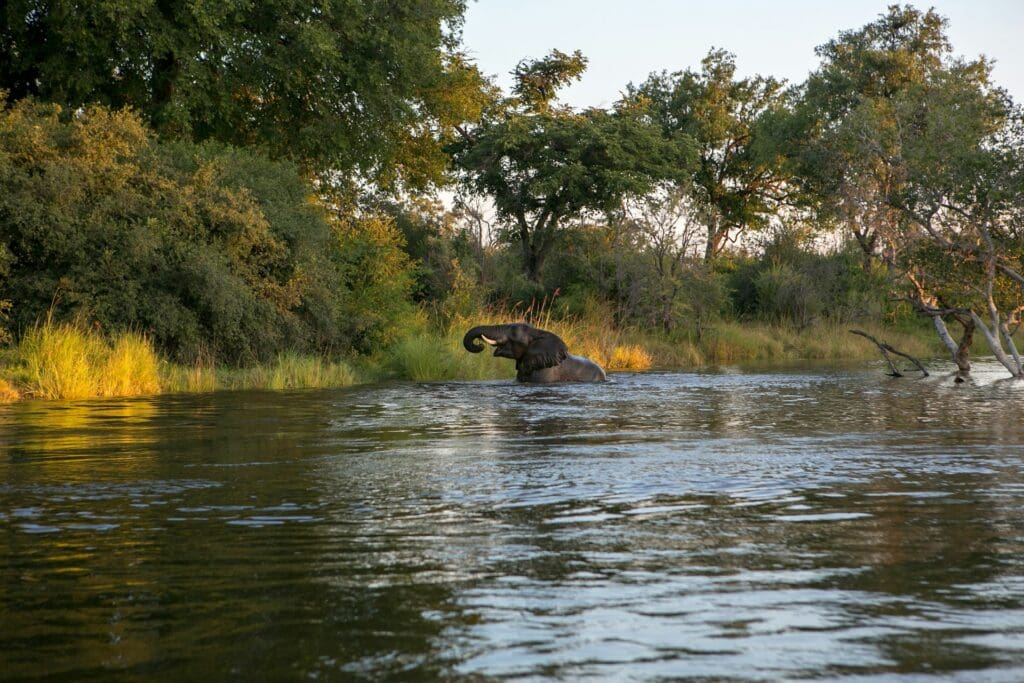
It is one of the few places where you can sign up for a canoeing safari, which gives guests the rare pleasure of drifting silently past elephant and buffalo at the waterline.
And in Kafue National Park, Zambia’s largest and one of Africa’s biggest parks, is a world unto itself, with wild dog, cheetah, roan antelope, and an extraordinary concentration of birds living among its many other residents.
For those willing to go a little bit further, the Liuwa Plain National Park is certainly worth the trip, as it is home to one of Africa’s last great wildebeest migrations, and it has a wolf and hyena population that is rarely documented elsewhere.
What is the Weather Like in Zambia?
Zambia sits comfortably within a warm, tropical climate zone, and its seasons follow a reliable pattern that gives the typical safari different characteristics and wildlife sightings, depending on the season you book your holiday.
The dry season is hands down the most popular season. It runs from approximately May through to October.
During these months, the rainfall is scarce, and the vegetation thins out completely, making it easier to see through.
One of the biggest reasons why it’s a great season to travel is that animals congregate around the rivers and remaining water sources, making wildlife sightings more predictable and a lot more spectacular, as there is always the chance of catching a predator-prey interaction.
October can be particularly dramatic; a hot, golden month when the bush is at its most stripped back, and the game viewing is arguably at its peak.
The green season, which is from November through April, can be cinematic as the bush turns green and fills up with wildflowers. During this season, the migratory birds arrive in extraordinary numbers and newborn animals begin to appear across the plains.
Rainfall tends to fall in afternoon downpours rather than all-day drizzle, so your mornings are bright, and game drives are entirely viable.
Many experienced travellers and photographers actually prefer to book their Zambia safari during the green season, as it is a lot more photogenic as well as quieter.

What is the Best Month to Visit Zambia?
For first-time visitors to Zambia, the best month is any month between June and September.
During this time, the weather is dry and cool, the roads are accessible, and the game viewing is at its most concentrated and consistent.
September and October give travellers an entirely different atmosphere, as the heat builds, the bush is still thinned, and there is plenty of wildlife activity in most parks, especially around the water sources.
For those already familiar with the dry season experience and who are now looking for something different, January and February are extraordinary months for a Zambia safari.
The Liuwa Plain wildebeest migration peaks around this time, and the bird life is at its most spectacular.
This season also brings considerably more competitive pricing and a sense of having the whole country almost entirely to oneself, a genuinely precious thing.
What Makes Zambia Famous?
Zambia holds a singular place in the travel world for several reasons, not least of which is the Victoria Falls, one of the seven natural wonders of the world.
Shared with Zimbabwe, the falls are accessible from the Zambian town of Livingstone.
The view from the Zambian side is considered the more spectacular, particularly when the water is flowing at its peak, between February and May, as the spray rises like a permanent storm cloud above the gorge.
Aside from the falls, Zambia is famous for pioneering the walking safari, a concept introduced at Norman Carr Safaris in South Luangwa in the 1950s that has since changed how the world experiences the African bush.
The country is also renowned for its low-impact, high-value tourism philosophy, a well-thought-through approach that keeps visitor numbers down and the quality of the experience correspondingly high.

Where in Africa is Zambia?
Zambia is a landlocked country in south-central Africa, bordered by eight nations, including Zimbabwe, Botswana, Namibia, Angola, the Democratic Republic of Congo, Tanzania, Malawi, and Mozambique.
Its central position makes it a natural meeting point of southern and eastern African wildlife corridors, which partly explains the remarkable biodiversity found within its borders.
The capital, Lusaka, sits roughly in the middle of the country and serves as the main international gateway, with direct or one-stop connections from most major hubs.
From Lusaka, there are plenty of light aircraft connections that make even the most remote parks easy to reach, turning what might sound like a logistical challenge into a really fun adventure.
This is, in fact, part of the pleasure of planning a Zambia safari well.
The distances are all a part of the experience.
Plan Your Zambia Safari with African Travel Concept
African Travel Concept is a luxury travel specialist in Southern Africa, designing unhurried, deeply considered itineraries for travellers who understand that the best experiences are the ones that cannot be replicated.
A Zambia safari can be a rare and quietly life-altering thing.
Enquire with us to begin planning yours.
Absolutely. A Zambia safari is well-suited to first-timers, particularly those who want a more intimate and unhurried experience than the larger, busier parks in Kenya or Tanzania. South Luangwa National Park is widely considered one of Africa’s most accessible and rewarding introductions to safari, with exceptional guiding standards and a range of luxury camps to suit different styles of travel.
A minimum of seven nights is recommended to experience the country meaningfully, ideally split across two parks to contrast the landscapes and wildlife. Combining South Luangwa with the Lower Zambezi or Kafue allows for both dramatic game viewing and a change of scenery, making for a more complete and satisfying itinerary.
Most nationalities require a visa to enter Zambia, which can be obtained on arrival or in advance through the Zambia e-Visa portal. Zambia also participates in the KAZA Univisa, a shared visa covering both Zambia and Zimbabwe, which is particularly useful if you plan to visit Victoria Falls from both sides of the border. Always confirm current visa requirements with your travel consultant before departure.
Yellow fever vaccination is required if you are travelling from or through a yellow fever endemic country. Malaria is present in Zambia, and prophylaxis is strongly recommended, along with appropriate clothing and insect repellent. It is advisable to consult a travel health clinic or GP at least four to six weeks before departure to ensure all recommended vaccinations and medications are in order.
The Zambian Kwacha (ZMW) is the local currency, though US dollars are widely accepted in tourist areas and at most luxury camps and lodges. Credit cards are accepted at higher-end properties in the main towns, but cash is advisable for smaller purchases and tips. Your travel consultant will advise on what to carry and how much to budget for gratuities during your stay.