Table of contents
- 1 What is Adventure Travel?
- 1.1 The Two Sides of Adventure Tourism
- 1.2 What are a Few Examples of Adventure Travel in Africa?
- 1.3 Adventure Travel is Really About the Traveller, Not the Activity
- 1.3.0.1 Is Adventure Travel Only for Young or Fit Travellers?
- 1.3.0.2 What is the Difference Between Hard and Soft Adventure Tourism?
- 1.3.0.3 Is Adventure Travel in Africa Safe?
- 1.3.0.4 What Should I Pack for Adventure Holidays in Africa?
- 1.3.0.5 How far in Advance should I Book Adventure Travel in Africa?
Enhance your reading experience—immerse yourself in the adventure with our audio version. Click play and let the sounds of Africa captivate you!
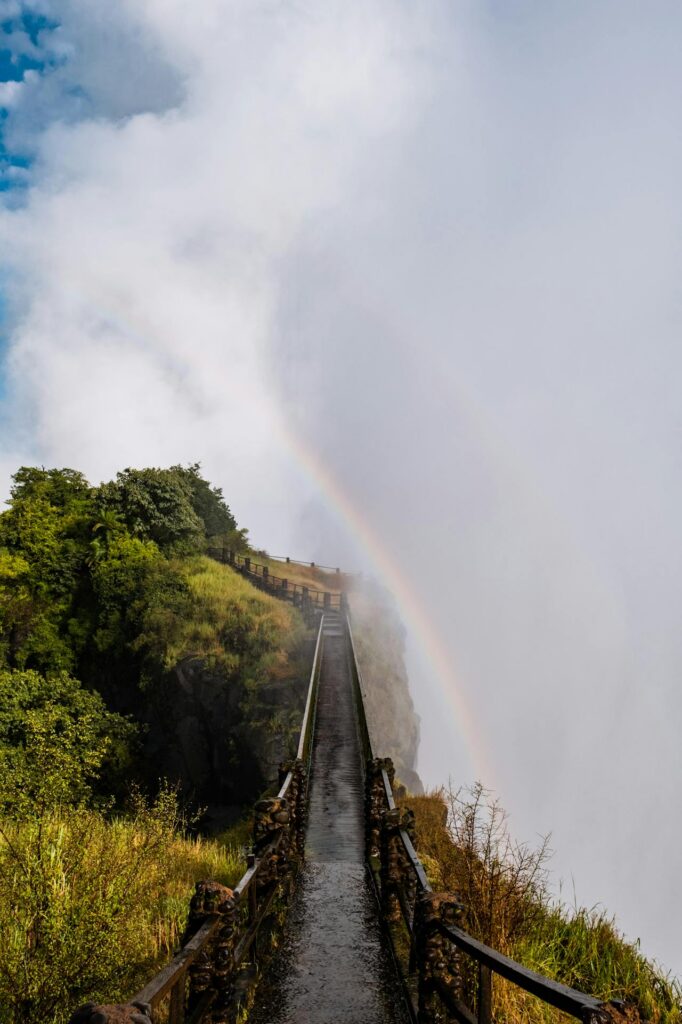
Walking along the edge of the Victoria Falls, while she is raging in full flood after a particularly heavy rainy season, I am taken aback by just how loud it is.
You often read about hearing these falls in travel blogs, but the words don’t do it justice.
The moment I stepped out of my car, I could hear it, and with each step closer to the entrance, it grew in intensity. Hearing such a roar actually made me nervous.
The walkway ahead was lost to mist. Somewhere beneath it, the falls dropped 108 metres, and the sound alone was enough to make you stop
Walking from the main lookout point down into the rainforest, along a slippery, mist-filled path that runs opposite the falls, is like walking through a cloud, and I half expected to see gorillas, guenons, colobus monkeys, or mangabeys.
The falls thundered next to me, and soon I felt as though I was experiencing a moment that early explorers like Livingstone would have enjoyed. While it was not a bungee-jumping type of rush, it certainly ranked up there as one of my most enjoyable adventure travel trips.
There is nowhere quite like Africa for an authentically adventurous experience, like seeing these falls or walking through a safari area, where you know there could be a lion around the next corner.
Adventure travel is an often misconstrued term, and as such, it can get overlooked by travellers who want to be on their feet but who also don’t want to do anything too hair-raising. But when you understand the term, you’ll be able to decide for yourself if this is the kind of trip for you.
What is Adventure Travel?
Adventure travel is an often-misunderstood term, and as a result, it gets overlooked by travellers who want to be on their feet but have no interest in anything hair-raising.
At its core, adventure travel is the kind of travel that gets you moving. The Global Adventure Travel Trade Association defines it as tourism that includes at least two of three elements: physical activity, a natural environment, and cultural interaction.
But that clinical description does not capture the feeling of standing metres from a gorilla family in an overgrown Ugandan forest, or watching the Victoria Falls from the flood.
When the term comes up in conversation, at least half the room will picture bungee cords, altitude sickness, and days-long extreme hikes that end with aching feet and wind-battered tents. The extreme sports world has, in a sense, hijacked the word. And that misunderstanding has kept many curious, well-travelled people from some of the most meaningful experiences that travel has to offer.
Because adventure travel, in its truest form, is less about physical extremity and more about being intentional with how you spend your time and how you inhabit a place. It is the difference between seeing the world and actually feeling part of it, even briefly.
The Two Sides of Adventure Tourism
Adventure tourism sits across a spectrum, broadly divided into hard adventure and soft adventure.
Hard adventure occupies the more demanding end. Rock climbing, white-water rafting, mountaineering, skydiving, and similar activities that carry a real physical challenge and a measurable element of risk all fall here. This kind of travel requires preparation, specialist equipment, and a serious level of fitness.
Soft adventure is far more accessible, and it is arguably where the richest outdoor experiences live. Guided safari walks, horseback riding through the Namibian desert, sea kayaking along the Garden Route coastline, or tracking mountain gorillas through misty Rwandan forest are all soft adventure experiences. The physical demand is present, but gentle enough that almost any traveller in reasonable health can participate fully.
For many people, soft adventure is where their love of this kind of travel begins, and for plenty, it is where it stays.
Did you know?
Adventure travel is a booming sector of the travel world, and most adventure travellers are women. Solo female adventurers make up 85% of the market. And the activities associated with adventure travel contribute roughly $887 billion to the global economy every year.
What are a Few Examples of Adventure Travel in Africa?
Africa is one of the great adventure travel destinations.
The landscapes are huge, the wildlife encounters are without competition, and the range of experiences on that you can have here makes choosing just a few an almost impossible task. As a starting point, these are just a handful of adventure travel experiences you can try.
Walking safaris in South Africa
There is nothing quite like being on foot in the bush. No engine noise to distract you, no glass between you and the landscape and every crack of a branch or unfamiliar sound has you on edge, but in a good way.
In the company of a skilled ranger who reads the ground with a fluency that comes only from years of experience, pointing out tracks and dung beetles and the quietness that descends on the bush before something significant happens, a walking safari is among the most elemental ways to experience Africa.
Gorilla trekking in Rwanda or Uganda
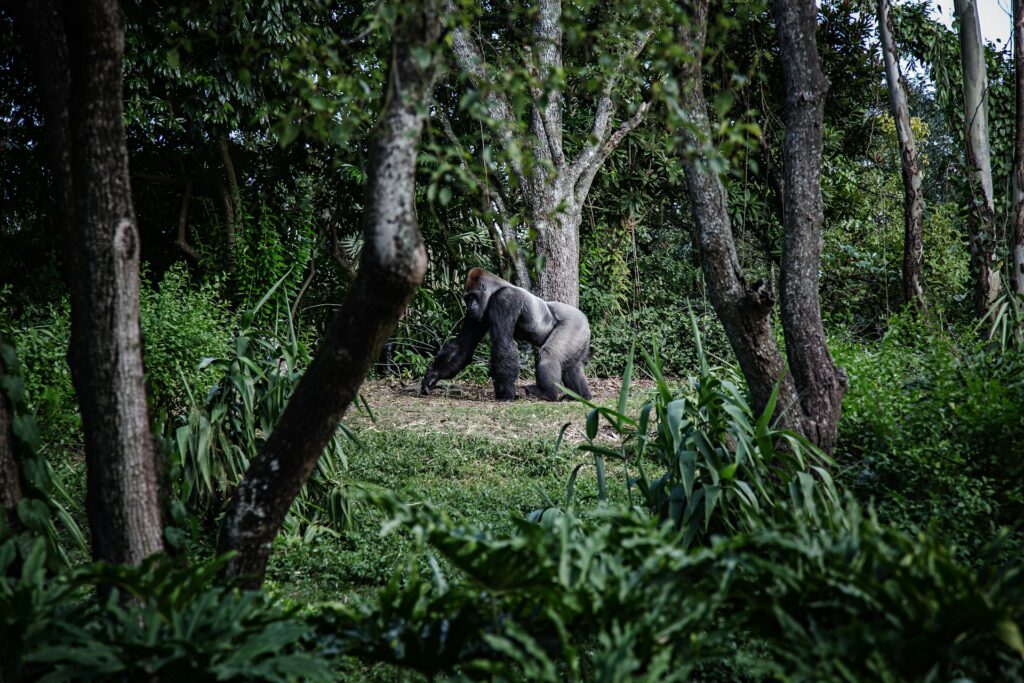
To sit within metres of a mountain gorilla family in its natural habitat is, by every account, a staggering experience. Travellers describe it as a life changing and it becomes something they talk about for the rest of their lives.
Gorilla safaris are remote, highly controlled, permits sell out months in advance, and travelling with a reputable operator and planning well ahead is part of what makes the experience what it is.
Desert trails in Namibia
Namibia is home to some of the most otherworldly terrain on earth. Experiencing them slowly, whether on foot, by bike, on horseback, or in a 4×4, is about the best way to gain a perspective that no fly-in itinerary can replicate.
Part of what makes it adventure travel is how out of the way you’ll feel. Once you leave the city, it is like stepping off the map entirely. This means excellent planning is essential and, for some travellers, since you will be so remote, it can be best to book a guided tour instead of trying to go it alone.
Sea kayaking along the Garden Route
The South African coastline on the Garden Route, between Knysna and Plettenberg Bay, is spectacular and travelling it by kayak, past caves and coves, rock formations, and colonies of Cape fur seals, is active travel at its most exciting.
It is also a reminder that some of the finest safari experiences do not happen on land at all.

Adventure Travel is Really About the Traveller, Not the Activity
Contrary to popular belief, adventure travellers are not defined by their fitness or their tolerance for discomfort.
They are defined by their curiosity and their willingness to engage with this world differently, both in how they travel and in how they choose to experience what is in front of them.
An adventure traveller wants to understand a place rather than simply photograph it for Instagram. They are the type of traveller who is yearning for depth, to create a connection to the land, to local cultures, to the wildlife, and to the people they will meet along the way.
As such, adventure travel tends to attract travellers who have worked through the traditional itineraries and found themselves wanting something with more weight to it. The walking safari, the gorilla trek, the sunrise in the bushveld are experiences full of meaning and no matter what kind of adventure travel you choose, the way you see things and they way you travel in future will never be the same.
*
Travel fatigue is becoming a real thing.
After years of accumulating passport stamps without accumulating much meaning, many travellers are looking at holidays differently. They want to come home changed, even in small ways, rather than just rested.
There is also a growing awareness that how we travel matters.
Adventure holidays across Africa tend to be built around smaller groups, local expertise, and conservation-conscious operations, with the outdoor experiences on offer being tied closely to the land and the communities that know it best.
And this alone is a great reason to go some place where the map gets interesting and experience the pleasure of being somewhere extraordinary
Not at all. Many of the best adventure travel experiences, particularly soft adventure options like guided safari walks, cultural immersions, and wildlife encounters, are accessible to travellers of varying ages and fitness levels. A good operator will always match the experience to the traveller.
Hard adventure involves high-intensity, higher-risk outdoor experiences such as mountaineering or white-water rafting, while soft adventure covers accessible active travel experiences like guided safaris, gorilla trekking, and coastal kayaking. Both fall under the broader umbrella of adventure travel.
When booked through a reputable, experienced operator and undertaken with qualified guides, adventure travel in Africa carries a very manageable risk profile. Safety standards at established camps and with licensed guides are consistently high, whether you’re on an adventure safari or trekking through mountain forest.
The essentials include neutral-coloured lightweight clothing, a wide-brimmed hat, comfortable walking shoes, high-factor sun protection, insect repellent, and a reusable water bottle. Your operator will provide a detailed kit list specific to your outdoor experiences and destination.
For popular experiences like gorilla trekking permits or peak-season safari activities, booking six to twelve months ahead is strongly recommended. Some permits and private camps have very limited availability, particularly during the dry season when active travel conditions are at their best.