Table of contents
- 1 10 Essential Facts About Gorilla Trekking in Uganda
- 1.1 Uganda is Home to Almost Half of the World’s Remaining Mountain Gorillas
- 1.2 Permits are Limited for Good Reason
- 1.3 There’s a Difference Between Habituation and Trekking
- 1.4 The Hike Itself is Measured in the Time it Takes, Not the Distance You Walk
- 1.5 Have Your Camera Ready at All Times
- 1.6 Infrared Thermal Imaging Has Changed How Gorillas are Tracked
- 1.7 Not Every Trek Results in a Gorilla Encounter
- 1.8 The Physical Recovery Matters as Much as the Trek Itself.
- 1.9 Be in Good Health and Bring Along Plenty of Water
- 1.10 Gorillas Won’t be Your Only Wildlife Encounter
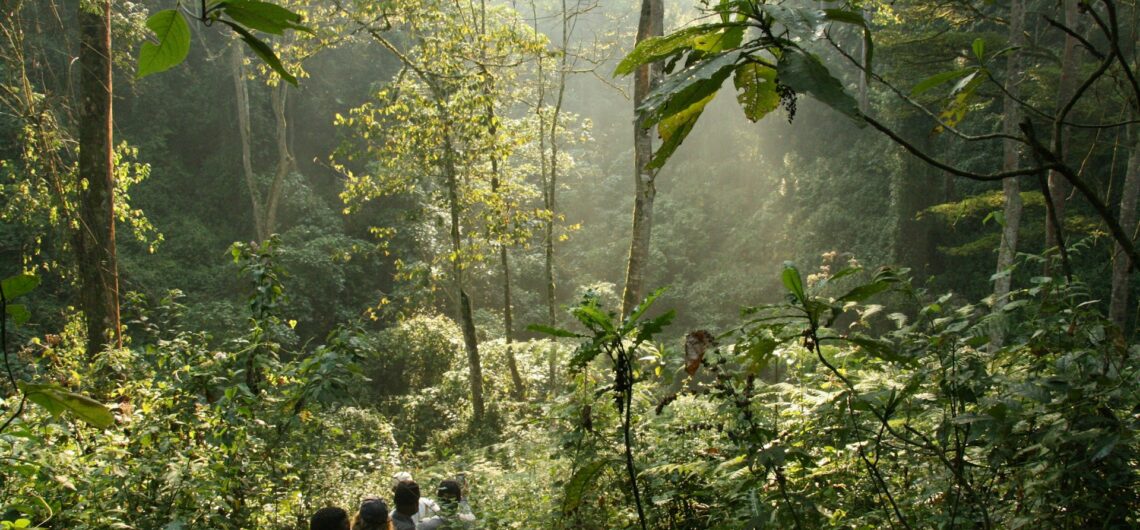
The Bwindi Impenetrable Forest is a formidable place, and not just because you never quite know when you might walk around a bend and come face to face with a gorilla, but also because of the nature of the forest.
The guides in Bwindi won’t romanticise the forest when they brief you because the word impenetrable in this sense is literal.
Impenetrable means you’ll slip on roots, rain will find every gap in your waterproof, and at some point during the walk, you’ll start to question your life choices.
But while walking through mist that hasn’t fully lifted from the canopy and along muddy tracks that have you worried about losing your footing every couple of steps, your guide stops, and suddenly, there is this feeling in the air that something life-changing is about to happen.
After decades of travellers coming to see the gorillas living in Uganda’s misty highlands, one thing is always the same; no amount of preparation and no quantity of facts or figures can ready you for the moment a silverback turns his gigantic head and looks into your soul, with eyes that mirror your own.
Gorilla trekking in Uganda is one of the rarest experiences Africa has to offer adventure travellers.
It demands planning, it requires a fair amount of physical effort, and yes, it involves significant investment.
But the encounter itself, when it comes, will change how you think about and understand the natural world.
10 Essential Facts About Gorilla Trekking in Uganda
Gorilla trekking in Uganda started in 1993, just two years after the Bwindi Impenetrable Forest was declared a national park. The experience is vastly different from any other “safari” type package, and with only a handful of permits granted every year, you really are among the lucky few if you managed to get a spot.
If you are planning such a trip, these are the 10 essential facts about gorilla trekking in Uganda.
Uganda is Home to Almost Half of the World’s Remaining Mountain Gorillas
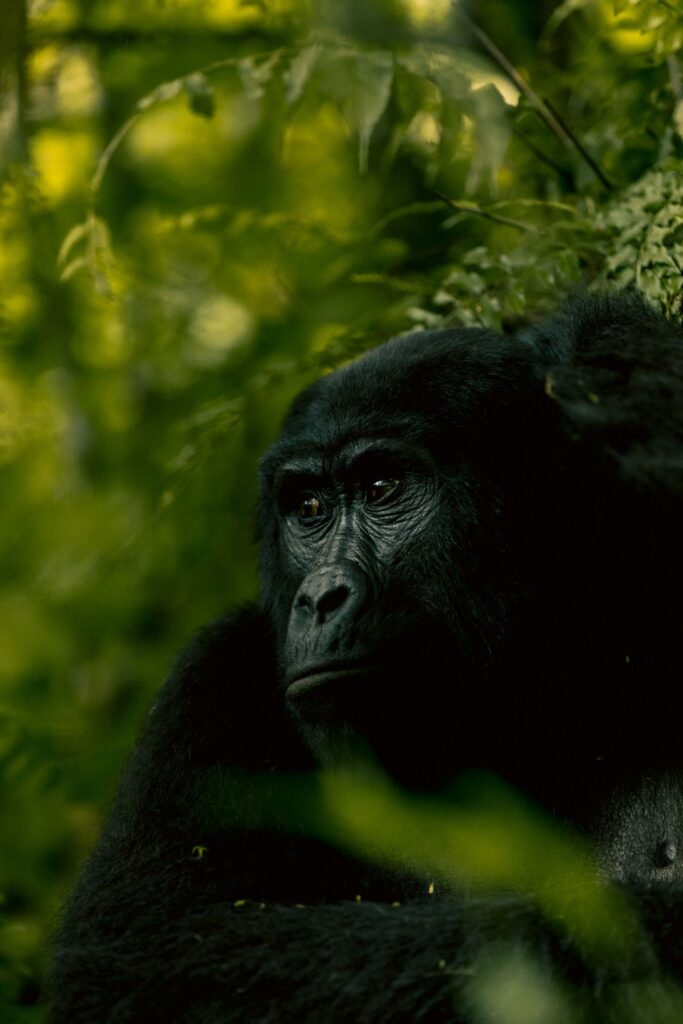
The country has 459 known mountain gorillas living in Bwindi Impenetrable Forest, in 20 family units.
This concentration makes Uganda statistically the most important destination for gorilla conservation on the planet, and tracking here contributes directly to the ongoing protection of these incredible animals.
Permits are Limited for Good Reason
The Uganda Wildlife Authority issues between 152 and 192 standard permits daily across Bwindi, with additional permits issued at Mgahinga.
This cap exists to protect the gorillas from habituation stress.
Standard permits are for trekking, and each gorilla group can take a maximum of 8 permits. As for gorilla habituation tours, only 8 permits are issued each day.
With almost 200 permits issued each day, you would be mistaken for thinking it’s a lot. Gorilla trekking in Uganda is a sought-after experience, and these permits are issued quickly.
You should plan for your trip 2 to 6 months in advance; some travellers have even booked as much as 2 years in advance, and with a reputable travel agency.
This way, you have the best possible chance of getting a much-prized permit.
There’s a Difference Between Habituation and Trekking
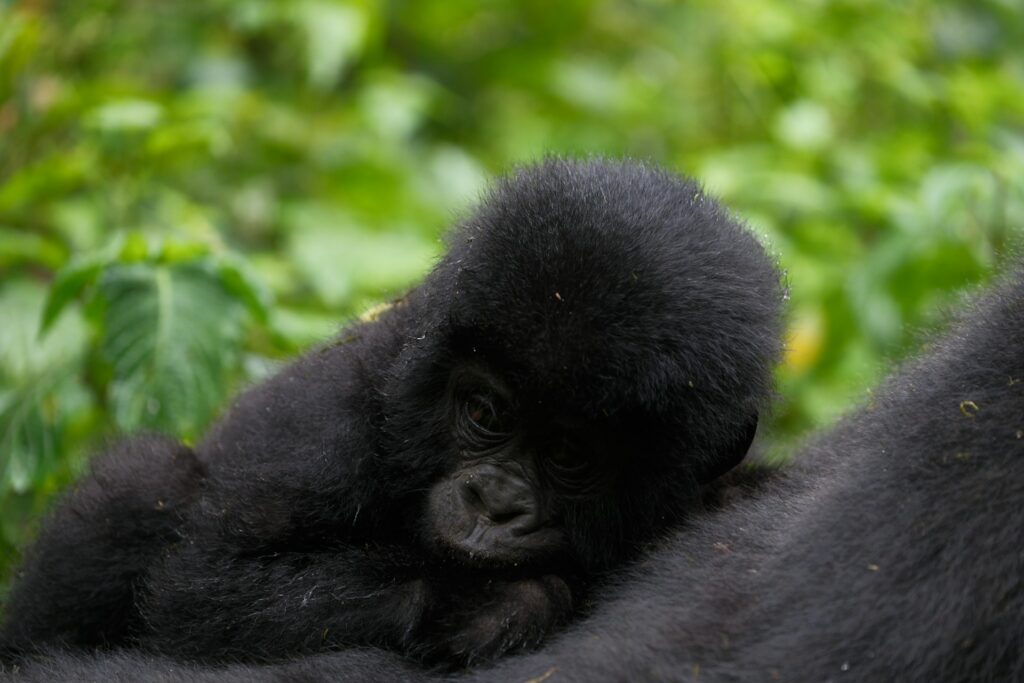
Some gorilla families have been habituated to human presence for over eight to ten years.
This means they’re accustomed to your presence but not indifferent to it. Other gorilla families have almost no encounters with humans, and they are shy and will often run off.
Each family has a distinct personality. Some are playful, others are more reserved, and your guide’s knowledge of individual gorillas makes the experience more intimate, almost as though you are forging a relationship with the gorillas.
The reason why some gorillas are habituated, and some are not, has to do with disease. Limiting interaction with humans reduces the risk of diseases from humans spreading to the gorilla.
When you sign up for gorilla habituation, you spend 4 hours watching the gorillas as opposed to 1 hour when trekking. But while habituation gives you more time, you won’t get nearly as close to these primates as you would when trekking.
Some past travellers suggest buying 2 permits, even though it can be pricey. Having 2 permits allows you to see the gorillas twice in 1 trip, and have both a habituation and a trekking experience.
The Hike Itself is Measured in the Time it Takes, Not the Distance You Walk
Most treks last between 4 and 8 hours, though some extend well beyond that.
What matters here is not the kilometres walked, but rather the altitude gained (you’ll climb between 300 and 1 200 metres) and the terrain itself, which remains dense regardless of weather, and naturally can take a whole day to push through.
First-time trekkers often underestimate the physical demand, and as such, guides are accustomed to adjusting the pace.
Before you set out, be honest with yourself and your guide about how fit you are. Having that sort of information can make the whole experience a lot more pleasant.
Have Your Camera Ready at All Times
If you are a seasoned safari traveller, you are probably accustomed to sudden, unexpected wildlife encounters that test your shutter speed.
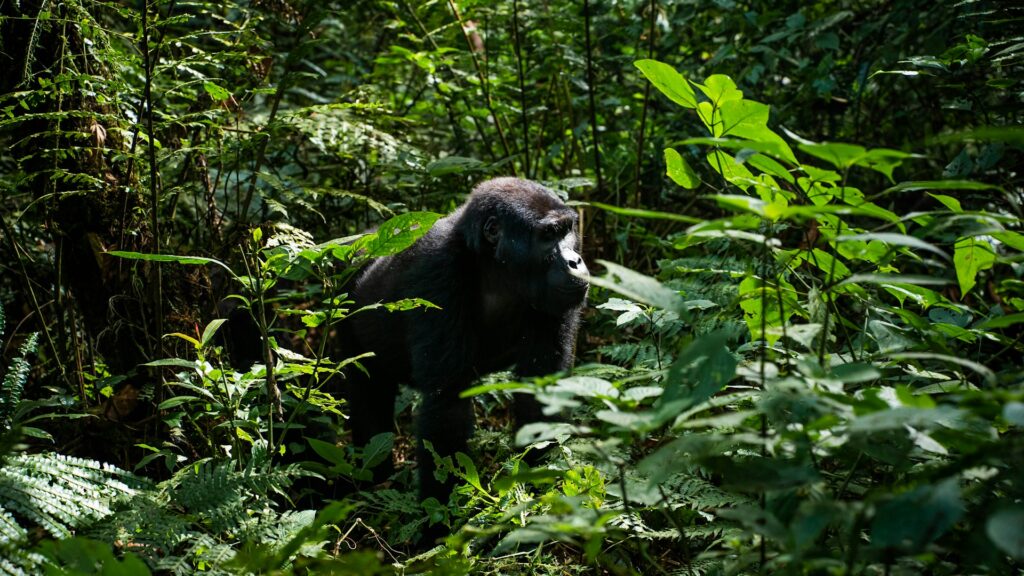
Gorilla trekking in Uganda is going to treat you to a whole different idea of speed. Gorillas move quickly, and to capture the full experience, you not only need to have a fast finger, but you also need to be comfortable with taking video footage and switching between the two styles.
Gorillas interacting with their families is something that is best captured on video. They shriek and natter and carry on like they are having the time of their lives, and each encounter is unique.
Infrared Thermal Imaging Has Changed How Gorillas are Tracked
Guides traditionally follow paths, spoor, and calls.
In recent years, the introduction of thermal cameras by conservation organisations has allowed guides to pinpoint the location of the gorillas faster and with more accuracy.
This technology reduces trek duration without compromising the experience. Newer guiding teams understand both traditional tracking and modern methods. The result: you’re more likely to spend allocated time with the family rather than searching for them.
Not Every Trek Results in a Gorilla Encounter
Places like Bwindi have something called walk-away policies, which have been put in place to protect stressed families and also to protect tourists.
If a gorilla family shows signs of anxiety or illness, your trek can be reallocated to another family or refunded. This happens rarely, but it’s possible.
The reallocation system is sophisticated enough that few trekkers go home without their encounter.
As an eco-conscious traveller, you can probably understand that the gorillas’ wellbeing comes before your experience. This boundary is what keeps the programme sustainable.
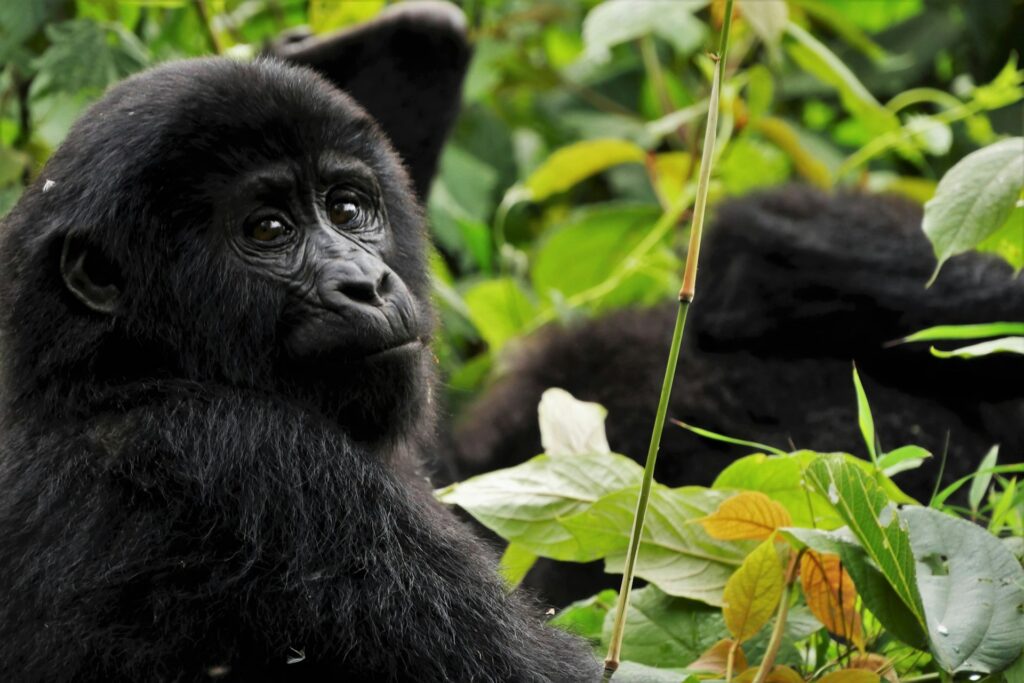
The Physical Recovery Matters as Much as the Trek Itself.
Many trekkers underestimate the exhaustion that follows.
The heady combination of altitude, exertion, and emotional intensity leaves most people needing a full recovery day.
Rather than immediately onward travel, it’s worth giving yourself a day to let the experience and your body settle properly before the next adventure begins.
Be in Good Health and Bring Along Plenty of Water
Uganda recommends that trekkers be in good health and they should be at least 15 years old, though younger children with adequate fitness and preparation have successfully completed treks.
Similarly, older travellers in good health regularly go gorilla trekking in Uganda well into their 70s.
It is important to mentally prepare for the hike and to have good cardiovascular health, as the day out can take quite a toll.
You’ll also need to bring along a backpack with your lunch and snacks, and at least 2 litres of water. If you are travelling as a group, you can hire a porter who will be able to help you carry whatever it is you are bringing along.
A porter can also aid you during your hike, helping you make your way across the muddy terrain and pulling or pushing you up the hills.
Gorillas Won’t be Your Only Wildlife Encounter
The rainforests of Uganda are teeming with life, and Bwindi is no exception.
The forest is alive with sounds, most of which come from the 350 or so bird species living in the region.
During your walk, you’ll likely encounter duiker, a wide variety of other primates, including olive baboons, blue monkeys, Demidoff’s galago, and the rare L’Hoest’s Monkey, as well as African golden cats, clawless otters, and the exceptionally secretive forest elephant, of which there are only 100 scattered throughout the park.
And with up to 8 hours or more trekking in search of gorillas, you are also more than likely to come across a couple of snakes. Keep a lookout for these, as they can very easily hide in the undergrowth and fallen leaves.
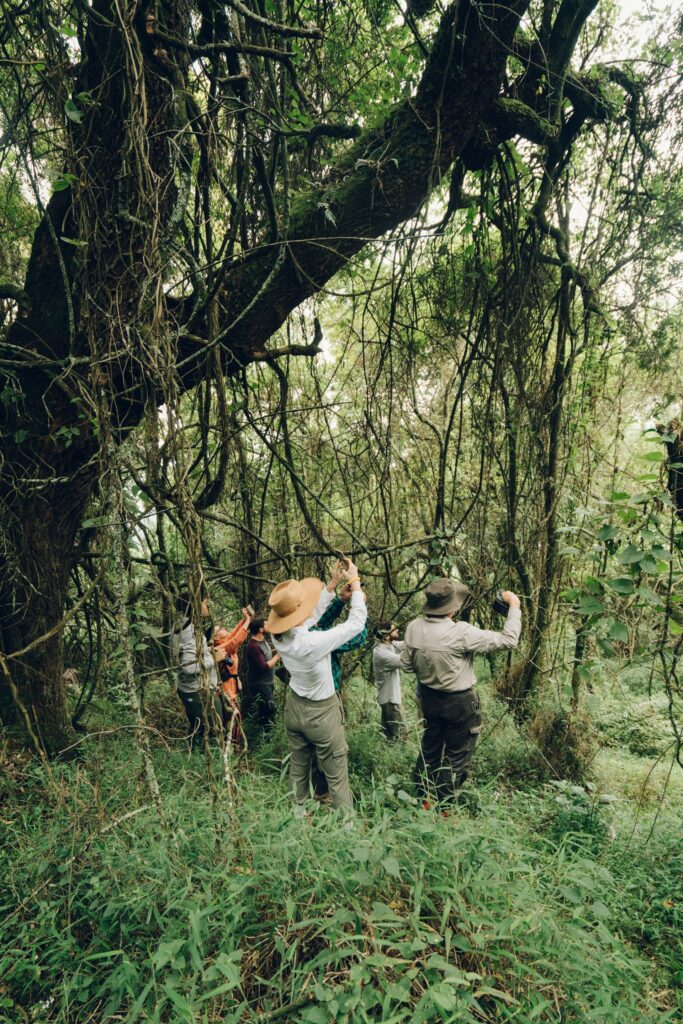
Gorilla trekking in Uganda is the ultimate wildlife experience, a once-in-a-lifetime trip that will change how you think about conservation and the animals that make Africa such a special place.
The best way to visit the mountain gorillas is to book a tour with an ethical, reputable travel operator.
Uganda’s permits cost USD $700 per person. This figure has remained stable since 2020, making Uganda more accessible than Rwanda (USD $1,500) without compromising the experience. The permit grants access to one family for one hour. Transport, guides, accommodation, and meals are additional costs that typically total USD $2 500 to $4 500 for a full trekking experience, depending on lodge choice and itinerary length.
No operator can guarantee a gorilla sighting, nor should they. The system works through reallocation: if your assigned family is unavailable, you’re moved to another habituated group or your funds are held for a future trek. Success rates in 2024 and 2025 hovered around 97 per cent across both Bwindi and Mgahinga, which is the operative word: nearly certain, not certain. This margin of uncertainty is precisely what keeps the programme ethical.
The risk profile is lower than many assume. Gorillas are not aggressive to humans without provocation. Your guide’s role includes monitoring gorilla behaviour and managing distance. The actual danger lies in the terrain, the altitude, and the weather exposure. Slips and falls are possible. Altitude headaches are common. Thoroughly prepared trekkers, however, encounter few complications. Pregnant women are advised against trekking due to altitude and physical strain, not gorilla behaviour.
A good guide, waterproof gear, and walking boots matter more than any single item. The forest is wet and muddy. Your boots will be caked in it within the first hour. Thermal layers work better than heavy jackets because they warm you up quickly during the climb. An insect repellent that works is essential. A good camera will disappoint you because no photograph captures what you feel in the moment. Binoculars are useful for the approach. Water, energy, and an open mind are the only truly necessary provisions.
The choice depends on your timeline and disposition. Bwindi offers more families, more permit availability, and slightly easier logistics. Mgahinga rewards those seeking solitude and a more geological landscape. Many travellers who can afford it do both, spreading experiences across two regions. Neither is objectively superior. Both change how you understand primates and conservation. Choose based on available permits, lodge preference, and whether you want immersion in a crowd or a quieter encounter.