
The 5 Best and Biggest Sand Dunes in Namibia
One of my earliest memories of what today would be called “adventure travel” is climbing a sand dune.
I was visiting Sodwana Bay, a cosy divers’ cove along South Africa’s north-eastern coastline. It was around June, and although the mid-winter weather was in full swing elsewhere in the country, the weather was sublime.
The area is well-known for its immense dunes, and I spent a good part of my day walking up the hot sand and sliding or rolling back down.
I was covered in sand, and full of the warm fuzzy feeling of utter euphoria.
When, a good couple of years later, I was sitting in front of my computer, planning my intrepid trip to Namibia, this happy memory popped back as I read about the sand dunes of the Namib.
The Must-See Namibia Dunes
A lot of the Namibia tours advertised on the web talk about the flora and fauna, the remote destinations, the empty roads, and the moonscapes. They’ll promote seeing the desert-adapted wildlife, taking a stroll through the sunny seaside town of Swakopmund, knocking a few of the top 10 destinations off your bucket list, and climbing at least one dune.
And boy does Namibia have a lot of them.
Dunes are not boring mounds of sand. If you take the time to look closely at them, you’ll see each is made up of billions upon billions of sand grains, in an exquisite array of colours and formations that change with the winds and the passing of time.
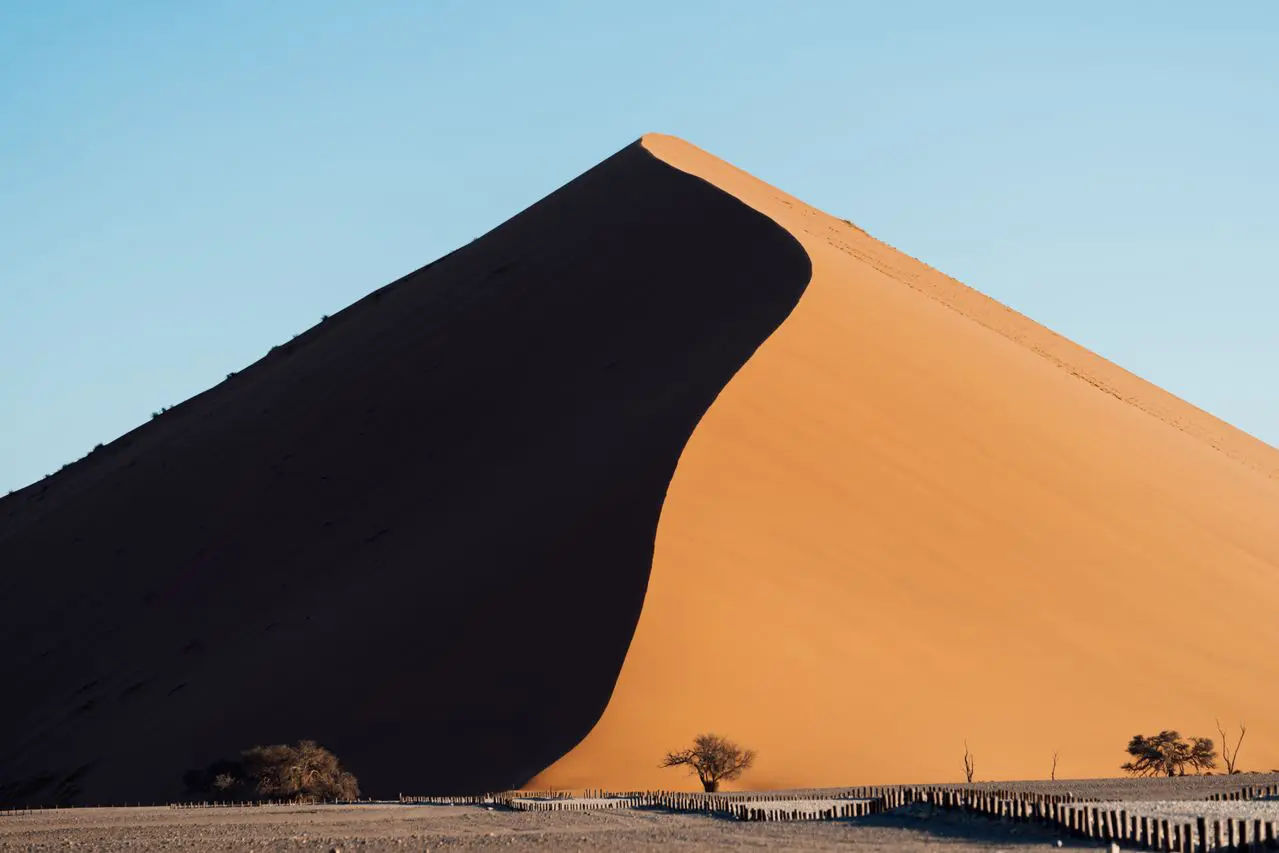
The Namibia dunes have become a defining feature of the country. And while you might have seen plenty of photos of these magnificent dunes, no photo really does justice to just how beautiful and huge they are.
The desert is full of dunes, of all shapes and sizes, but there are 5 Namibia dunes that are really worth your time:
Big Daddy
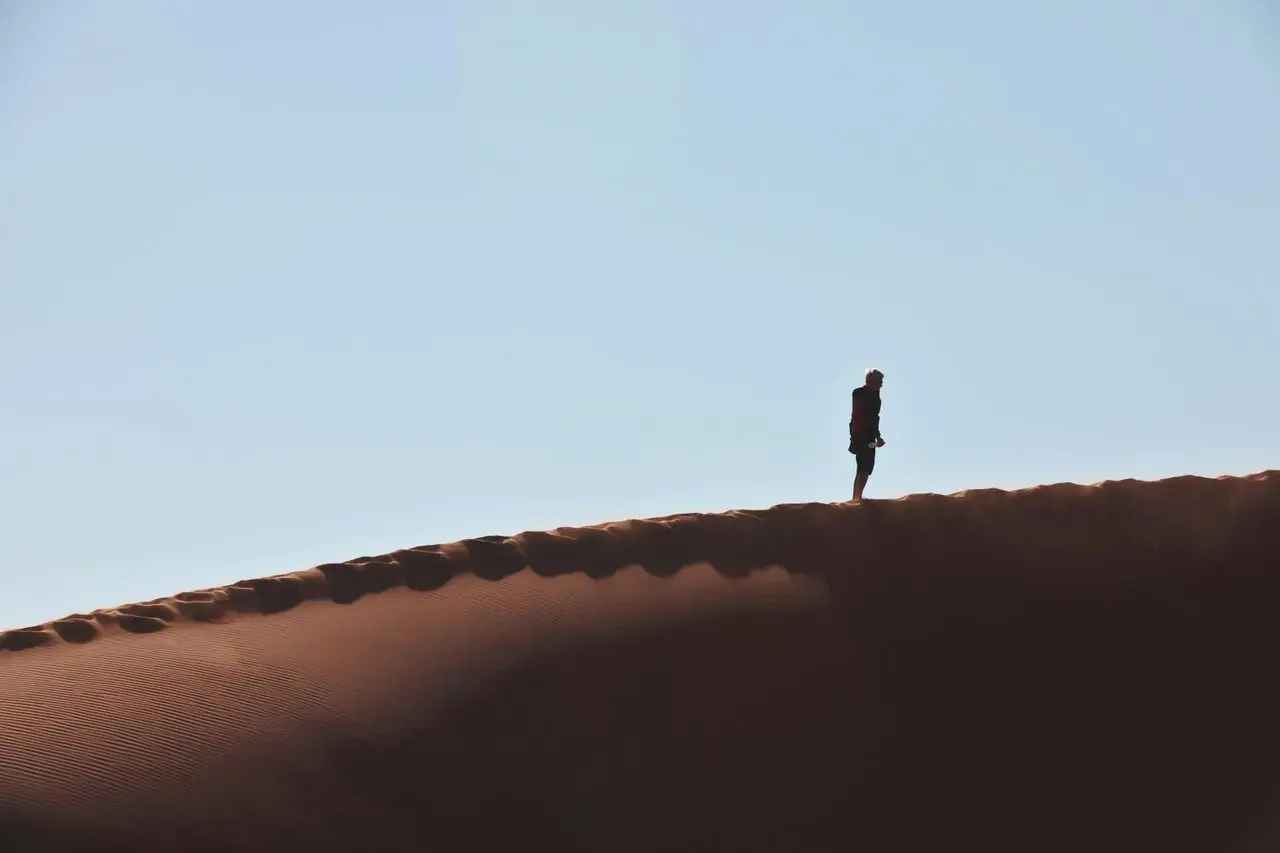
Rising to around 325 metres, and situated between the Sossusvlei and Deadvlei pans, Big Daddy is generally considered the tallest dune in the immediate Sossusvlei area, and climbing it is less a walk than a negotiation with your own stamina.
This is the dune that popped up on all the lists of destinations worth seeing in Namibia, and naturally, when I visited, I did the very touristy thing and joined the throng of other travellers just before dawn, to climb it.
The ridge line is narrow enough that you can place one foot directly in front of the other, and the sand underfoot is cool at dawn, but by mid-morning it becomes uncomfortably close to the temperature of a pan on the stove.
You definitely want to copy me and start early. And I don’t mean “early” in the loose, holiday sense, but gate opening early, so that your first hour of climbing happens while the sand still holds the night’s chill.
The view from the top is not the only thing to look forward to (you’ll see the stunning star dunes of the Sossusvlei basin), but the descent itself is loads of fun.
You’ll be running, sliding, half falling down the steep leeward face into Deadvlei, where the centuries-old camel thorn trees stand blackened and bone dry against a floor of cracked white clay.
After your trip up the dune, you can visit nearby Sesriem Canyon where you’ll be treated to shaded, cooler areas, and the small settlement of Solitaire, roughly an hour’s drive north, is worth the stop for its bakery alone.
Dune 45
Just a short forty-five kilometres from the Sesriem gate, on the road that leads towards Sossusvlei, sits the dune that most visitors picture when they think about Namibia.
Estimates of its exact height vary depending on who measured it and when (dune surveying is an inexact science because the sand moves so much), but it sits somewhere between 80 and 170 metres, and it is made from sand thought to be around five million years old.
The fame of Dune 45 is not surprising.
The ridge is broad enough to walk comfortably, the climb takes most people under half an hour, and because it rises directly beside the road, the early morning light catches its western face in a way that makes the sand look almost as though it is lit from within.
Locals will tell you to walk it in socks rather than shoes. And their advice is not them being quaint. Your shoes will fill with sand within minutes, while your socks do not. Bare feet, while it might sound like a comfortable idea, will start to burn once the sun is properly up.
You can combine a Dune 45 sunrise walk with a later stop at Elim Dune, a smaller and far less crowded formation just five kilometres past the gate, for a second, more laidback and people-free climb where you might just catch sight of oryx grazing peacefully at its base.
Dune 7
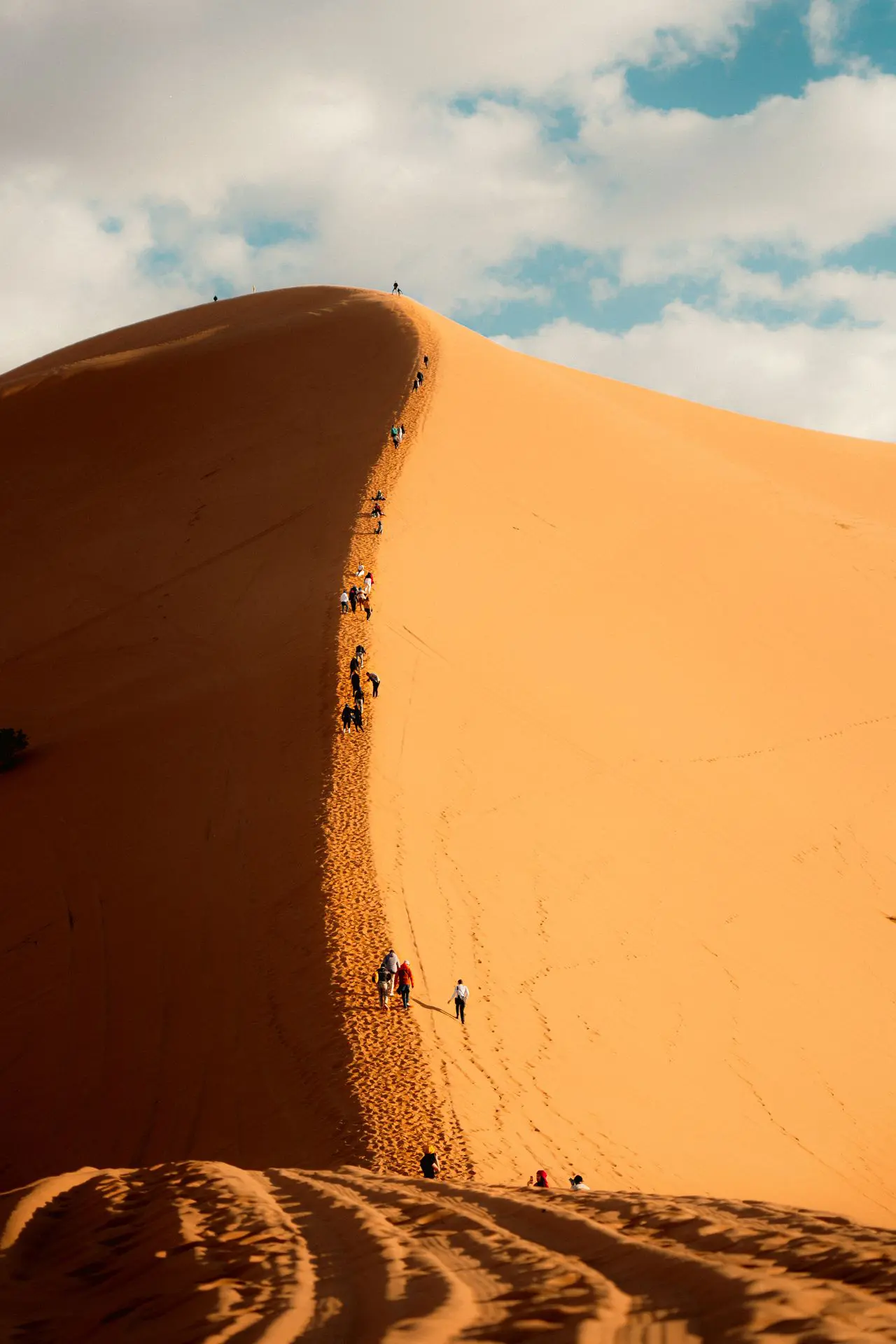
Just outside Walvis Bay, on Namibia’s foggy and chilly Atlantic coastline, stands Dune 7, named for being the seventh dune along an old riverbed rather than for any particular grandeur, though grandeur is exactly what you can expect.
At roughly 383 to 388 metres, it ranks among the tallest dunes anywhere on the planet, and unlike its Sossusvlei cousins, it sits within easy reach of a beautiful coastal town.
This is the dune for anyone who wants adrenaline rather than solitude.
Sandboarding operators run from its base most mornings, and the climb itself, while long, is far easier to do than Big Daddy thanks to its firmer, more compacted sand.
You’ll want to visit this dune in the late afternoon, if you can. The coastal fog that rolls in off the Atlantic each morning usually clears by early afternoon, leaving you with crisp light and long shadows for the climb down.
Walvis Bay’s lagoon, a short drive away, is one of southern Africa’s most reliable spots for flamingo sightings, and the German colonial streets of nearby Swakopmund make an easy half-day addition, giving you the full Namibia dune and coastal experience all in one trip.
Sandwich Harbour
There is nowhere else quite like it on earth.
At Sandwich Harbour, a natural cove roughly forty-five minutes south of Walvis Bay, towering dunes run directly into the Atlantic Ocean with no beach, no buffer, nothing but a narrow tideline where sand the colour of rust meets water the colour of steel.
It is one of the more improbable landscapes in a country built on improbable landscapes.
Access is only possible with a permitted operator, since the drive crosses tidal flats that flood twice daily and has claimed more than a few overconfident self-drivers over the years.
A guided 4×4 excursion, timed around the tides, is the only sensible way in and once there, you’ll be treated to sights of a lagoon thick with flamingos and pelicans (depending on the time of year you travel), framed by dunes that seem to be actively falling into the sea, because in a sense, they are.
You can include your Sandwich Harbour excursion with your trip to Dune 7, and make Swakopmund your base. The town’s cafes and quad biking outfits make a comfortable landing pad after a morning spent somewhere this wild.
NamibRand Nature Reserve
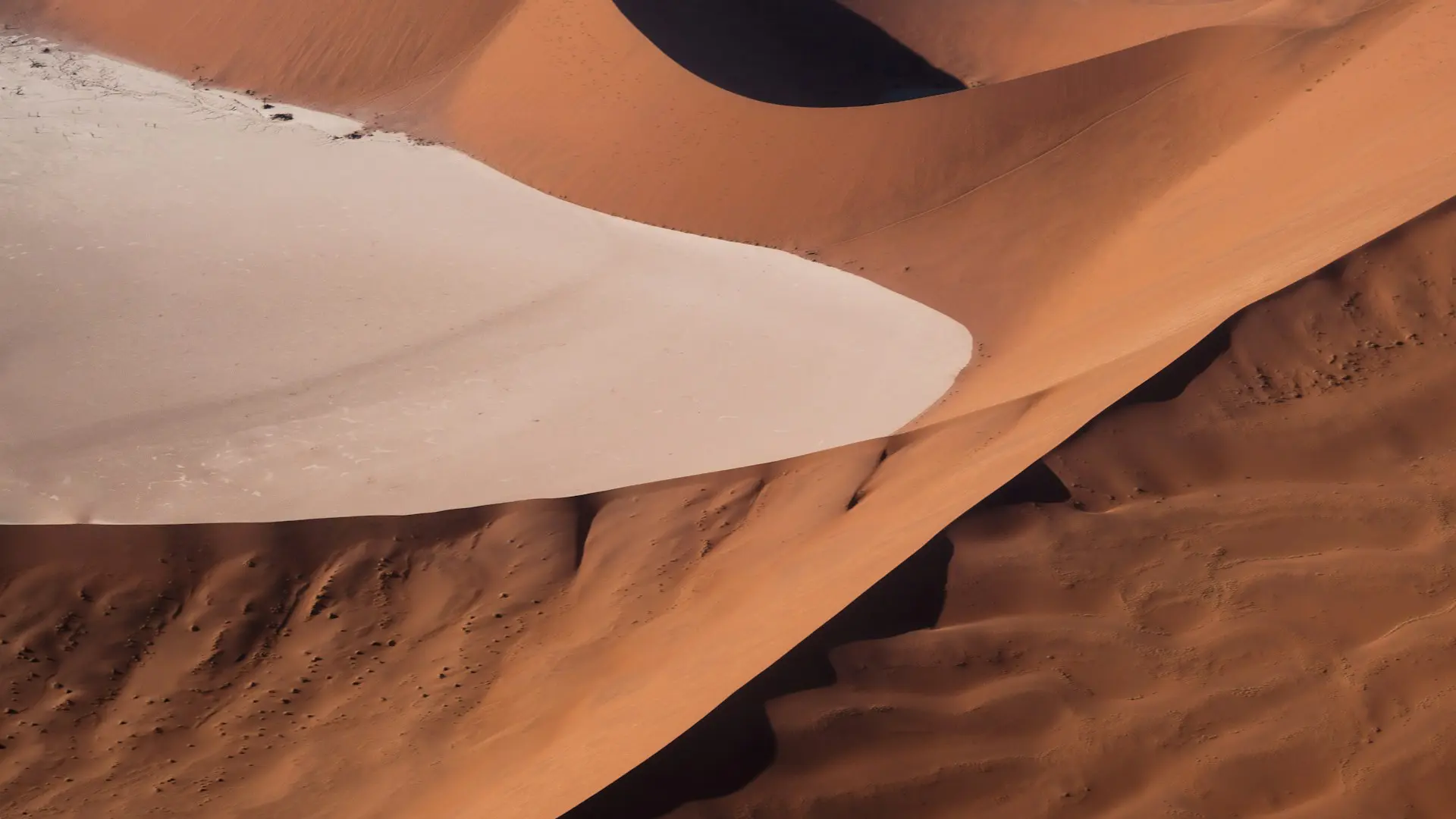
South east of Sossusvlei, inside the privately protected NamibRand Nature Reserve, you can see a more relaxed and less dramatic version of Namibia dunes.
The dunes here are lower and more scattered than Sossusvlei’s towering formations, but what they lack in height they make up for in open skies.
NamibRand holds International Dark Sky Reserve status, making it one of the very few places on earth certified for the quality of its night sky, and a dune climbed here at dusk usually ends with a sky properly full of stars and very few if any other people.
Access is through a small number of lodges within the reserve, which keeps visitor numbers naturally low. It is the Namibia dune experience for travellers who have already ticked off Sossusvlei’s icons and who want to understand what the Namib feels like without a crowd for company.
The reserve borders Namib-Naukluft National Park, so a stay here pairs naturally with a Sossusvlei visit either side, making it an efficient addition rather than a detour.
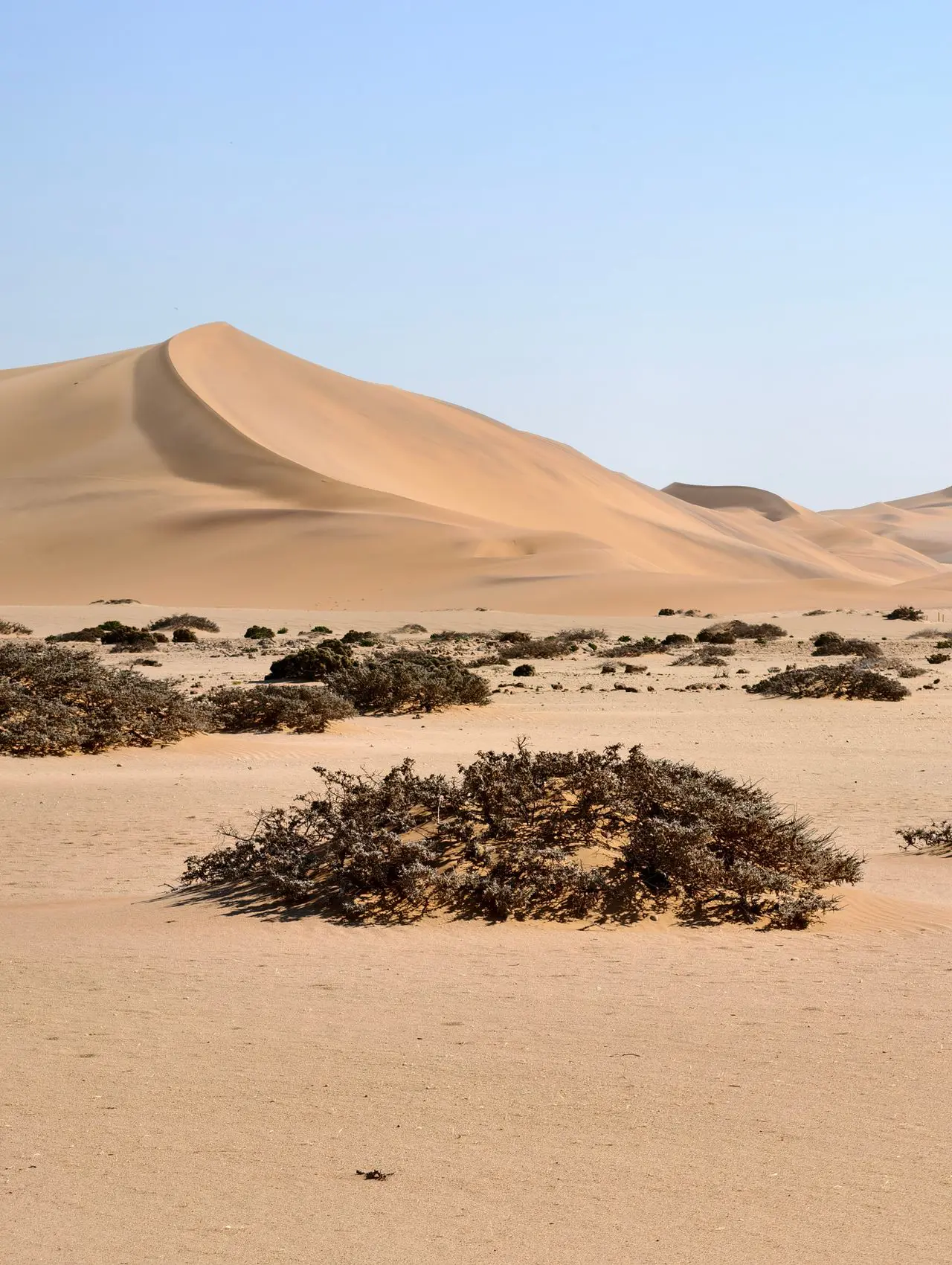
The various Namibia dunes are a sight worth beholding.
And one the best ways of seeing them is by booking a guided tour with an operator who knows the best spots and the best time of day to go climbing.
What is the biggest sand dune in Namibia?
Dune 7, near Walvis Bay, is generally considered the tallest at around 383 to 388 metres. Within the Sossusvlei area itself, Big Daddy holds the record at roughly 325 metres.
Which Namibia dune is best for beginners to climb?
Dune 45 is the most accessible of the well known dunes, with a broad, walkable ridge and a climb of under half an hour for most visitors. Elim Dune, nearby, is an even gentler alternative.
When is the best time to visit the Sossusvlei dunes?
Early morning, ideally at gate opening, gives cooler sand, softer light and far fewer people. The dunes are open year round, though the cooler months from May to September are the most comfortable for climbing.
Can you visit Sandwich Harbour independently?
Not safely. The route crosses tidal flats that flood twice a day, and access requires a permit and a guided 4×4 excursion timed carefully around the tides.
How many days should I spend seeing Namibia's dunes?
Three to four days allows a comfortable pace: two days around Sossusvlei for Big Daddy, Dune 45 and Deadvlei, and a day or two based near Walvis Bay or Swakopmund for Dune 7 and Sandwich Harbour.