Table of contents
- 1 Mountain Gorillas Without the Price Tag
- 2 Visiting the Ultimate Primate Circuit
- 3 Safari Meets Rainforest
- 4 Queen Elizabeth National Park
- 5 Uganda for Seasoned Safari Travellers
- 6 Community Tourism Means Something in Uganda
- 7 Africa’s Most Species-Rich Bird Country
- 8 A Country Made for Slow Travel
- 9 See Uganda and Rwanda
- 10 Why Uganda Will Keep You on Your Feet
Enhance your reading experience—immerse yourself in the adventure with our audio version. Click play and let the sounds of Africa captivate you!
Before the mist has lifted off the Bwindi canopy, before the first chimpanzee call rolls through the valley below, I find myself sitting in the predawn light, in awe of where my recent African travels have brought me.
Uganda was not on my bucket list, but only because I had the wrong impression about it.
Right now, the Uganda safari is increasingly becoming one of the most sought-after African holiday experiences, not because it has been packaged and polished into something easy to sell, but precisely because it has not.
Granted, the roads can be rough in places, the altitude can catch you by surprise, and the rain, when it comes, and boy does it come, is serious.
But what you get in return is access to rare experiences, in a country where the wildlife is free in every way.
If you have already done East Africa’s safari circuit, and you are wondering where to head to next, you need to have a close look at Uganda, the Pearl of Africa.
Mountain Gorillas Without the Price Tag
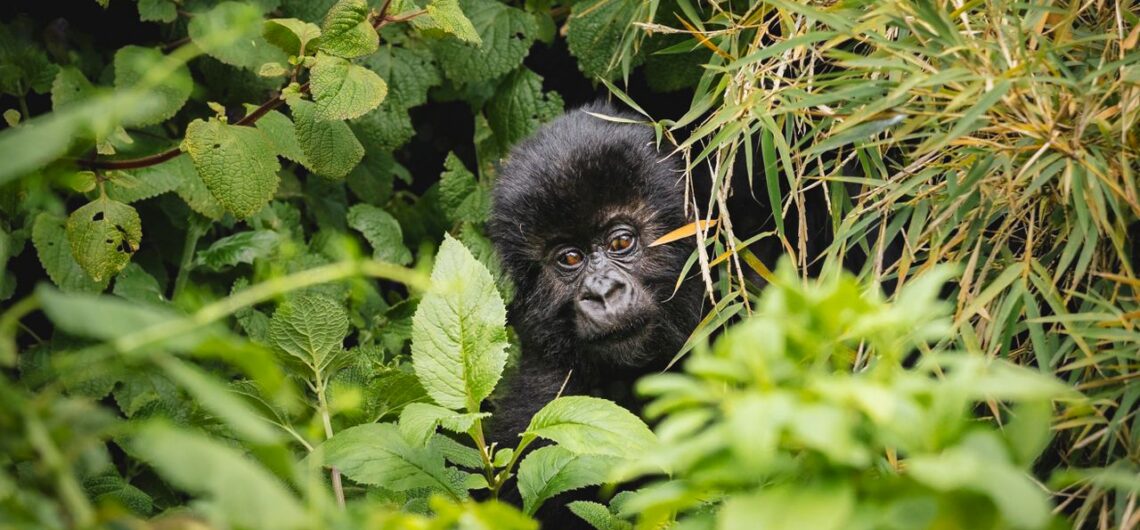
What drew me to the country was the gorillas.
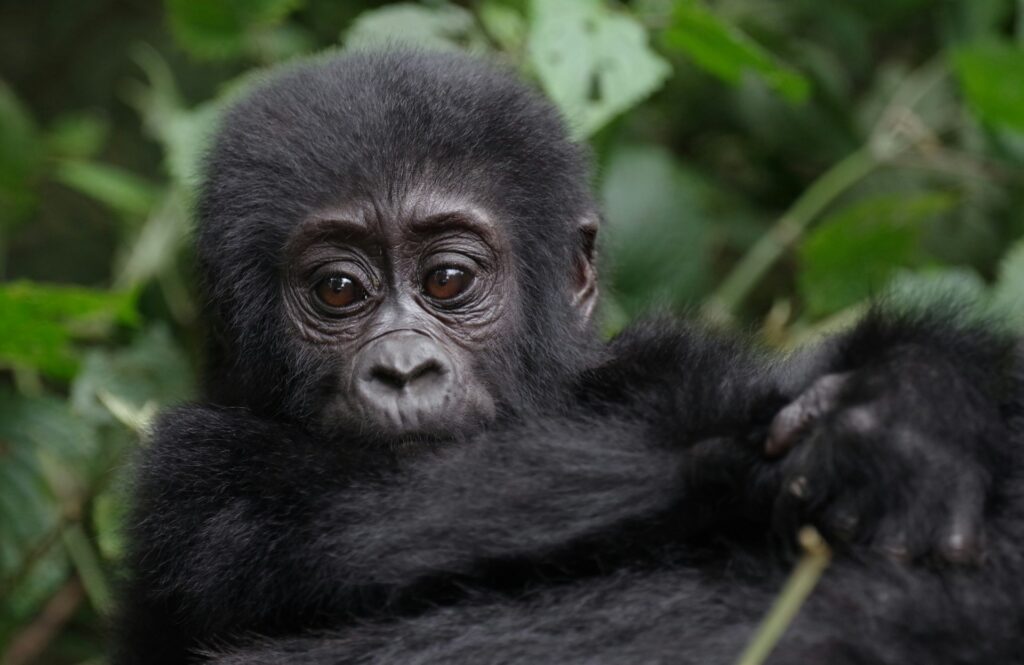
Uganda is home to the majestic mountain gorilla, and the safari experiences are built around seeing them.
Mountain gorilla trekking in Uganda costs about USD 800 per permit in Bwindi Impenetrable National Park or Mgahinga Gorilla National Park. To give you some perspective, in neighbouring Rwanda, the same permit will cost you about USD 1 500.
And aside from the terrain being slightly different, the experience of seeing the gorillas is about the same.
Uganda is home to roughly half of the world’s remaining mountain gorilla population, and approximately 500 of them live in several habituated family groups.
Bwindi alone is home to more than 20 of these families, spread across four trekking sectors: Buhoma, Ruhija, Rushaga, and Nkuringo. Each area will give you a unique trip, because each is at a different altitude.
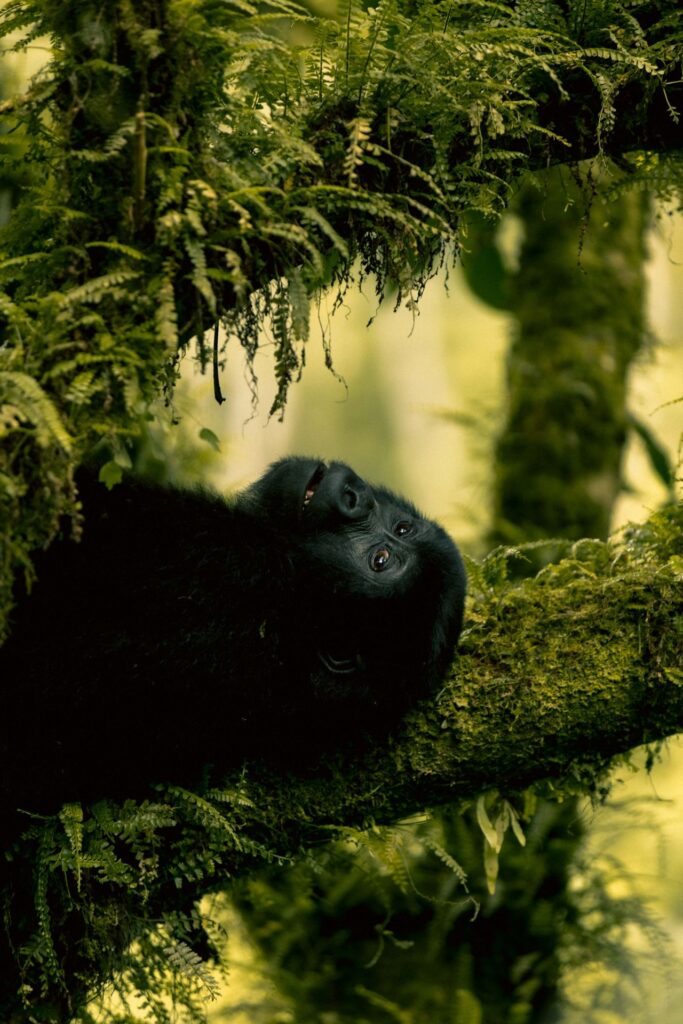
The trek itself can range from 30 minutes to a full day’s walk through dense highland forest, and when you finally come face to face with a silverback, no amount of preparation quite readies you for it.
You are allowed one hour with the group.
Most people describe it as one of the most significant experiences of their lives. Since the pricing is a lot more budget-friendly, a Uganda safari to see the gorillas is more accessible compared to Rwanda, which makes a big difference if you are planning a more intricate African holiday itinerary.
Visiting the Ultimate Primate Circuit
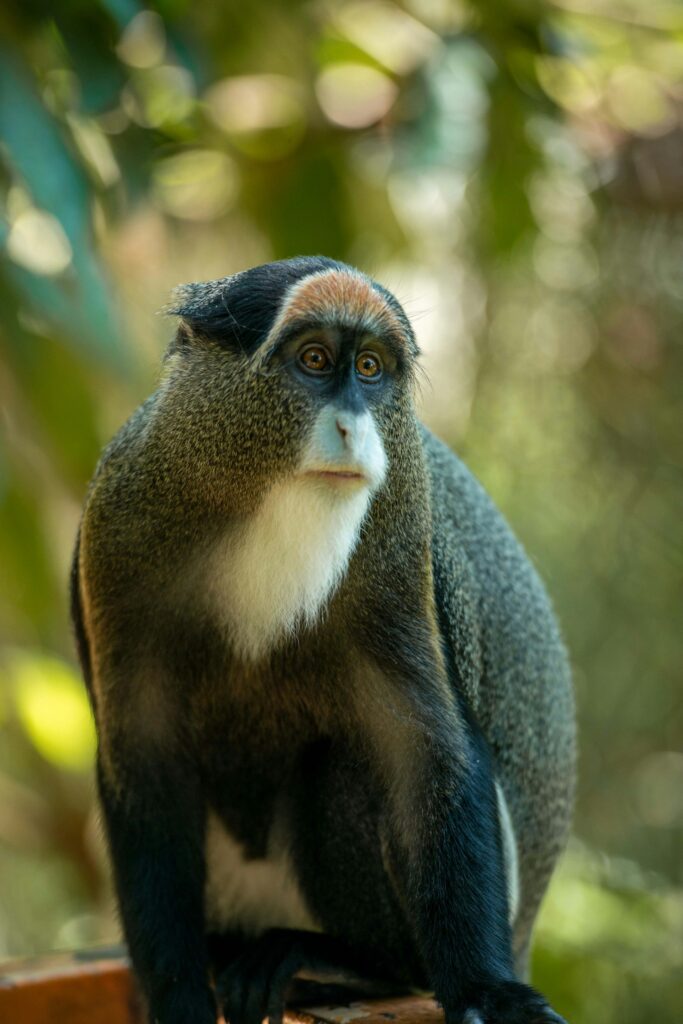
The further down in Africa you travel, the more your sightings are limited to vervet monkeys and baboons, but Uganda is very different. During my trip to Uganda, I saw more of a variety of primates than I’d seen elsewhere in Africa.
Uganda is the only country in the world where you can realistically track mountain gorillas, chimpanzees, and the rare golden monkeys on a single trip.
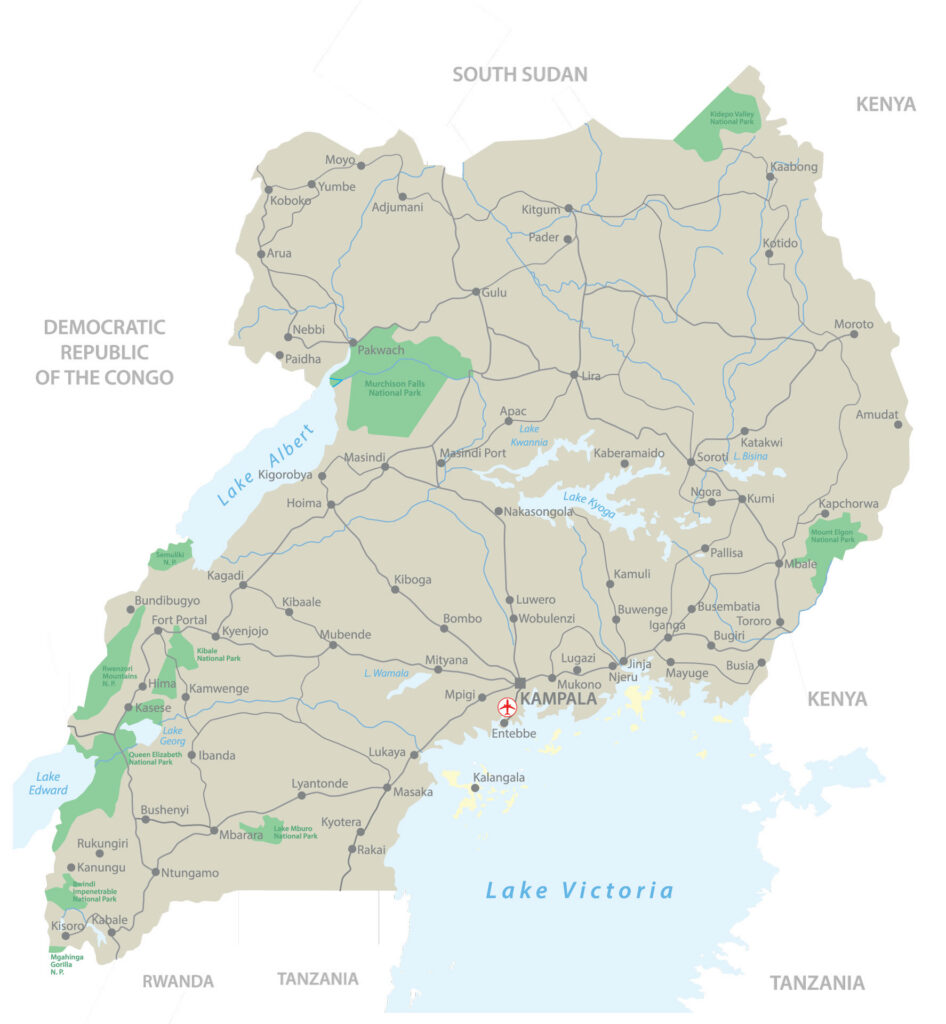
Kibale National Park, situated in western Uganda near Fort Portal, holds the highest density of primates in Africa.
It is home to 13 primate species, including around 1 500 chimpanzees. A chimp trek here is a different experience altogether from gorilla tracking.
Chimpanzees move fast, and they are really loud. You’ll hear them crashing through the canopy, calling, and screaming with a social energy that is infectious but at first can be rather alarming, as they will catch you off guard.
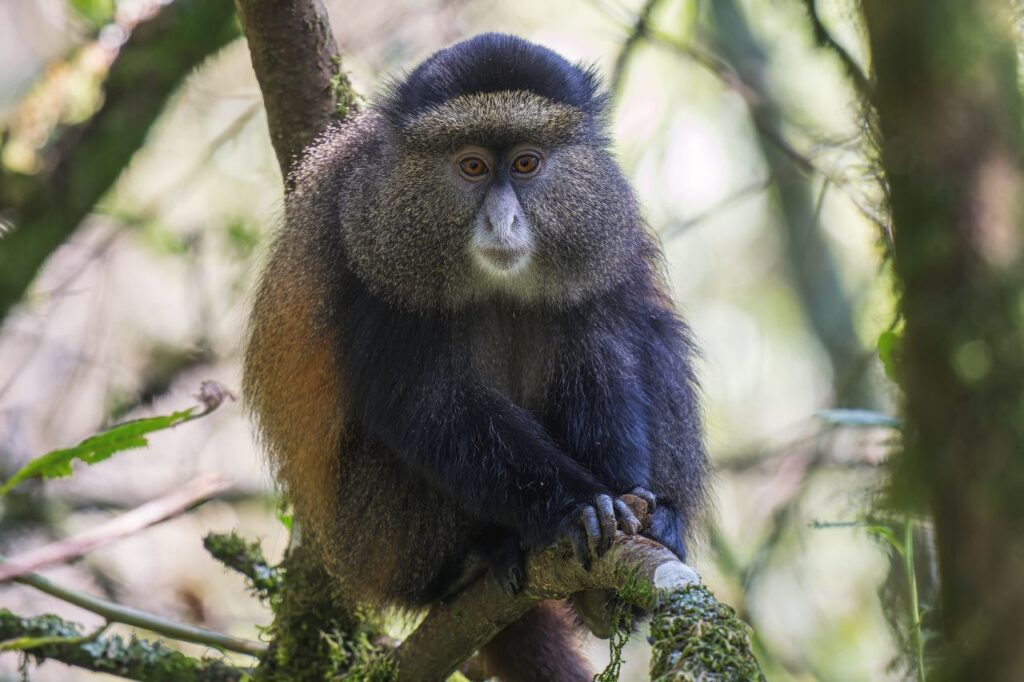
Golden monkeys can be tracked in Mgahinga; a permit to see them is usually sold with a gorilla permit.
They are hard to miss and make for the most stunning photography subjects, with their electric orange-gold contrasting beautifully against the green of the Virunga volcanic slopes.
They move in large, playful groups that are a pure delight to spend time with.
Safari Meets Rainforest
Most travellers arrive in Africa expecting savannah; golden grass, stereotypical flat-topped acacia trees, and huge dry plains.
Uganda is different, and that is what makes it an exceptional safari destination for the traveller who has already seen it all.
Uganda sits on the equator and straddles two of Africa’s great ecological zones: the East African savannah and the Congo Basin rainforest.
The result is a country of startling ecological variety.
On a Uganda safari, you’ll see ancient montane forests clinging to crater walls, papyrus swamps thick with waterbirds, Rift Valley lakes edged with hippos, and open game plains where lion and elephant move freely.
The air smells of earth and rain and green things.
For travellers accustomed to the dry-season drama of Botswana or the big skies of the Serengeti, Uganda is so very different and lush in a way that most of Africa simply is not.
Queen Elizabeth National Park
If Bwindi is Uganda at its most intimate, Queen Elizabeth National Park is Uganda at its most cinematic.
Spread across 1 978 square kilometres along the Rwenzori foothills and the shores of Lake Edward, it is one of the most biodiverse parks on the continent.
The Kazinga Channel, a natural waterway linking Lakes George and Edward, is the centre attraction and where some of the most incredible sightings take place.
A boat safari is the best way to see this area, and you can spend an afternoon here moving slowly past some of the world’s largest hippo concentrations, with Nile crocodiles draped along the banks and clouds of waterbirds rising and settling in rotation. Late afternoons on the water are especially magnificent, as the setting sun washes the reeds and water in an amber hue.
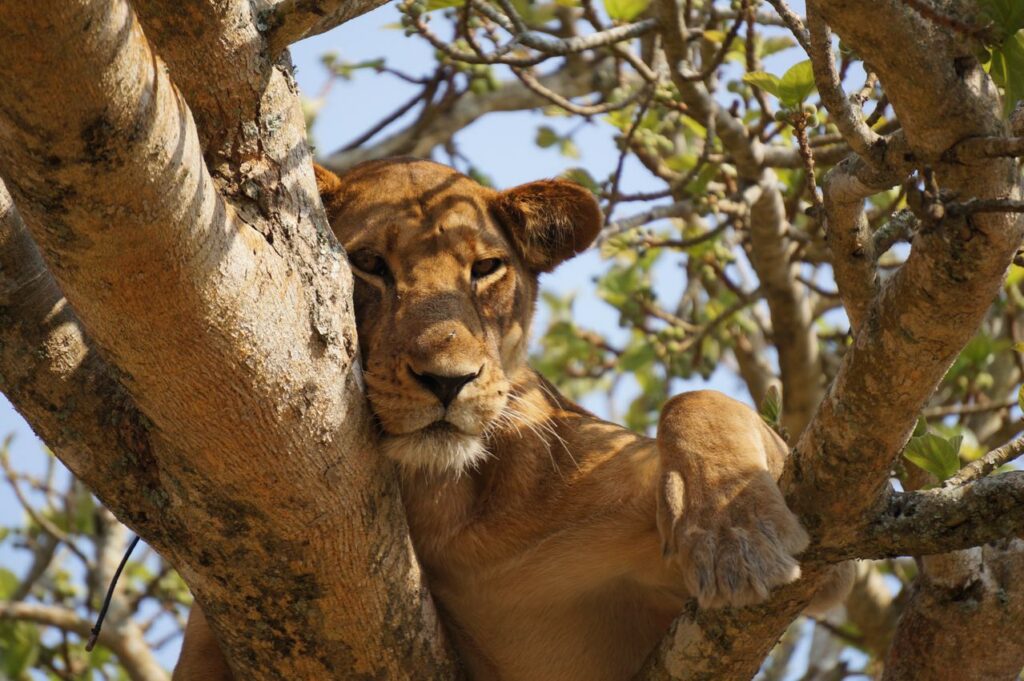
The park is possibly most famous for being home to the unusual tree-climbing lions of the Ishasha sector. It is behaviour unique to this population and another small population in Lake Manyara in Tanzania.
Watching a lion arrange itself along a fig branch with the studied indifference of a housecat is quite something.
The Mweya Peninsula also happens to have some of the finest lodges in Uganda, with many perched high above the channel with views that make it difficult to leave.
Uganda for Seasoned Safari Travellers
Most travellers arrive in Uganda already fluent in African safaris.
They have done the Masai Mara at migration time, they have watched elephants at a Botswana waterhole until the lights went out, and they are not looking for more of the same.
As someone who has done most of the typical African trips, I found that the Uganda safari gave me slower travel, deeper, almost intimate access to wildlife, and experiences that kept me on my feet.
Gorilla trekking is physically demanding.
Chimp tracking in Kibale requires patience and a willingness to move at the forest’s pace.
And birding seriously in Uganda means early mornings, wet boots, and a field guide that actually gets used.
The lodges that serve this market are also excellent. Places like Clouds Mountain Gorilla Lodge above Bwindi, and Sanctuary Gorilla Forest Camp, will give you real luxury and indulgence, which is most welcome after a day of trekking. The lodges are also rather quiet, so if you are looking for privacy or if you are planning a romantic break, a Uganda safari should definitely be on your list.
Community Tourism Means Something in Uganda
Uganda’s community tourism is something that the country has approached with conservation and tourism development fully in mind and largely out of necessity.
The communities living alongside Bwindi and other protected areas were, for generations, in conflict with conservation.
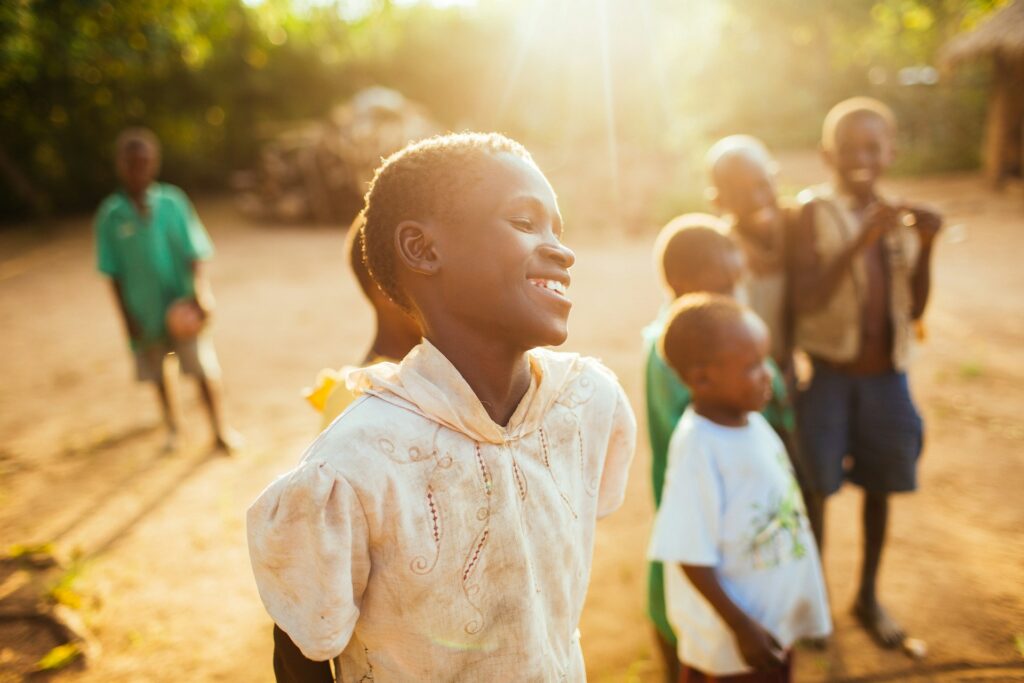
Gorilla tourism changed all of that, and today, a proportion of every gorilla permit goes directly to local community funds, supporting schools, medical facilities, and infrastructure. The Bwindi Community Hospital, built partly on gorilla tourism revenues, serves tens of thousands of patients annually.
Village walks, cultural evenings, and craft markets in the Bwindi corridor are all important parts of the Uganda safari experience.
They have become points of contact with the Bakiga and Batwa communities who have lived in this area for centuries.
Africa’s Most Species-Rich Bird Country
Uganda is home to well over 1 060 bird species, more than any other country in Africa relative to its size, and more than the whole of Europe combined.
For serious birders, that statistic can become the entire reason to book that trip.
The Albertine Rift endemics are the headline attraction here, and birds like the African green broadbill, the Shelley’s crimsonwing, the Grauer’s warbler, and the Chapin’s flycatcher, among dozens of others, can be seen here.
These birds are found nowhere else on earth, and Uganda’s position at the western edge of the Rift makes it the most accessible place to find them.
Mabamba Swamp, less than an hour from Kampala, is the most reliable site in Africa for the shoebill stork, a prehistoric-looking bird that has been on every serious birder’s list since they first opened a field guide. Bwindi, Kibale, and Queen Elizabeth add hundreds more species across entirely different habitat types. A dedicated birding itinerary in Uganda is genuinely one of the world’s great wildlife experiences.
A Country Made for Slow Travel
Uganda is not a country that you can rush through and then expect to have the best experience.
And it is not that the distances between regions are as massive as those of Namibia or even South Africa, but the roads can be slow due to not-so-great infrastructure in out of the way places or unexpected stops.
Many of the most interesting areas can only be reached via routes that wind through hills and small towns that are well off the tourist trail. This usually means you’ll want to take your time so that you can add a few extra stops to your itinerary.
Kampala to Bwindi is roughly 8 to 9 hours by road, or around 45 minutes by scheduled light aircraft, and Fort Portal, the gateway to Kibale and the crater lake region, sits about 5 hours from Kampala by road.
The internal flight network, operated mainly by Aerolink Uganda, connects most of the better-known destinations and makes it easy to cover significant ground without losing days to unnecessary travel.
For most travellers, 10 days is recommended if you want a comprehensive Uganda itinerary.
12 to 14 days is even better, and it’ll give you more than enough time to include Queen Elizabeth, the primate circuit, and at least one other destination at a pace that doesn’t feel as though you are hurrying from one highlight to the next.
See Uganda and Rwanda
With Volcanoes National Park in Rwanda sharing a mountain gorilla population with Uganda’s Mgahinga, including both destinations in one trip is a great option, and it’ll give you more variety and a deeper appreciation for this spectacular region in Africa.
A typical tour might begin in Uganda, working through the primate circuit at Kibale, then Queen Elizabeth, then Bwindi for gorilla trekking, before crossing into Rwanda for a second gorilla permit in the Virunga volcanoes.
Rwanda is extraordinarily well-managed, the roads near Volcanoes National Park are excellent, and Kigali is one of the most liveable and lively capital cities in sub-Saharan Africa.
Why Uganda Will Keep You on Your Feet
Uganda is not a laid-back destination, which is why it has become so appealing to travellers who like to be active.
The Nile exits Lake Victoria at Jinja, and for the better part of three decades, Jinja has been East Africa’s white-water capital.
The rapids here, Grade 5 at their most intense, draw rafters from across the world. Since the construction of the Bujagali dam altered some of the original stretch, the remaining run is shorter, but it still means serious business, and the operators who work here are experienced and well-equipped.
The Rwenzori Mountains, on the border with the Democratic Republic of Congo, are the legendary Mountains of the Moon.
A multi-day trek through the afro-alpine zone, past glacial lakes and giant lobelias the size of trees, is one of the most unusual mountain experiences in Africa. The summit, Margherita Peak at 5 109 metres, is the third highest point on the continent!
Mount Elgon, the Sipi Falls region, and the crater lakes near Fort Portal each add further activities for travellers who want their itinerary to move between different physical landscapes.
PLAN YOUR SAFARI WITH AFRICAN TRAVEL CONCEPT
A Uganda safari is best planned with a travel operator who knows the country and the best places to visit. We can work with you to put together a comprehensive itinerary.
Uganda can be visited year-round, but the drier seasons from June to September and December to February are generally preferred for gorilla trekking and game drives. The trails are more manageable in drier conditions, though Uganda’s equatorial climate means rain is possible at any time. The green seasons (March to May and October to November) see fewer visitors and the best birding.
A gorilla trekking permit in Uganda costs USD 800 per person, which is significantly less than the USD 1,500 charged in Rwanda. Permits must be booked well in advance, particularly for peak season travel, and are best secured through a licensed tour operator such as African Travel Concept.
Uganda is home to chimpanzees, golden monkeys, over 1,060 bird species, lions (including the famous tree-climbing lions of Ishasha), leopard, elephant, hippo, buffalo, and Nile crocodile, many of which you’ll see during a Uganda safari. Queen Elizabeth National Park and Murchison Falls National Park are the primary game-viewing destinations, while Kidepo Valley National Park in the north is increasingly popular for its remote, untouched character.
Uganda is considered a safe destination for tourists, particularly within the established national park circuits. Standard precautions apply, and travellers should always follow guidance from their tour operator and check current foreign office advisories before travel. The tourism infrastructure in the key wildlife areas is well-developed and well-monitored, making a Uganda safari safe and predictable.
Yes. A Uganda safari works exceptionally well with Rwanda for a focused primate itinerary, or with Kenya and Tanzania for travellers wanting to contrast the rainforest experience with classic savannah game viewing. African Travel Concept specialises in custom itineraries that combine a Uganda safari with one or more neighbouring destinations, built around your specific interests and travel dates.