Table of contents
Enhance your reading experience—immerse yourself in the adventure with our audio version. Click play and let the sounds of Africa captivate you!
Although there are many other places in Africa where you can have a superb safari, there’s no place quite like the Kruger.
The Kruger National Park in South Africa covers an enormous 19 485 km², and within that perfectly untouched setting, there is a multitude of wild animals to see.
Animal populations in the Kruger today number in the hundreds of thousands for some species, but it wasn’t always like that.
Established over 100 years ago, when a couple of ahead-of-their-time men decided that they could not simply sit back and watch as the animal populations were decimated by hunters, farmers, pioneers and prospectors, the Kruger National Park has become a symbol of resilience and an enduring reminder that the earth and the vulnerable wild creatures who dwell upon it are sacred.
For travellers planning a Kruger Park safari, the dream is not to stay in the most luxurious lodges, or to grab an ice cream at Skukuza, or to take part in a traditional South African braai.
The dream is to see all of the 147 mammal species that the park is home to, whether that is on a weeklong safari or a lifetime of return trips.
The abundance of wildlife in the park is what makes the Kruger one of the most fulfilling places to safari.
And unlike other safari destinations where you might have to drive most of the day before you see anything, it is not unusual for your first sighting in the Kruger to happen as you drive through the gate.
Antelope, hyena and even elephant often linger around the gates, seemingly taking on the role of welcoming guests, and with the animal populations in the Kruger being so impressively abundant, unless you are really out of luck, your game drive is almost certain to be one of the most exciting trips you ever take.
How many animal species inhabit the Kruger?
The park might be a place for us to see animals, but it is essentially a sanctuary for the extraordinary range of species that make up the animal populations in the Kruger.
This park is a series of carefully balanced ecosystems that are home to birds, mammals, reptiles, and countless quieter little beings that contribute to this miraculous place.
According to SANParks, the animal populations in the Kruger include:
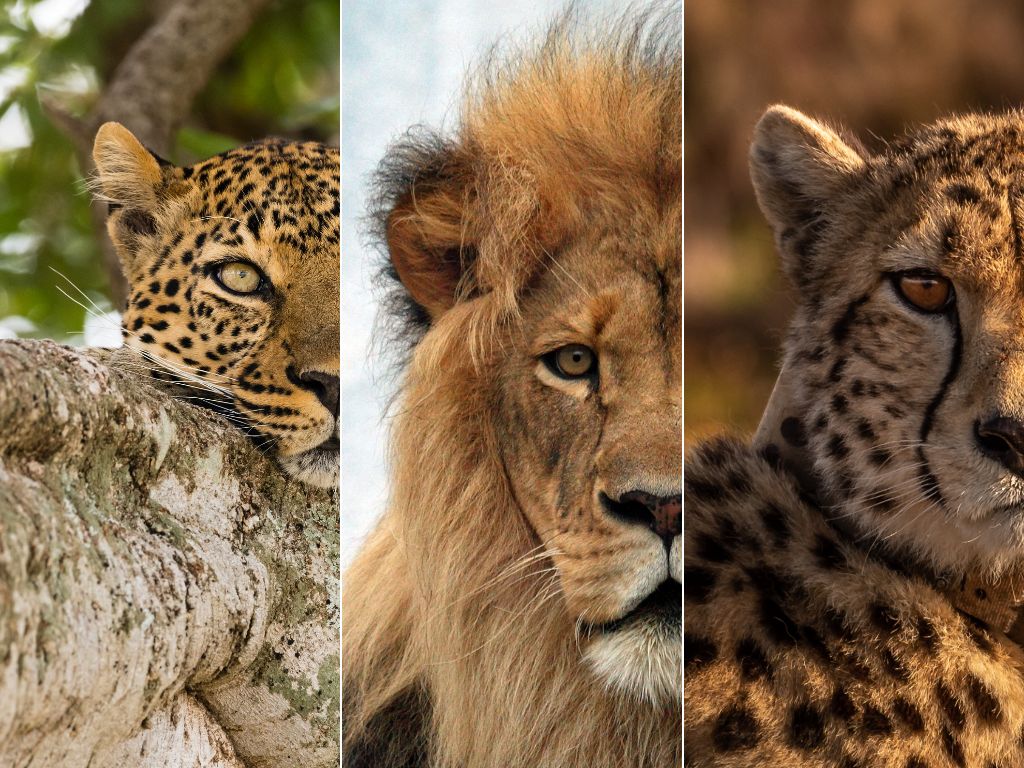
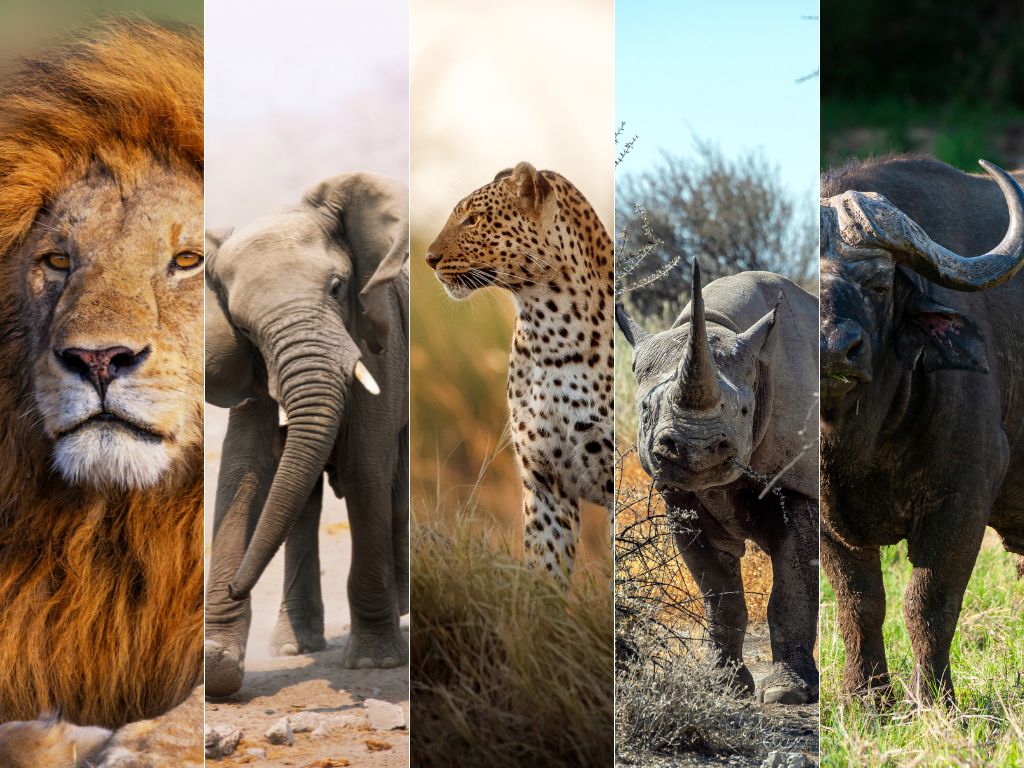
- Nearly 150 mammal species, including the iconic Big 5 (elephants, rhinos, buffalo, lions, and leopards), cheetah, nyala, kudu, bushbuck, hippo, baboon, wild dog, jackal, and the list goes on and on.
- More than 500 bird species, making it one of the most significant birding destinations on the continent. Some of the most exciting birds to spot in the Kruger include the African Fish Eagle, Southern Ground Hornbill, Brown-Headed Parrot and Lilac-Breasted Roller. If you are visiting a rest camp, you will more than likely have an encounter with the Yellow-Billed Hornbill, which isn’t shy about hopping around on tables, taking as many snacks as it can get.
- More than 110 reptile species. Crocodiles are a common sighting when driving over rivers. During the early mornings and late afternoon, you can spot them lying on the riverbank. They’ll slink quietly back into the water as the day heats up. You might also see chameleons, bloukops (Southern Tree Agama) and skinks. Snakes are also very much a part of the park, so when you are walking around a camp, or even your lodge outside of the park, watch where you put your feet!
- Dozens of amphibian and fish species, which keep the river systems thriving.
When you look at this kind of biodiversity together, the animal populations in the Kruger suddenly take on a sense of scale that’s hard to get from a brochure alone.
The way that SANParks determines the size of the animal populations is an intense and extensive census process.
The facts and figures from annual animal counts are not quite as forthcoming as they once were, quite possibly because of the park’s ongoing anti-poaching operations.
The best information one can get about wildlife population numbers is what we can pick up in the news and on websites like Stories of the Kruger.
Over the years, the park has seen an increase in zebra, leopard, spotted hyena, elephant, waterbuck, buffalo and kudu, while at the same time, numbers of African wild dog, cheetah, giraffe, wildebeest and rhino have dropped.
Of all the animal populations in the Kruger, if you’re booking a safari specifically to see the Big 5, you’re in luck.
It is estimated that the Kruger is home to around 1 000 leopards, 17 000 elephants, 1 500 lions, and 48 000 buffalo. Population numbers for rhinos are mostly unknown, but in parts of the southern Kruger, they can be seen.
These large populations make sightings of some, or all of these animals, rather easy, depending on where in the park you are travelling.

Which animal species is most abundant?
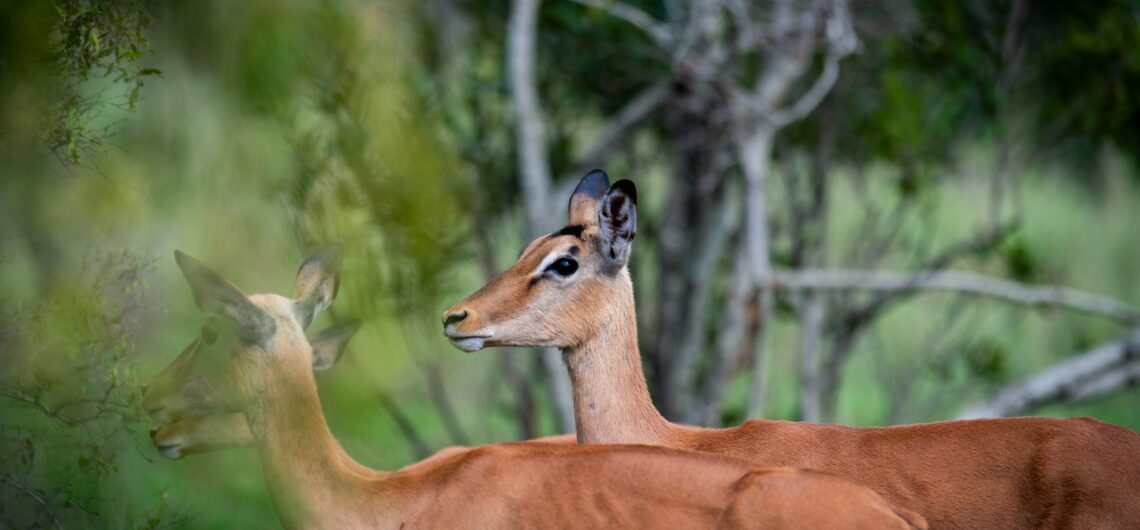
Of all the animal populations in the Kruger, the most abundant mammal in the Kruger is the impala.
Their population regularly hovers around 180 000 and they mostly move about in huge herds. If you spot one within minutes of entering the park, you’re officially having a classic Kruger experience.
Long-time safari goers will often laugh at how often they’ve seen impala during a game drive, because if you see nothing else on your trip, we promise you’ll see these bokkies (small antelope).
Impala, although they can become a tedious sighting, play an important role in predator-prey dynamics. These antelopes are a staple food for most of the Kruger’s predators, as they are easy to catch and abundant throughout just about the whole park.
Where the herds of impala go, predators like leopard, lion and even wild dogs are not too far behind.
Bird-wise, the Kruger’s most common species include the glossy starlings, hornbills, and the red-billed quelea, often described by conservationists as the most numerous birds on Earth.
Which animal species is least abundant?
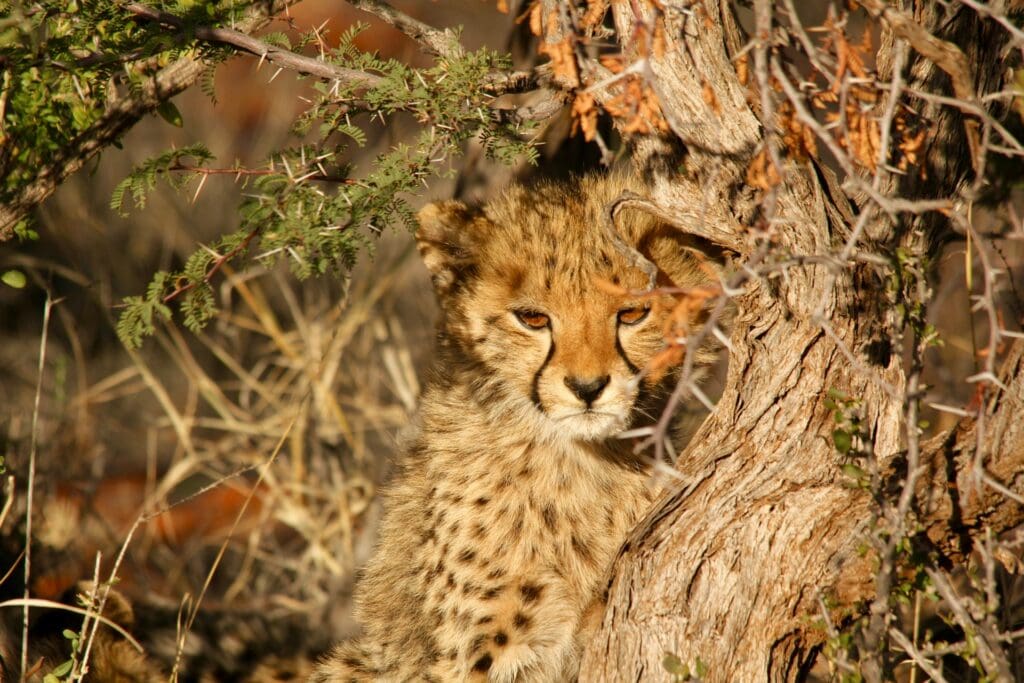
Cheetahs are among the least numerous large animal populations in the Kruger although their numbers are growing.
Current estimates place their population at around 200 individuals, and their low density has a lot to do with competition from larger predators like lions and hyenas.
If you want to give yourself the best possible chance of seeing a cheetah, you should head north, where the open grass plains allow this big cat to run at its impressive full speed. Seeing a cheetah sprinting across the savannah is an awe-inspiring sight!
Another rare animal is the African wild dog, with numbers generally between 120–160 in the Kruger.
They move like artwork, beautiful, fast, and unpredictable, and because they cover such wide distances, catching even a glimpse of one on your Kruger trip can feel like winning the wildlife lottery.
Pangolin, Roan Antelope, Sable Antelope, Aardvark and Aardwolf are also species that are not abundantly seen in the Kruger. Most of them are on the critically endangered list, and seeing one in the wild can be a humbling experience.
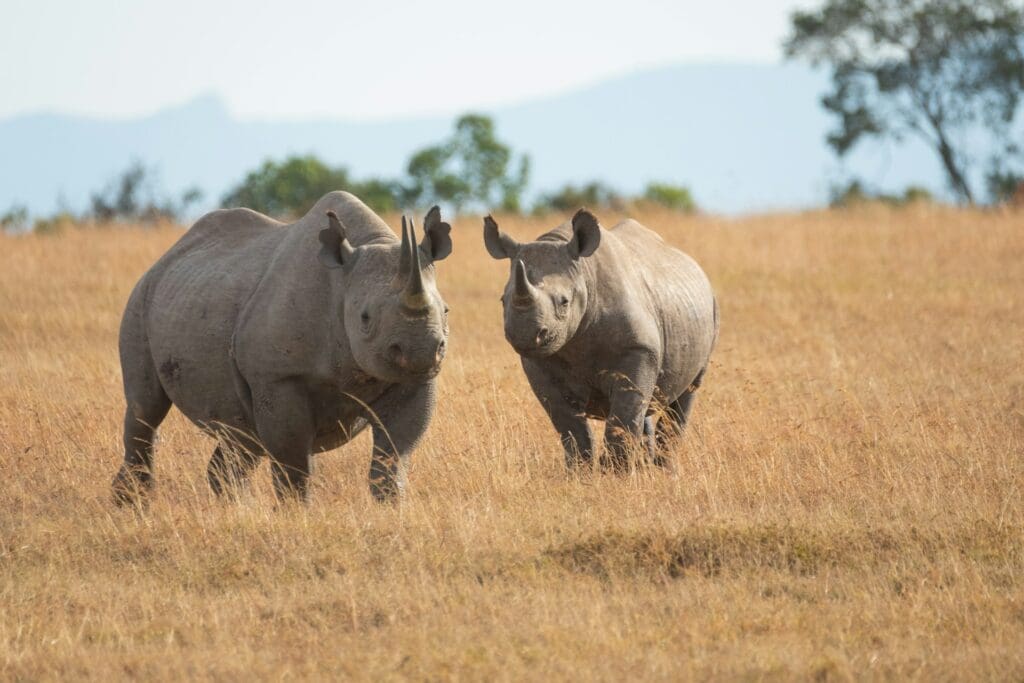
One of the least seen animal species in the Kruger is the black rhino.
Although in general rhino numbers are low, black rhinos are a lot rarer because they are far shier than the white rhino.
What animal populations are under threat?
The most vulnerable animal populations in the Kruger remain the rhino, particularly the southern white rhino.
Their numbers have declined significantly over the last decade due to poaching pressures. SANParks has not publicly released exact current figures for security reasons, and conservation bodies across the region highlight rhino protection as one of the park’s top priorities.
Vultures are another group under pressure, largely due to poisoning incidents beyond the Kruger’s borders.
Even with more than 500 bird species recorded in the park, these scavengers need continuous protection to maintain healthy numbers.
Which animal populations are most popular for tourists?
There’s no denying that the Big 5 are the most popular sightings, out of all the animal populations in the Kruger.
For many travellers, they’re the reason they click the booking button for a Kruger safari in the first place.
Of the Big 5, the elephant is often the animal spotted first. Their population numbers are far larger than the rest of the Big 5, and, given their size, there’s no way that they can hide away.
Lions follow close behind, though you’d be surprised how often they hide themselves in tall grass as if they know you’re desperate to see them.
Leopards are the ultimate Kruger bucket list prize. Their population is estimated at around 1 000, which isn’t the tiniest population, but their stealth means you’re lucky to cross paths with even one, because they have no interest in making things easy for your camera roll.
Other animals that are popular amongst tourists are giraffes. You just don’t appreciate their incredible size and their peaceful nature until you have one stroll past your open safari vehicle.
And seeing herds of zebra and wildebeest moving as one is the stuff safari memories are made of.
The Kruger National Park remains one of Africa’s most vital wildlife sanctuaries, and each visit supports the preservation of this unique ecosystem, ensuring future generations can see its wild beauty firsthand.
Brian Jackman, a UK journalist with a lifetime love for wildlife, once said, “Everything in Africa bites, but the safari bug is worst of all.”
It is only when you book a trip to the Kruger National Park that you’ll understand what he meant, and it is only on a safari that you’ll see the wildlife and understand how special this place is.
The impala is by far the most common large animal population in the Kruger, with a population in the hundreds of thousands.
Cheetah numbers sit at around 200 individuals, making them one of the park’s rarest large predators.
When it comes to regularly recorded species, the African wild dog and cheetah are among the rarest. Some smaller nocturnal species, such as the pangolin, are even harder to encounter.
Leopards take the crown. Their elusive nature, combined with their solitary lifestyle, means sightings feel incredibly special.
The Kruger is estimated to host around 1 000 leopards, though their movements and stealthy behaviour make them one of the most challenging animals in the Kruger to spot.