Table of contents
Enhance your reading experience—immerse yourself in the adventure with our audio version. Click play and let the sounds of Africa captivate you!
This isn’t just another packing list. Find out exactly what to wear on a safari, why colour matters, and what items could ruin your experience. Smart, stylish, and written to be helpful, let this is your go-to safari clothing planning guide.
Many first-time safari travellers worry about what they should pack for such a trip. The whole talk of there being a safari etiquette often extends to what a person should and should not wear when both travelling in Africa and when out on a game drive.
The truth, of course, is that there is no right or wrong outfit choice, but there is a comfortable or uncomfortable choice of clothing.
No matter what time of year you travel to the top safari destinations, like the Kruger National Park or the Okavango Delta, the weather is hot, and sometimes even overwhelmingly humid.
There is nothing worse than feeling sweaty and as though you are overheating while knowing you won’t be able to change until you get back to the lodge or camp. And since your safari is quite possibly a once-in-a-lifetime holiday, you should want to go out of your way to make sure that you have the most pleasant and memorable safari, for all the right reasons.
If you’re soon to be heading to the plains of the Serengeti or the bushveld of South Africa, getting your wardrobe right will not only keep you comfortable, but it might just help you blend in better.
In this guide, we have all of the answers to the question “what to wear on a safari”, so that you can pack just what you need for your holiday in Africa.
What clothes should I wear on a safari?
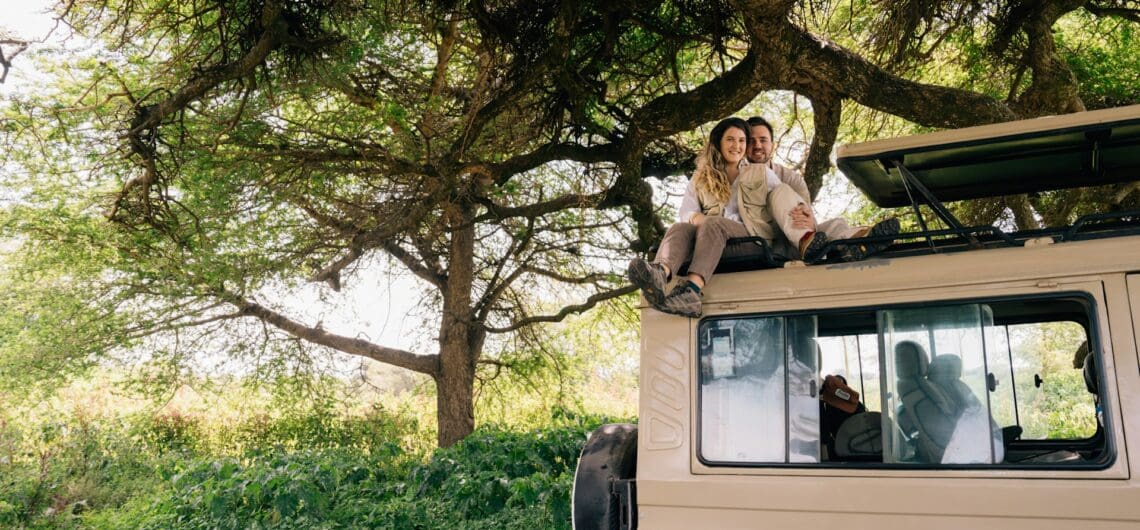
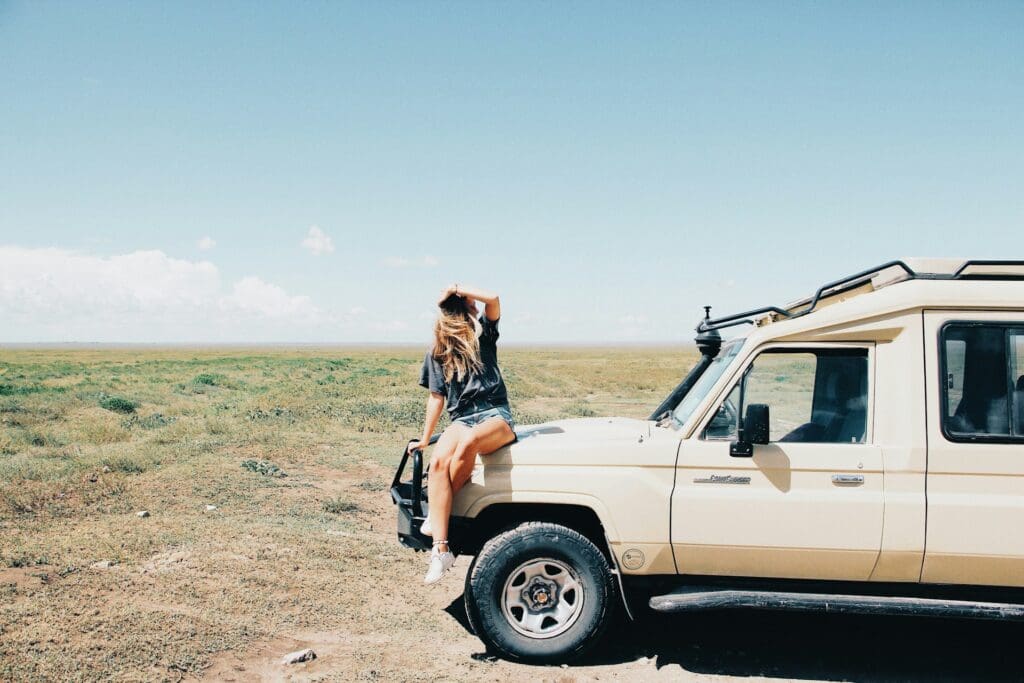
The best safari clothing is light, breathable, neutral-coloured clothing. If you think of a safari during the best time of the year, during the dry season, the colours that come to mind should be tones of khaki, brown, beige, and classics like black and cream. And if you consider that even in the middle of an African winter, daytime temps will often get as high as 28 degrees Celsius, you’ll understand why wearing something light and breathable is a must.
But what to wear on a safari extends further than just these considerations, so to help you pack your luggage, this is what else you should keep in mind:
Layers are everything
Temperatures will often swing wildly on safari.
The mornings can be bitterly cold, especially when you are sitting in an open 4×4, but when afternoon arrives, the heat settles in and you can begin to simmer.
When planning what to wear on a safari, and to prepare for these changes, you should pack a light fleece or down jacket that you can peel off easily. A long-sleeved shirt over a tee does the trick too, especially since Africa’s idea of “freezing cold” is usually around 11 to 15 degrees Celsius, which most European travellers might just find on the warm side.
Stick to natural fabrics
Cotton and linen are safari favourites because they can breathe, allow you to move easily, and don’t trap heat like synthetics. As for colours, you can’t go wrong with khaki, olive, taupe, or beige tones, not just because they’re fashionable, but because they help you stay inconspicuous to wildlife.
Trousers over jeans
Lightweight, quick-dry trousers with zip-off legs are fantastic clothing to bring along for your safari, as they will give you flexibility and comfort. Denim is not ideal at all because it gets heavy, holds heat, and takes forever to dry, which can become uncomfortable if you are caught in a rainstorm when you’re miles from your lodge. You can still pack your denim for those crisp evenings at the lodge, just don’t wear them when you’re on your game drive.
Hat with a brim
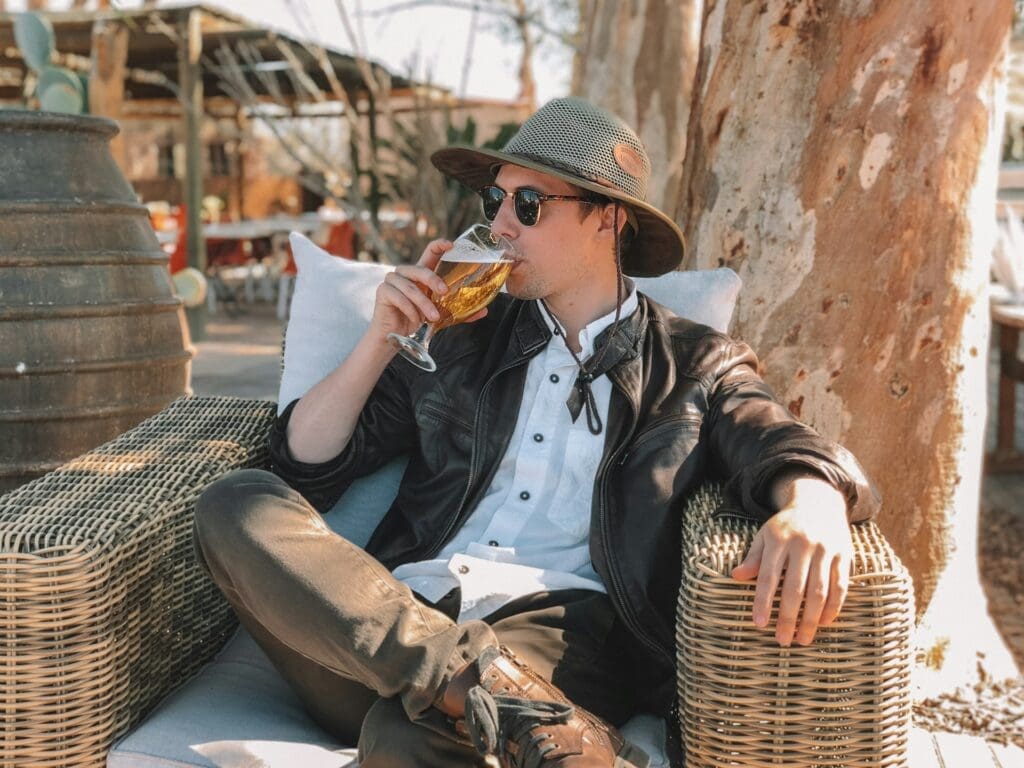
Sunburnt ears are no fun. The African sun can give you a burn year-round if you are not too careful, and you’re not even safe on an overcast, cloudy day. You should bring a breathable, wide-brimmed hat or a packable cap with a neck flap; either of these will save your skin.
Socks matter
Wearing high socks can protect against ticks, which are a real concern in some parks, even more so when you are out on a walking safari. As for the materials, wool or moisture-wicking hiking socks are your friends.
Is there a safari dress code?
No lodge or game park enforces or even encourages a specific type of “safari dress code”, but there is an unspoken code that many guides and seasoned travellers follow around what to wear on a safari and what you should not:
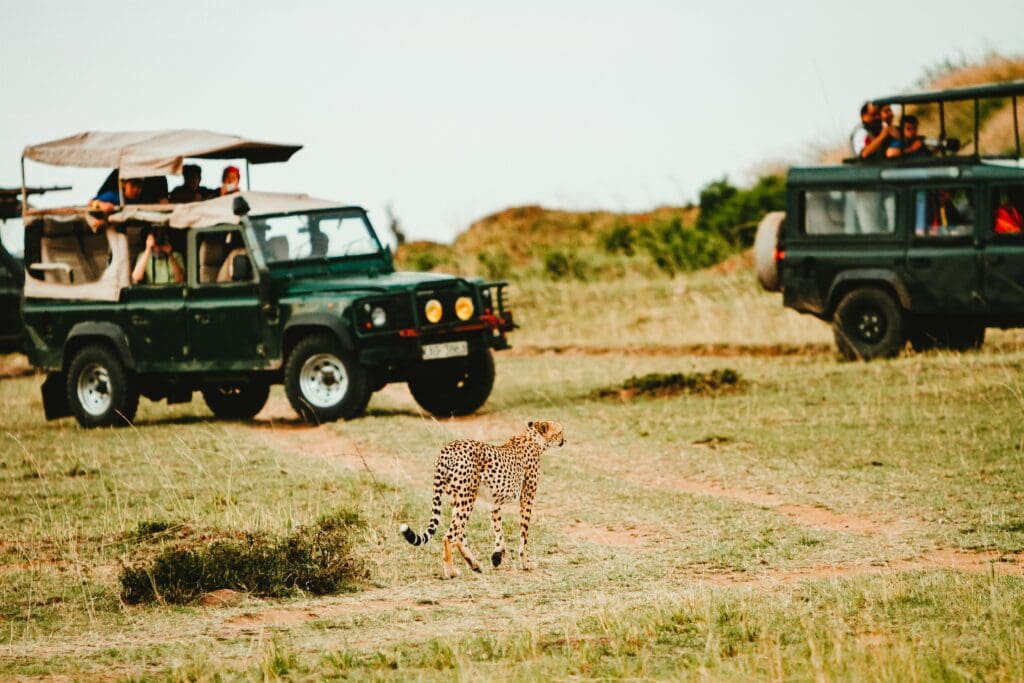
- Don’t wear bright colours like red, blue, and white. These can attract insects and are more visible to wildlife. Such colours will also have you standing out amongst your fellow travellers, and if you are not the kind who enjoys having the spotlight on them, you can see why wearing such colours would be a no-no.
- Absolutely no camouflage patterns, they’re still illegal to wear in some African countries for civilians (yes, even tourists), and often park rangers and anti-poaching officials will wear camou or fatigues, and as you can imagine, you wouldn’t want to be dressed like them as it could cause confusion.
- Don’t dress like you’re going on a hike through London. Over-accessorised safari costumes scream “tourist,” and they have no functional benefit. You don’t need heels, an oversized bag, oodles of jewellery and accessories, or anything else that might just be considered over the top.
Always strive for minimal when you are dressing for a game drive and stick to the authentic, understated style that is both comfortable and practical. What to wear on a safari is not about dressing for Instagram; you’re dressing for dust, heat, and unexpected rain.
What shoes to pack for a safari?
What to wear on a safari also includes your shoes. You need something that you can wear when in the bush, and you should also pack a pair of lazy sandals, which you can wear when you are at the lodge, just enjoying some downtime. Your bush attire can be a pair of sturdy boots or running shoes. If you are doing a walking safari, you will want to go with a comfortable pair of boots, as you never know what kind of terrain you’ll be taking on.
And if you are walking around at night, you’ll want to wear your closed shoes, as you never know what is lurking in the dark (usually something unpleasant).
Can I wear shorts on safari in South Africa?
Yes, you can wear shorts, but you need to decide carefully when to wear your shorts.
As we’ve said, mornings can be cold during safari season, and when in the park or at your rustic accommodation, you are going to encounter bugs, and they are not your friends.
If you’re in an open vehicle or walking through tall grass, shorts will leave you exposed to the elements and the insects. But shorts do have a place if you are travelling in summer, when by the time the sun comes up it’s 30 degrees, especially in the Kruger or some other nearby park. That’s when shorts are a lifesaver.
When you are simply lounging around your lodge, you can absolutely do so in your shorts. But while on a drive or bush walk, it is a must to keep your legs protected. And don’t forget sunscreen, the African sun can be unforgiving.
What not to bring on a safari?
Packing is where most travellers go wrong, often because they think they need to bring along far more than they actually need for their trip. When packing your suitcase, this is what you should keep in mind:
- Leave the white clothing at home because it gets filthy within hours while on a game drive. If you want to wear a light colour, go for cream instead.
- Don’t wear dark blue or black clothing because, although it sounds strange, these colours can attract tsetse flies.
- Don’t bring the perfume or scented lotions on your game drive, as the animals can smell you coming from a mile away, and might walk off in the opposite direction.
- Leave the heels and fancy shoes because you’ll get zero use and you’ll waste your luggage space.
- Don’t overpack your bags. You should only pack what you’ll wear, and you should pack light, leaving enough space for those souvenirs you want to bring home.
Make peace with the fact that you’ll likely wear the same outfit multiple times. Safaris aren’t fashion shows, so don’t worry too much about how you look. Your attention should be fully focused on the wildlife you get to see and the experiences you’ll be treated to, after all, you are on holiday.

Knowing what to wear on a safari isn’t at all about style; it’s about safety, your comfort, and having respect for the environment.
Whether you’re staying at a high-end lodge or a mobile tented camp, dressing smartly will make every moment smoother, from sunrise coffee to relaxing sundowner gin.
And if you’re still feeling unsure? Contact us. We’ve helped thousands pack right, save time, and experience the ultimate African safari all without second-guessing their socks.