Table of contents
- 1 What is Responsible Travel?
- 2 The Importance of Sustainable Tourism in Africa
- 3 The Benefits of Responsible Tourism (For You and The Locals)
- 4 5 Best Places for A Sustainable Holiday in Africa
- 5 10 Tips on How to Be a Responsible Traveller
- 5.0.1 Choosing a low impact tour is one of the simplest ways to travel responsibly in Africa, and it certainly looks like it will become the future of all travel on this continent.
- 5.0.2 What does low impact tourism actually mean on an African safari?
- 5.0.3 Does responsible travel cost more than a standard safari?
- 5.0.4 How can I tell if a lodge is genuinely sustainable and not just marketing itself that way?
- 5.0.5 When is the best time to travel for a lower impact trip?
- 5.0.6 Do conservation and lease fees really reach local communities?
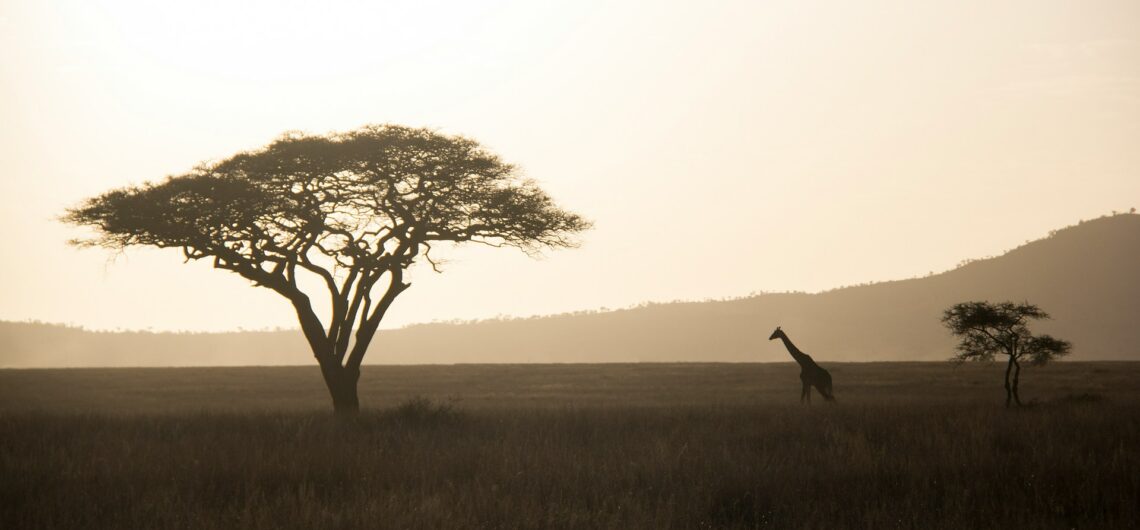
Perhaps it was the 2020 pandemic that made a lot of us start to rethink how we approach travel, when we had nothing but time to daydream about setting out on a safari or sitting on a beach in Africa.
Or maybe it was Greta Thunberg and her climate protests that had us begin to wonder about the impact our jet-setting travels have on this beloved planet.
Regardless of how we got there, being responsible travellers who leave nothing but footprints and leave with no more than a mind full of the best memories is a hot topic lately and something worth giving a second thought to when you are planning your Africa tour.
What is Responsible Travel?
People often imagine responsible travel as a guide set in stone; a list of processes and procedures that you need to follow to make a tour sustainable.
In reality, it is actually the little things, things that you don’t have control over.
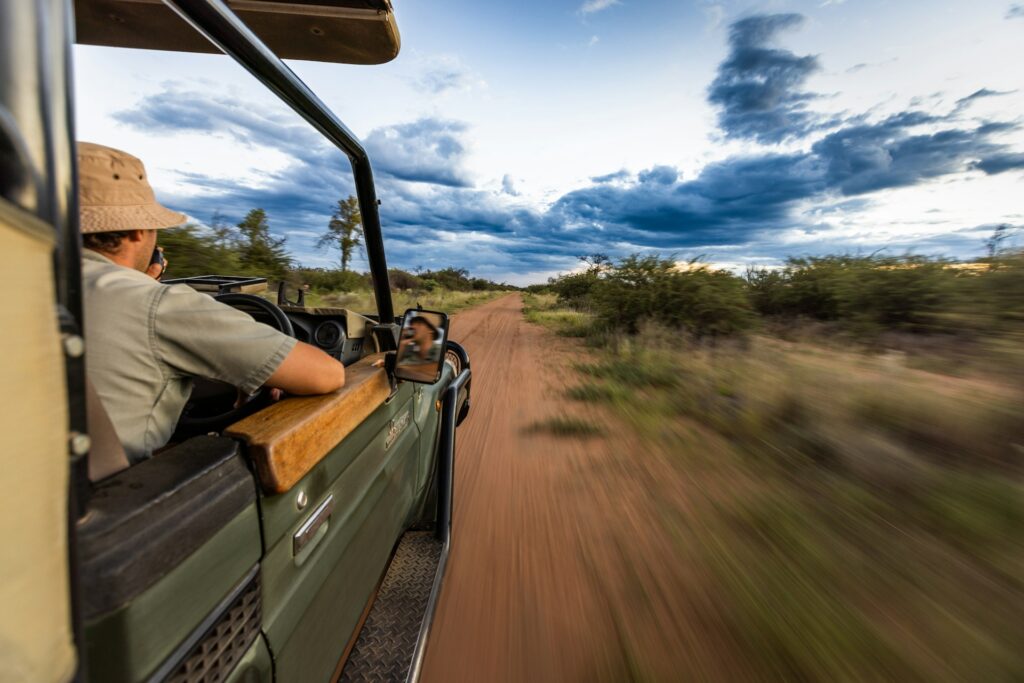
Like when you are on safari in the Kruger, and your guide switches off the engine before easing the vehicle any closer to a sighting.
It is a small decision, but when it is repeated a hundred times a day across the continent, it becomes responsible travel in practice.
Responsible travel has nothing to do with sacrifice and everything to do with paying extra attention to the details, like choosing routes, camps and tour operators that give something back to the land and the people who call it home, rather than simply passing through in a hurry.
The idea is not new. It has different versions of itself and travels by a few different names.
Ecotourism, one of the more popular terms, tends to be more about the environmental side of things.
Sustainable tourism widens the scope to include economies and culture.
And then there is regenerative travel, the phrase doing the rounds quite a lot in 2026. This style of responsible travel is more focused on travelling in such a way that your presence helps an area to grow and basically regenerate.
An example of that would be travelling to a wildlife park that uses conservation fees to increase wildlife population numbers through various programmes that could range from breeding to anti-poaching.
Knowing the different types of responsible travel options is a big part of the planning process because it will help you decide where you’d like to go, and you can base your decision on the impact your tour will make.
The Importance of Sustainable Tourism in Africa
Africa’s pristinely kept wild places are not a natural occurrence.
Most of the continent’s flagship wildlife areas only exist today because tourism made a stronger economic case than the alternative uses of that land, whether cattle farming, mining or subsistence farming.
Each country has its own approach to eco-tourism, and the pay-offs for the land and tourists alike have made every effort well worth it.
Botswana has built its entire safari economy around one principle: fewer people, paying more, doing less damage.
Today, close to 40% of the country sits inside protected or wildlife-designated land, with permit numbers into the Okavango Delta and Chobe National Park deliberately capped, rather than expanded, to chase demand, which is why a Chobe sundowner is a rare and special event.
Rwanda has taken a similar approach with its mountain gorillas.
A trekking permit into Volcanoes National Park costs 1 500 US dollars in 2026, and while that might sound expensive, those funds go to ranger salaries, veterinary care, anti-poaching patrols and a revenue-sharing scheme that has built schools and clinics along the park boundary.
And the strategy appears to be working: mountain gorilla numbers, once reduced to a few hundred, now sit close to 1 000 individuals, making it one of the only great ape populations on earth still growing rather than shrinking.

Namibia has gone further still, handing wildlife rights directly to the communities who live alongside it.
Since the country’s conservancy legislation came into force, 86 communal conservancies have been registered, covering close to a fifth of Namibia’s land.
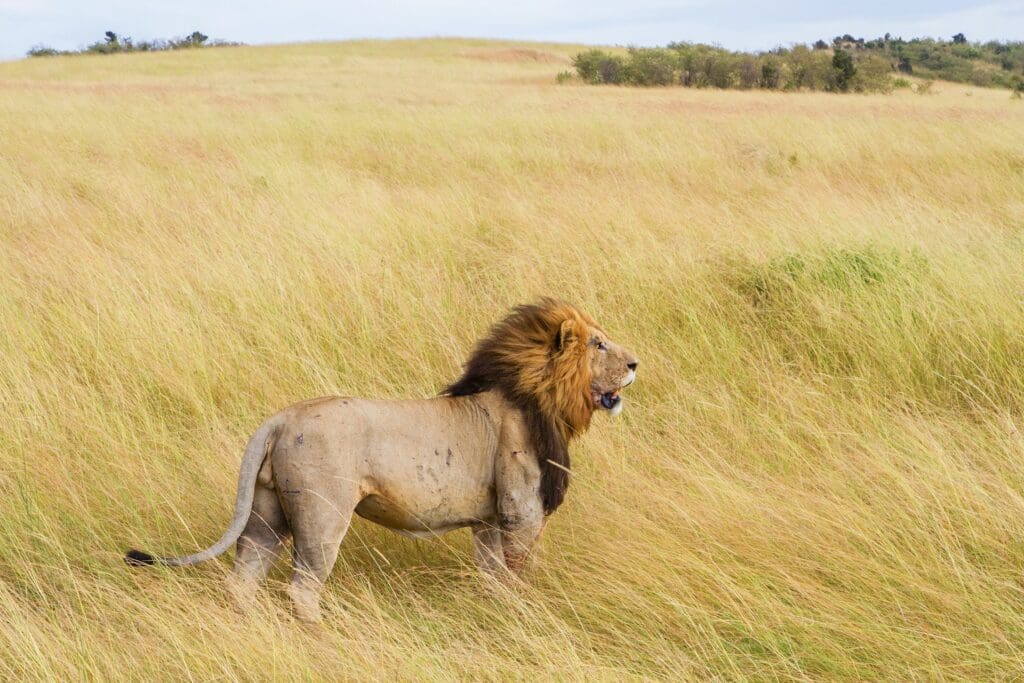
In Kunene, elephant numbers have tripled, desert lions, reduced to fewer than 25 animals by the mid-1990s, now number over 150, and oryx have recovered from a few hundred to close to 29 000.
Kenya’s Maasai Mara conservancies work on about the same line of thinking.
Maasai landowners lease land into conservancies such as Mara North, Naboisho and Olare Motorogi for guaranteed monthly payments, whether or not a single guest passes through that month, reopening wildlife corridors that fencing and land subdivision had begun to close.
South Africa relies on certification and community beneficiation rather than one conservation policy.
SANParks’ Beneficiation Scheme around the Kruger, formalised for the park’s centenary in 2026, has opened tourism concessions, bursaries and jobs to neighbouring communities, while bodies such as Fair Trade Tourism audit lodges against more than 170 criteria covering fair wages, local sourcing and environmental practice.
Fewer than 5% of tourism properties across Africa currently hold this kind of third-party certification.
The Benefits of Responsible Tourism (For You and The Locals)
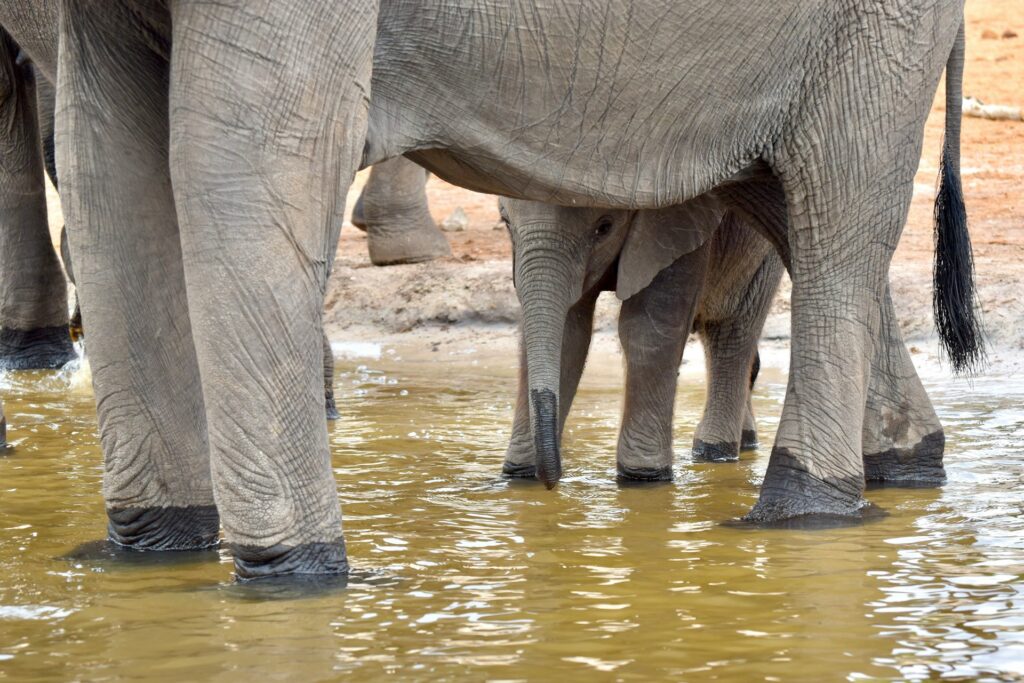
The importance of responsible travel is not only a moral one. Such an approach to travelling in Africa tends to often lead to travellers having an overall better holiday.
Conservancies such as those in the Mara cap bed density at roughly one bed for every 350 hectares.
For private conservancy travellers going on a game drive, this means having a leopard sighting entirely to oneself, with no radio chatter and no queue of vehicles. Botswana’s low-volume policy has the same effect but on a larger scale, across the whole of the Okavango and Chobe.
Guests in these areas also gain access to places and experiences that mass tourism cannot. Night drives, off-road tracking and walking safaris with armed rangers, activities restricted or banned inside the neighbouring national parks, are all more readily available in such areas.
For the people on the other side of that lease agreement, the benefits are more direct.
A landowner in the Mara conservancies receives a fixed monthly payment for setting land aside for wildlife, so they get a steady income that does not depend on rainfall or cattle prices.
In Namibia, conservancy revenue funds bursaries, healthcare and wildlife rangers, who are trained from the community itself, the people with the biggest reason to want elephant and rhino numbers climbing rather than falling.
Rwanda’s schools and clinics along the Volcanoes boundary exist for a similar reason.
When a family’s income is tied to a healthy wildlife population, a snare left in the forest or desert becomes everyone’s problem.
5 Best Places for A Sustainable Holiday in Africa
Botswana, for the Okavango Delta and Chobe
Botswana is the best place on the continent for low-impact tourism.
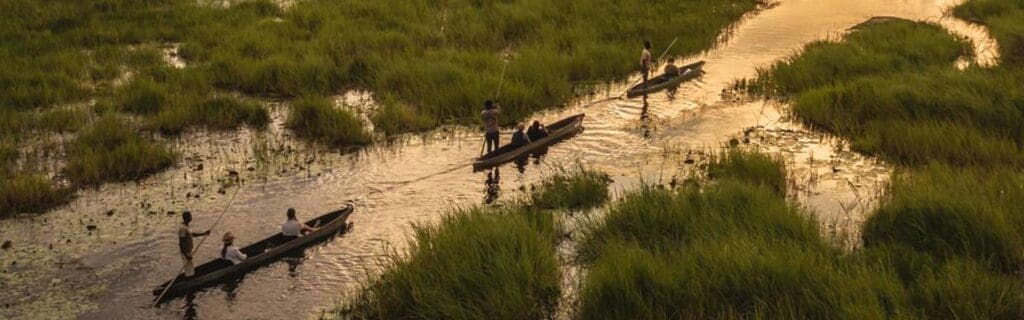
Its high-value, low-volume policy keeps camps small and concessions private, so when you are on a mokoro drifting through the Okavango’s reed channels, you will rarely cross paths with another person.
The numbers are kept low with permits into Chobe National Park and Moremi Game Reserve being capped rather than sold to the highest bidder.
For a traveller weighing up low-impact tours in Africa against every other safari on the shelf, Botswana is usually where their search ends.
Rwanda, for Volcanoes National Park
A morning spent with a habituated gorilla family in Volcanoes National Park is Rwanda’s signature experience, and only a lucky few tourists get to have it.
Only 96 trekking permits are issued each day. This is done to prevent the gorillas from getting stressed out.
The country’s extraordinary conservation credentials are boosted by its network of paved roads, short transfers from Kigali, and lodges built with every attention to detail in mind.

Namibia, for Kunene and Damaraland
Namibia’s northwest is where community conservancies have done most of the country’s conservation work.
Desert-adapted elephant, once reduced to isolated pockets, now move across open, unfenced areas, sharing their space peacefully with the communities who manage it.
Staying in Damaraland or Kunene allows you to book into lodges that have been built through joint ventures with the conservancies themselves, so the nightly rate that you pay funds the same rangers who track that afternoon’s elephant herd.
Kenya, for the Maasai Mara conservancies
The private conservancies bordering the Maasai Mara are entirely unlike the overcrowded river crossings.
In Mara North, Naboisho and Olare Motorogi the strictly limited bed numbers, permit only off-road tracking, and night drives that the national reserve does not allow, all helps to lower the impact of tourism.
Lease payments for some of the conservation land go directly to Maasai landowners each month, income that has, in many cases, replaced the pressure to fence or subdivide land for grazing, an approach that has become a working example of tourism holding a landscape together rather than wearing it down.
South Africa, for the Greater Kruger
The private reserves bordering the western side of the Kruger National Park, among them Sabi Sands and Timbavati, have created one of the country’s strongest track records in community-linked tourism.
A number of lodges hold Fair Trade Tourism certification, meaning independent auditors have checked wages, water use and local sourcing against more than 170 criteria.
It remains one of the easier places in Africa to have a flight and a safari on the same day.
10 Tips on How to Be a Responsible Traveller
It is not rocket science, being a responsible traveller.
Often, it is less about what you do while on holiday and more about how you plan your trip, where you stay and who you decide to travel with. If you keep these 10 tips in mind, you’ll never have to worry about making the wrong decision:
- Ask before booking, not after.
A vague answer is itself an answer, and not a good one.
A good tour operator can explain, without hesitation, who owns the land a camp sits on and where the conservation levy goes.
- Check for certification.
Look for Fair Trade Tourism or GSTC-aligned audits rather than a lodge’s own claims. Fewer than 5% of African properties are independently certified, so the ones that have done the work are worth seeking out.
- Favour fewer camps over more.
Three nights in one place, rather than one night in three, cuts light aircraft transfers and puts more of the spend into a single community.
- Travel in the shoulder season.
June to October brings the crowds and the premium pricing to parks like the Mara and the Okavango. April, May and November often mean better rates, quieter sightings and less pressure on the land itself.
- Pack out what the bush cannot process.
Wet wipes, batteries and most plastics have nowhere to go once inside a remote conservancy. Bringing them home, rather than leaving a camp to manage them, is a small but real courtesy.
- Tip guides and trackers directly and fairly.
Ask the operator for the local going rate before departure rather than guessing on the last morning. This income is often the most direct benefit a community sees from a visit.
- Buy from the people who made it.
Community cooperatives and craft markets near conservancies put money straight into local hands, in a way a duty-free curio shop at the airport simply cannot.
- Ask before photographing anyone.
A camera pointed at a person, particularly during a village or cultural visit, deserves the same courtesy as one pointed at a home.
- Give twice.
Book the trip, then, once home, consider a direct donation to the specific conservation trust or community fund connected to where the trip stayed. Most camps can point to exactly the right one.
- Choose the guide who teaches you something.
The best trackers carry decades of knowledge about a landscape most guests will never fully see. Asking questions and really listening to the answers is one of the few forms of respect that costs nothing at all.
Choosing a low impact tour is one of the simplest ways to travel responsibly in Africa, and it certainly looks like it will become the future of all travel on this continent.
It means choosing camps, guides and routes that limit strain on wildlife and habitat while directing meaningful income to the people who live there. In practice, that looks like capped visitor numbers, community owned or co-owned land, and lodges that can explain exactly where their conservation levy goes.
Often, though not always for the reason people assume. Botswana’s permit-capped model and Rwanda’s 1 500 US dollar gorilla permit build conservation costs directly into the price, while Kenya’s Maasai Mara conservancies add a modest nightly fee on top of the camp rate. The trade-off is usually a quieter, more exclusive trip rather than a straightforward premium for the same experience.
Ask for third-party certification such as Fair Trade Tourism or a GSTC-aligned audit, rather than taking a lodge’s own claims at face value. Fewer than 5% of African tourism properties currently hold this kind of independent certification, so a lodge that has it is usually glad to talk through the audit process.
The shoulder seasons, generally April, May and November across much of Southern and East Africa, ease pressure on popular parks and conservancies while wildlife viewing remains strong. Rates tend to be lower too, and permits such as Rwanda’s gorilla trekking discount are often tied to these quieter months.
In the destinations covered here, yes, and the mechanisms are fairly transparent. Namibia’s communal conservancies report annually on income distribution, Kenya’s Maasai Mara conservancies pay landowners a fixed monthly lease regardless of guest numbers, and Rwanda channels a share of gorilla permit revenue into schools and clinics along the Volcanoes National Park boundary.